


More news on this day
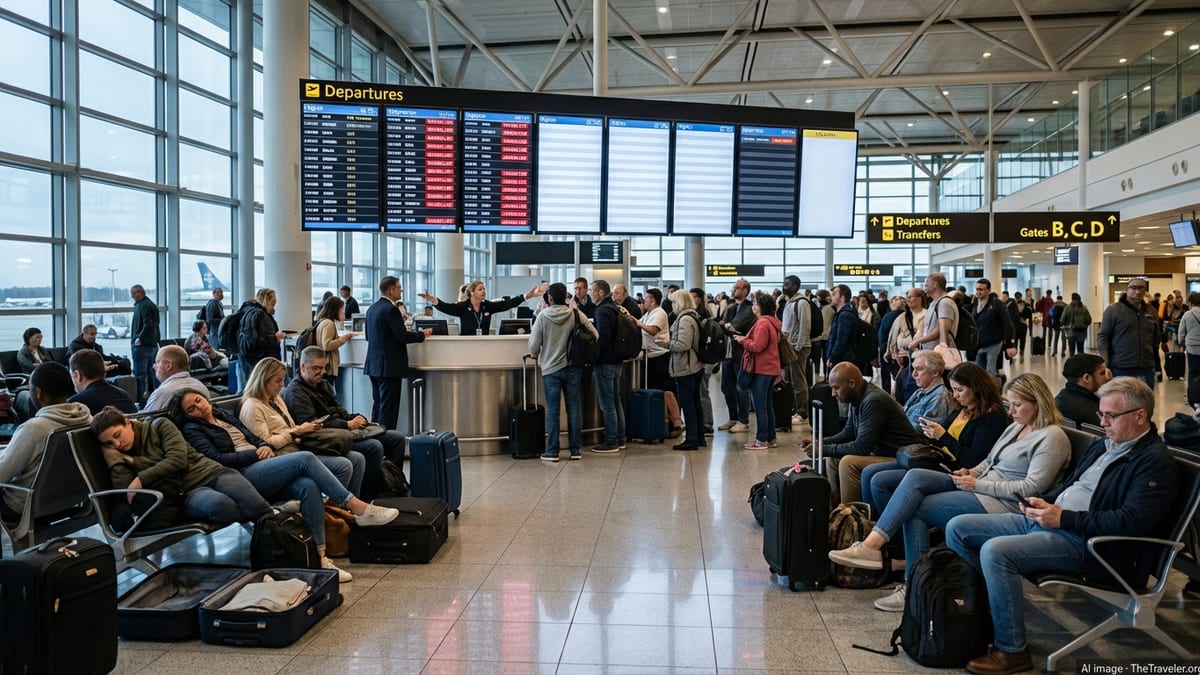
A number of flights at Manchester Airport were delayed or cancelled on Monday as airspace restrictions were introduced across parts of the UK following a technical issue affecting the national air traffic control network, adding fresh disruption for travellers in the north of England.
Get the latest news straight to your inbox!
What’s driving the disruption
Published coverage indicates the day’s problems were triggered by a technical fault at National Air Traffic Services’ (NATS) Prestwick centre in Scotland, which supports air traffic management for sections of UK airspace used by flights to and from northern airports. While systems were reported as restored later in the morning, airlines continued to work through knock-on delays and aircraft positioning issues.
Reports also indicate that airports south of Manchester were less affected, while flights heading north and departures from Scottish airports faced heavier delays. For Manchester, that meant disruption concentrated on services routed through northern airspace, as well as inbound flights arriving late and turning around for later departures.
The incident comes just weeks after a separate UK-wide disruption tied to air traffic control systems earlier in September, an episode that prompted widespread cancellations and took days for airlines to fully recover. The proximity of the two events has heightened passenger sensitivity to even short-lived restrictions, particularly when they occur during busy travel periods.
How Manchester Airport services are being affected
By mid-day Monday, flight status boards and airline notifications showed a mix of delayed departures and cancellations at Manchester, alongside longer-than-usual arrival delays that can cascade through the day. Published coverage referencing aviation analytics also pointed to Manchester among the airports seeing the most disruption in terms of cancellations and delays.
For travellers, the practical impact is less about a single long shutdown and more about rolling disruption: aircraft and crews arriving late, gates and stands turning over more slowly, and airline schedules becoming harder to rebuild as the day progresses. Even when the immediate airspace restrictions ease, airlines can still face a mismatch between where aircraft are parked and where they are needed next.
Manchester’s route network makes it particularly exposed to northern airspace constraints because it handles a large volume of domestic and short-haul European services that rely on tightly sequenced departure slots. When those slots are reduced, short-haul rotations can unravel quickly, increasing the likelihood of later cancellations as carriers protect onward connectivity and aircraft availability.
Passenger rights: what airlines must provide and what may not apply
Publicly available guidance from the UK Civil Aviation Authority (CAA) published Monday indicates that passengers affected by delays or cancellations tied directly to the air traffic control technical issue are unlikely to be entitled to cash compensation under the usual rules, because the cause is outside the airline’s control.
However, CAA guidance also indicates that airlines still have care obligations. That generally includes offering options such as rebooking or refunds for cancelled flights, and providing assistance such as meals, refreshments, and, where necessary, accommodation and transport between the airport and hotel during extended disruption.
Travellers should be aware that compensation and care are separate concepts. Even when compensation is not expected to apply, passengers can still have practical entitlements such as rerouting at the earliest opportunity, and airlines typically continue to handle those arrangements through their customer service teams and airport desks.
What travellers should do before heading to the airport
With disruption expected to ripple through the remainder of Monday, travellers departing Manchester are best served by checking their flight status directly with their airline and the airport’s live departures information before leaving for the terminal. When airspace restrictions create uneven delays, flight times can change multiple times within a few hours.
For those whose flights are cancelled, rebooking pathways can differ depending on ticket type and airline. Some carriers automatically rebook affected passengers, while others require customers to choose an alternative flight in an app or online account. In situations like this, the fastest path is often to secure a confirmed alternative itinerary first, then address refunds, expenses, or claims afterward.
Passengers connecting through another UK airport should also monitor onward segments closely. A short delay out of Manchester can become a missed connection later, and airlines may prioritize placing customers on available seats across the same day or the next day depending on capacity.
Why airspace restrictions can cause day-long knock-on delays
Airspace restrictions are typically used to keep operations safe when air traffic control capacity is reduced. Even a time-limited restriction can result in fewer permitted departures per hour, creating queues that take time to unwind, especially when multiple airports are competing for the same flow of airspace.
For Manchester, the knock-on effects can linger because the airport’s short-haul schedule relies on quick turnarounds. If morning flights are delayed, aircraft may miss later slots, crews may reach duty-time limits, and airlines may cancel later services to reset the operation.
In parallel, publicly available information from NATS about earlier September disruption shows how a software or systems issue can prompt temporary national restrictions to safely restart and stabilize flight data processing. While Monday’s event was reported as centred on Prestwick, the practical outcome for passengers is similar: a safety-driven reduction in traffic that can take much longer to clear than the initial interruption itself.