


More news on this day
Parts of the UK air network faced renewed disruption on Monday after air traffic control provider NATS reported a “technical issue” at its Prestwick centre in Scotland, with published coverage indicating delays and cancellations particularly affecting flights connected to Scotland, Northern Ireland and the north of England.
Get the latest news straight to your inbox!
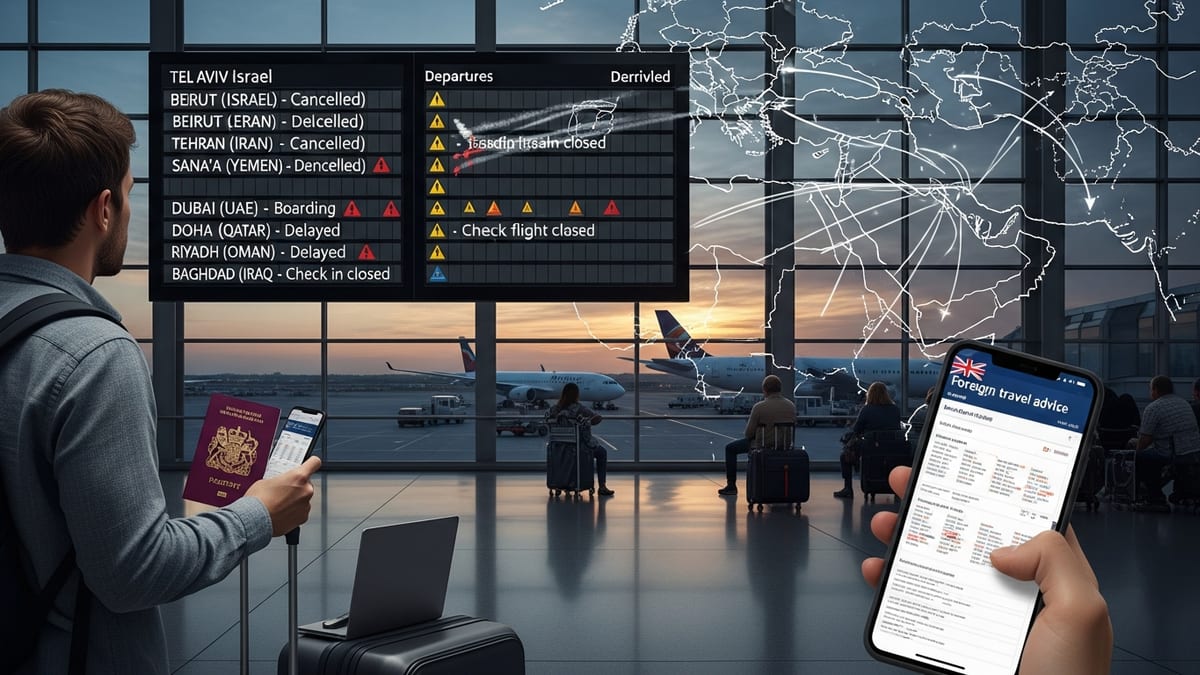
What happened and where disruption was concentrated
NATS posted that the incident occurred early Monday morning at its Prestwick centre, a major facility supporting air traffic services for Scotland and surrounding regions. Reports indicated the issue was resolved, but the knock-on impact continued as airlines and airports worked through displaced schedules.
Published coverage described the disruption as most noticeable for operations into and out of Scotland, and for flights routed through northern UK airspace. Airports further south, including many serving London and the South East, appeared broadly less affected, though passengers on northbound flights still reported delays as traffic management measures rippled across the network.
The latest disruption arrives only weeks into the autumn travel period, when schedules can already be strained by tighter daylight windows, weather variability, and aircraft and crew rotations that are less forgiving after a single day’s disruption.
Why a localized issue can delay flights nationwide
Even when a technical problem is limited to one centre, aviation systems are tightly interconnected. When controllers reduce the volume of aircraft entering a portion of airspace, the effect can cascade: departures are held at origin airports, inbound arrivals are sequenced further apart, and aircraft may be rerouted to avoid bottlenecks.
That kind of flow management can translate into a familiar passenger experience: a flight that looks “on time” at check-in, only to be held at the gate, pushed back late, or receive a revised arrival slot while taxiing. Once those delays propagate, airlines often face secondary impacts such as crew duty-time limits and aircraft that do not arrive in time for their next scheduled leg.
For travelers, the practical takeaway is that disruption can show up far from the original problem area. A flight departing from England to Scotland may be delayed because the destination or en route airspace is constrained, and aircraft operating earlier sectors can arrive late and disrupt later rotations across the day.
Context: a second NATS incident within weeks
Monday’s delays followed a recent, separate NATS event earlier this month involving the UK’s flight planning or flight processing systems, which resulted in widespread disruption across multiple airports. In the days after that event, NATS published a preliminary report outlining how the earlier incident unfolded and describing planned actions to improve resilience.
The UK Civil Aviation Authority (CAA) has also published consumer-facing information in response to the earlier disruption, including guidance on passenger rights and the approach to compensation and assistance when flights are delayed or cancelled due to air traffic control-related events.
With two notable incidents being widely reported within a short timeframe, the sequence has sharpened attention on operational resilience across the UK aviation system, including the ability to recover quickly when an air traffic management issue triggers large-scale knock-on delays.
What travelers should do today and how to protect connections
Passengers traveling to, from, or within the UK on Monday are likely to see the most accurate information via airline apps and airport departure boards, which update as new departure slots are issued and aircraft are repositioned. Published coverage has consistently urged travelers to check flight status before setting out for the airport, particularly for short-haul services that rely heavily on tight turnarounds.
For travelers with connections, the risk tends to rise when the first leg is short and scheduled tightly, especially when the itinerary relies on a single aircraft completing multiple sectors in one day. Where possible, travelers may want to confirm rebooking options in advance and keep an eye on alternative same-day flights, rail options for domestic legs, or later departures that might operate once the network stabilizes.
Passengers who are already at the airport may experience gate holds, late boarding, or last-minute stand changes as airlines juggle aircraft and crew positioning. If a flight is cancelled, many airlines can rebook automatically through their apps, but travelers should also monitor email and SMS updates in case re-accommodation is routed through a partner carrier.
Passenger rights: compensation versus care during disruption
In the UK and on many flights to and from the UK, passenger rights frameworks typically distinguish between compensation for delays and the airline’s duty of care. Published guidance from regulators and travel industry coverage around recent NATS-related disruption has highlighted that air traffic control technical failures are often treated as outside an airline’s control for standard compensation purposes, but that airlines can still be responsible for providing assistance.
That assistance can include rebooking or refunds depending on the circumstances, along with meals or refreshments and, where an overnight stay becomes necessary, hotel accommodation and transport to it. Practical availability can vary widely in a large disruption, especially when many flights are affected at once, so travelers are often advised to keep receipts and follow airline instructions on what will be reimbursed.
As Monday’s operations continue, the speed of recovery is expected to depend on how quickly aircraft and crews can be returned to their planned rotations, and on whether weather or additional airspace constraints complicate the effort to clear the backlog.