


More news on this day
Hundreds of passengers have been left stranded across Indonesia on Saturday as widespread disruption involving at least 276 delayed flights and 26 cancellations hit services operated by Batik Air, Citilink, Lion Air and several other domestic carriers on key routes linking Jakarta, Surabaya and Makassar.
Get the latest news straight to your inbox!
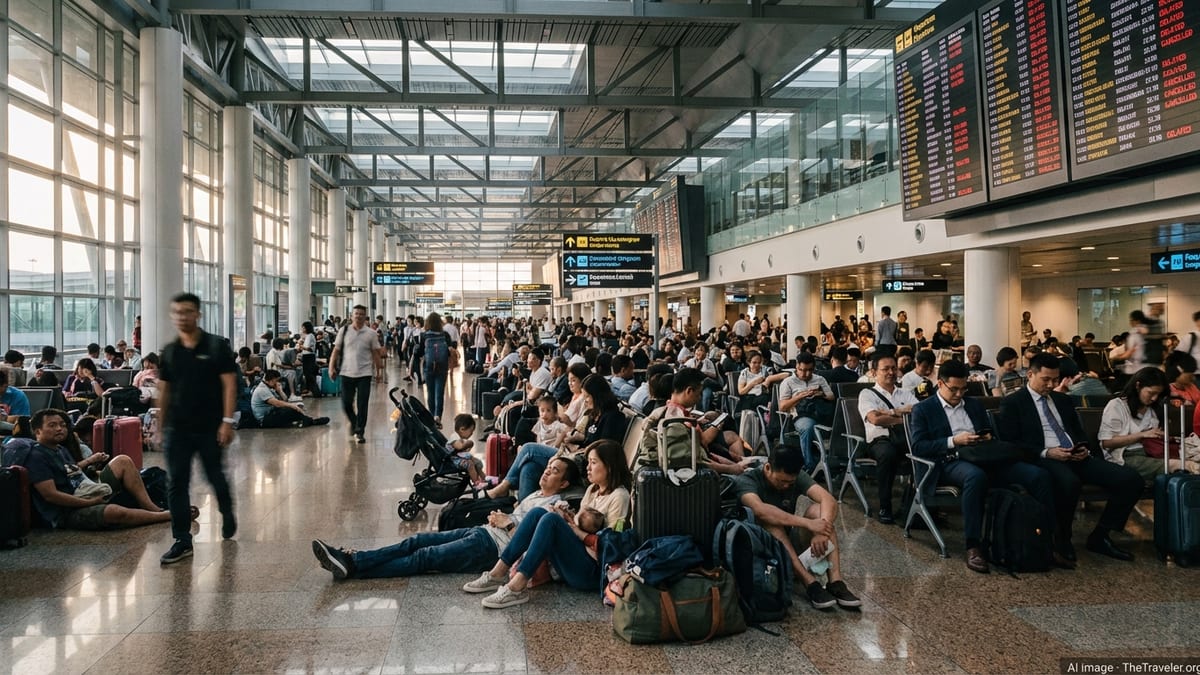
Major Hubs Grapple With Wave of Disruptions
The latest disruption has focused on Indonesia’s busiest aviation corridors, with Jakarta’s Soekarno Hatta and Halim Perdanakusuma airports, Surabaya’s Juanda International Airport and Makassar’s Sultan Hasanuddin International Airport all reporting elevated levels of delays and cancellations. Publicly available airport and tracking data for Saturday show an unusual build-up of late departures and extended ground times affecting multiple operators on the Jakarta to Surabaya and Jakarta to Makassar routes, as well as services between Surabaya and Makassar.
Flights operated by Batik Air, Citilink and Lion Air, along with other Indonesian low cost and hybrid carriers, appear to be most heavily impacted. Monitoring of domestic flight schedules indicates departure times pushed back well beyond original slots, with knock-on effects on later rotations as aircraft and crew struggle to return to position. Several services have been removed from boards entirely, contributing to the tally of 26 cancellations reported across the three cities.
Indonesia’s domestic network is among the busiest in Southeast Asia, and any disturbance in the Jakarta, Surabaya and Makassar triangle can ripple through the country’s broader schedule. The scale of today’s disruption, with more than 270 delays logged, suggests a combination of operational strain and congestion along the main eastbound corridors, which routinely handle high traffic density.
Passengers Face Long Queues, Rebookings and Missed Connections
For travellers caught in the disruption, the immediate effects are long waits at departure gates and uncertainty over onward journeys. Social media posts and user reports on travel forums describe crowded terminals in Jakarta and Surabaya, with passengers seeking clarification on revised departure times, rebooking options and compensation rules. Some domestic travellers also report concerns about missing separately booked onward flights from major hubs later in the day.
On key routes such as Jakarta to Surabaya and Jakarta to Makassar, where services are typically frequent throughout the day, delays of one to several hours can quickly erode the buffer that many travellers build into their itineraries. With multiple carriers operating similar timings, a problem in one part of the system can make it difficult to find spare seats on alternative departures, particularly on weekend travel days when loads are high.
Families returning from holidays, business travellers with fixed meetings and international visitors connecting to regional flights all appear to be among those affected. Travel community discussions in recent months have already highlighted a perception of increasing schedule volatility among some Indonesian carriers, and today’s events are likely to intensify calls from passengers for clearer communication and more robust contingency planning.
Operational Strain on Indonesian Carriers Under Scrutiny
The disruption comes at a time when the operational performance of several Indonesian airlines is already under close scrutiny from travellers. Published analysis of on time performance over the past year has drawn attention to recurring issues at low cost and hybrid operators, many of which serve dense domestic routes that leave little margin for recovery when problems arise.
Publicly available coverage on recent Indonesian aviation trends points to a mix of contributing factors, including tight turnaround schedules, congestion on popular air corridors linking Jakarta to eastern Indonesia, and the challenge of matching aircraft availability to rising post pandemic demand. Industry commentary has also noted that network structures built around a few dominant hubs can make carriers vulnerable to cascading disruption if a single airport experiences weather, technical or staffing constraints.
Within that context, today’s 276 delays and 26 cancellations affecting Batik Air, Citilink, Lion Air and other airlines appear to fit a broader pattern of operational stress. While each carrier publishes its own performance statistics, independent tracking platforms show that even modest schedule slippages early in the day can quickly expand into widespread lateness when aircraft are scheduled to operate multiple consecutive sectors between the same core cities.
Jakarta, Surabaya and Makassar Corridors Highlight Systemic Vulnerabilities
The concentration of today’s disruption along the Jakarta, Surabaya and Makassar axes underscores the importance of these routes to Indonesia’s broader transport system. Jakarta serves as the country’s primary aviation hub, while Surabaya and Makassar act as key gateways to eastern Java and eastern Indonesia respectively. Domestic point to point and connecting itineraries often rely on smooth flows through these three cities.
Airport traffic data show that Juanda International Airport in Surabaya and Sultan Hasanuddin International Airport in Makassar handle significant volumes of flights from Batik Air, Citilink and Lion Air, in addition to other local operators. Any widespread delay pattern involving these carriers therefore has the potential to affect a large share of movements at both airports, and to disrupt links to secondary destinations that depend on timed connections through the main hubs.
Observers of Indonesia’s aviation sector note that infrastructure and airspace capacity have struggled at times to keep pace with demand on the busiest domestic routes. When combined with airlines’ efforts to maximise aircraft utilisation through tight scheduling, the environment can leave little resilience in the system when faced with operational challenges. The clustering of delays and cancellations today across three of the country’s busiest airports illustrates how rapidly those vulnerabilities can become visible to travellers.
Advice for Affected Travellers and Upcoming Passengers
For passengers already at the airport or due to travel later on Saturday, publicly available guidance from airlines and travel platforms generally recommends checking real time flight status frequently and allowing additional time at departure terminals. Travellers with separate onward tickets, particularly for international flights from Jakarta or Surabaya, may need to consider same day alternatives or rebooking options if their domestic sector is heavily delayed or cancelled.
Consumer advocates typically advise keeping all documentation related to delays and cancellations, including boarding passes and any written notices of schedule changes, to support later claims under airline policies. In Indonesia, compensation and care obligations vary by carrier and ticket type, meaning some passengers may be offered rebooking or limited amenities while others rely primarily on their travel insurance coverage.
With disruption affecting multiple carriers simultaneously across Jakarta, Surabaya and Makassar, analysts suggest that ripple effects could continue into the evening schedule and potentially into the next operating day. Travellers booked on affected routes in the coming 24 hours are being encouraged by travel information services to monitor updates closely, build in longer connection windows where possible and remain prepared for further adjustments as airlines work to restore normal operations.