


More news on this day
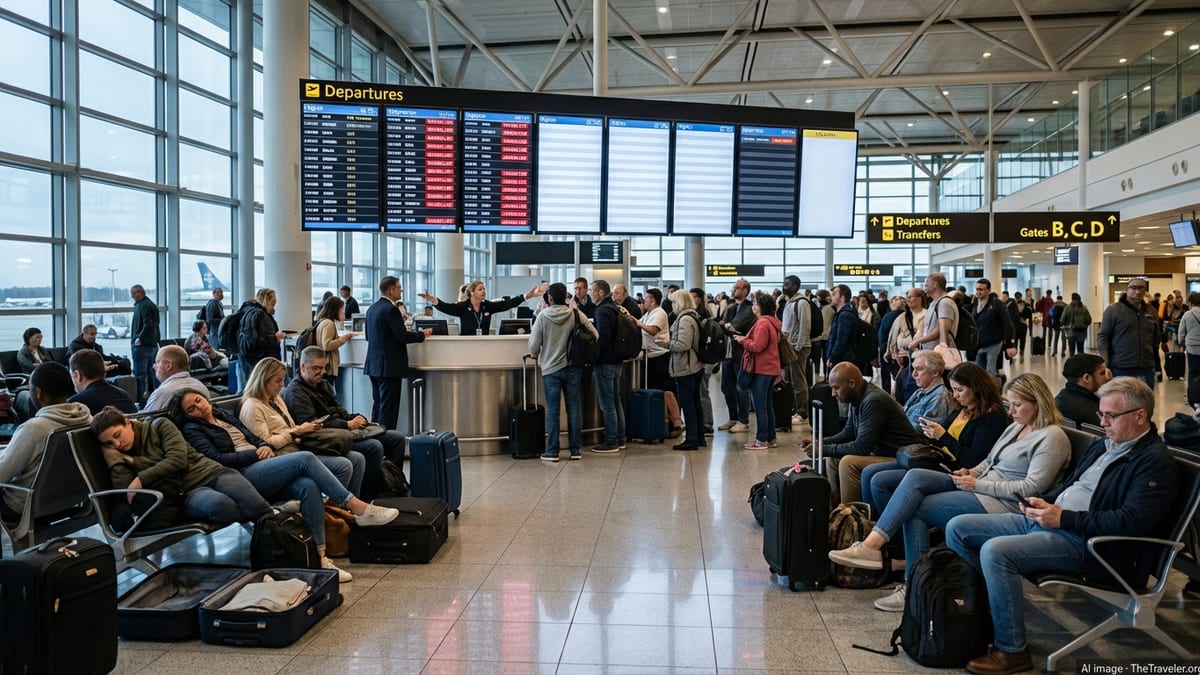
Flight operations across the Middle East lurched into a new phase of disruption in early September 2026, as fresh data showed 1,617 delays and 71 cancellations in a single day, with Istanbul and Cairo among the hubs under the greatest strain.
Get the latest news straight to your inbox!
Single-Day Surge Highlights Structural Fragility
Publicly available disruption trackers and travel-industry coverage indicate that on 3 September 2026, Middle East airports collectively recorded 1,617 delayed flights and 71 cancellations, with Istanbul and Cairo ranking alongside Dubai and key Saudi gateways as the most affected hubs. Reports describe the numbers as a sharp escalation in an already fragile operating environment, where even modest disruptions now cascade rapidly through dense connection banks.
Breakdowns compiled from real-time tracking feeds show that the disruption wave spanned at least six countries, including Turkey, Egypt, the United Arab Emirates, Saudi Arabia, Kuwait, and Iraq. Istanbul and Cairo appear repeatedly in the logs as core transit points where late-arriving aircraft and congested gates amplified knock-on delays for both regional and long-haul services. Travel media analyses note that the scale of disruption in a 24-hour window is more typical of a severe winter storm in North America or Europe than routine operations in early September.
Separate summaries published by aviation-focused outlets and travel sites align closely on the timing and scale of the event, emphasizing that the 1,617-delay figure reflects verified flights in active schedules rather than projections. Although minor discrepancies appear between sources and airport boards, coverage stresses that the totals are large enough to signal a systemic shock, not a localised scheduling glitch.
Istanbul and Cairo Under Pressure as Transit Gateways
The latest wave of delays has reinforced the role of Istanbul and Cairo as pivotal east–west and north–south connectors. Istanbul’s main airport functions as a bridge linking Europe to the Middle East, Central Asia, and Africa, while Cairo has emerged as a key transfer point between Africa, the Gulf, and southern Europe. When flight paths are forced around closed or restricted airspace, both hubs inherit additional overflight and connection traffic, raising the stakes when operations slow.
Live departure boards and tracking platforms around the disruption period show mounting schedule slippage from Istanbul’s airports, particularly on routes toward the eastern Mediterranean, the Caucasus, and Central Asia. Individual flight records around 5 and 6 September point to continuing knock-on delays, even as core infrastructure remains open and weather conditions at the field are largely within normal operating limits, suggesting that congestion and crew-rotation issues are primary drivers.
At Cairo International Airport, departure logs for early September similarly reflect a tightly packed schedule of regional and long-haul flights into Europe, the Gulf, and domestic Egyptian destinations. Weather data for Cairo on 5 and 6 September indicates generally favorable conditions, with only localized visibility changes, reinforcing the assessment that the September 3 disruption was driven less by storms at the hub itself and more by upstream airspace and rotation complications across the wider network.
Geopolitical Airspace Limits and Weather Combine
Analyses from aviation commentators and industry bodies link the 3 September disruption to a combination of geopolitical airspace restrictions and localized weather fronts elsewhere in the region. Long-standing closures and new limitations over parts of the Middle East have narrowed the corridors available to civil aviation, forcing airlines to route traffic through alternative paths over Turkey, Egypt, the Red Sea, and the Caucasus. These longer routings add minutes or even hours to individual flights, pushing aircraft and crews closer to their duty limits.
Economic and traffic assessments focusing on the Middle East note that since early 2026, repeated airspace shocks have steadily reduced the flexibility of carriers to absorb irregular operations. The Iran conflict and associated risk zones have been cited as among the most disruptive developments for global traffic since the pandemic, shrinking the number of direct, commercially viable paths between Europe and large parts of Asia and Africa. When those constrained routes intersect with busy hubs like Istanbul and Cairo, even routine holding patterns or small diversions can tip schedules into widespread delay.
Localized storms and dust events in parts of Saudi Arabia and surrounding states around the same period compounded these structural constraints. Coverage of the disruption describes temporary ground stops at some regional fields and capacity reductions on key approaches, reducing the flow of inbound traffic that large hubs depend on to keep connection waves synchronized.
Airlines Absorb Knock-On Delays and Cancellations
Carrier-level breakdowns compiled from tracking data and trade reporting show that both Turkish and Gulf-based airlines shouldered a significant share of the September 3 disruption, with Egypt’s national carrier facing some of the steepest proportional impacts. Turkish Airlines is reported to have recorded the highest absolute number of delayed flights among affected operators, reflecting its extensive hub-and-spoke network centered on Istanbul.
EgyptAir and other carriers operating through Cairo appear in the data with elevated delay percentages relative to their overall schedules, underlining how secondary hubs can suffer outsized impacts when they depend heavily on a small number of tightly timed connection waves. Budget and hybrid carriers across Turkey and the Gulf also experienced notable schedule slippage, particularly on medium-haul routes that intersect with conflict-adjacent airspace.
Industry commentary frames the cancellations as the inevitable result of duty-hour rules and resource constraints once a delay wave spreads across multiple banks. With aircraft and crews out of position, airlines curtailed some rotations entirely to preserve operational integrity on higher-priority long-haul and repatriation services, a strategy that provides stability for some travelers while stranding others.
Travelers Face Prolonged Uncertainty Across the Region
For passengers, the combined effect of airspace rerouting and hub congestion has translated into missed connections, overnight airport stays, and rapidly shifting rebooking options. Travel advisories and consumer press coverage stress that even flights that ultimately operate close to schedule can be subject to late gate changes and rolling departure-time adjustments as operations centers juggle constrained resources.
Recent strands of coverage about Middle East aviation point out that regional carriers and airports are now contending with a crisis increasingly described as structural rather than temporary. International economic assessments suggest the Middle East may be the only major global market expected to post collective airline losses in 2026, with persistent airspace restrictions and rising operating costs eroding margins. In that environment, large-scale delay events such as the one recorded on 3 September raise concerns about the resilience of the network as traffic continues to grow.
For now, publicly available tools such as real-time flight trackers, airport departure boards, and airline apps remain the primary sources for travelers attempting to navigate the uncertainty. Analysts advise that itineraries relying on tight connections through Istanbul, Cairo, Dubai, or major Saudi hubs may require additional buffer time and flexible planning while the regional aviation system continues to operate under unusual strain.
Middle East Aviation Disruption Alert: NomadLawyer
Travel And Tour World coverage of 1,617 delays and 71 cancellations