


More news on this day
Typhoon Noul has unleashed heavy rain and powerful winds across southern China and neighbouring Hong Kong, triggering widespread flight cancellations and delays that are rippling through major aviation hubs across Asia this weekend.
Get the latest news straight to your inbox!
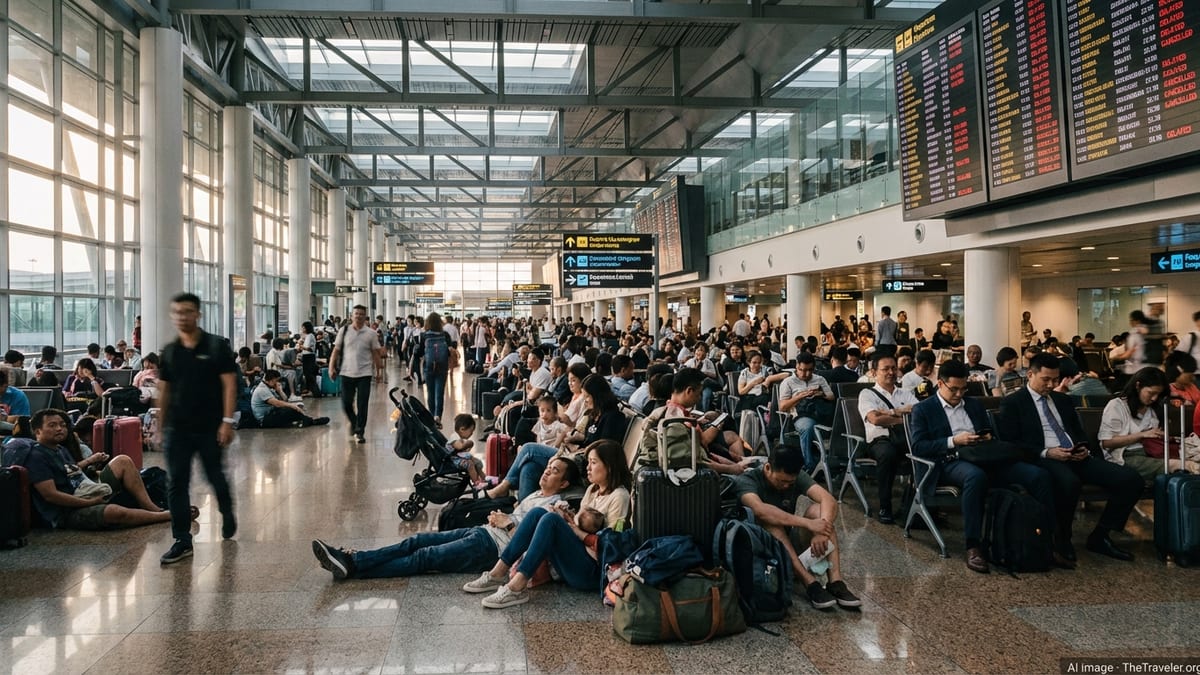
Storm Strikes Southern China and Hong Kong
Publicly available meteorological data shows that Typhoon Noul made landfall in Guangdong province in the early hours of Sunday, July 26, weakening slightly as it moved inland but continuing to produce intense rainfall and gale-force gusts. The system has been identified as the 12th typhoon in the Pacific this year and the third to affect China within a month, adding further strain to already weather-battered infrastructure in the region.
Reports from Hong Kong and coastal cities in Guangdong describe streets lashed by sideways rain, reduced visibility and strong crosswinds, conditions that are particularly disruptive for airport and airline operations. Aviation experts note that the combination of saturated runways, low cloud ceilings and shifting wind patterns significantly increases the likelihood of flight diversions, cancellations and extended ground delays.
While Noul has begun to weaken as it tracks inland, forecasters expect bands of heavy rain to linger over parts of southern China, prompting concerns about localized flooding and potential disruption to ground transport links serving major airports. Travellers are being advised to plan for extended journey times and possible last-minute schedule changes.
Hundreds of Flights Cancelled at Hong Kong International Airport
Hong Kong International Airport has emerged as one of the worst-affected aviation hubs. Flight information published by the airport operator for Saturday and Sunday indicates that more than 300 services were cancelled or heavily delayed as Noul’s strongest winds passed near the territory. These disruptions involve both regional and long-haul routes, affecting connections throughout Asia, Europe and North America.
According to published coverage, the most intense operational impact coincided with the hoisting of higher storm signals in Hong Kong, when crosswinds and wind shear made takeoffs and landings increasingly challenging. In response, many airlines opted to proactively cancel or consolidate services, a move widely seen as prioritising safety and minimizing the risk of airborne diversions.
As the storm centre moved away and local storm warnings were gradually lowered, airport operations began to pick up, but flight schedules remained heavily congested. Passengers arriving at Hong Kong International Airport on Sunday afternoon and evening continued to face lengthy queues at rebooking counters as airlines worked through a backlog of disrupted itineraries.
Ripple Effects Across Regional Hubs
Noul’s impact has not been confined to southern China. Flight-status data and airline statements indicate that cancellations and delays have spread across several key regional hubs as carriers adjusted their networks to cope with the storm. In Singapore, publicly accessible information from Changi Airport showed at least 20 flights between the city-state and southern Chinese destinations such as Hong Kong and Shenzhen cancelled over the weekend.
Singapore Airlines and its low-cost arm Scoot were among the carriers confirming disruptions on routes to Hong Kong and Shenzhen, with some services scrubbed or retimed to avoid the worst of the weather. Malaysia Airlines and other regional carriers also announced cancellations on services linking Kuala Lumpur with Hong Kong and southern mainland Chinese cities, reflecting the broader regional nature of the storm’s impact.
Further afield, knock-on delays have been reported on connecting flights to Europe, North America and Australia, as disrupted Asia-bound services failed to arrive on schedule. In some cases, passengers who were due to connect through Hong Kong or southern Chinese hubs have been rebooked onto alternative routings through cities less affected by the typhoon.
Travellers Face Stranded Nights and Complex Rebookings
The extensive cancellations have left many travellers stranded in transit hubs or at their point of departure. Media reports from Hong Kong and major Indian and Southeast Asian cities describe passengers being provided with hotel accommodation and meal vouchers while they wait for the weather to ease and new seats to become available.
Some travellers bound for Hong Kong from South and Southeast Asia have reported that their outbound flights were cancelled only hours before departure as airlines responded to evolving forecasts. Published accounts from Chennai, for example, describe passengers on a cancelled overnight service to Hong Kong being accommodated locally after their plans to continue on to onward destinations such as London, Tokyo, Melbourne and Chicago were disrupted.
The complexity of rebooking has been heightened by the fact that many weekend flights were already heavily subscribed at the start of the busy summer travel period. In several cases, passengers have been advised that the earliest alternative flights may be available only several days later, underscoring the scale of the operational disruption triggered by Noul.
Airlines Activate Waivers and Advise Checks Before Travel
In response to the fast-changing situation, multiple airlines operating in and out of Hong Kong, Shenzhen and other affected airports have introduced flexible travel policies. Publicly available notices from carriers across the region show a range of options, including free date changes, refunds or rerouting for passengers holding tickets over the peak typhoon period.
Airport operators and aviation regulators across Asia are also using their official channels to urge passengers to verify their flight status before leaving for the airport. Travel advisories emphasise that conditions remain fluid, and that additional cancellations or significant delays may be imposed at short notice if wind speeds or visibility deteriorate again, or if ground operations are slowed by persistent heavy rain.
For travellers currently planning trips through Hong Kong, southern China and nearby hubs over the coming days, industry guidance suggests allowing extra connection time, remaining flexible with routing options and monitoring airline and airport announcements closely. As Typhoon Noul continues to weaken inland, the aviation sector is expected to gradually work through the backlog of disrupted services, but full schedule normalisation may take several days.