


More news on this day
The United States has issued a renewed worldwide travel caution, highlighting elevated security risks for its citizens abroad amid heightened tensions and armed conflict across the Middle East, and urging travelers to reconsider or delay nonessential trips to several countries in the region.
Get the latest news straight to your inbox!
Global caution tied to regional conflict
According to publicly available notices on official travel advisory portals, the worldwide caution reiterates that U.S. citizens overseas should exercise increased vigilance, particularly in areas where military confrontation or proxy activity involving Iran and its regional partners has intensified. The guidance references the potential for attacks or hostile actions targeting locations associated with the United States or crowded public venues frequented by foreign visitors.
Published material on recent travel advisories describes a security environment shaped by direct hostilities between the United States and Iran, missile and drone activity, and broader instability tied to ongoing conflicts in Israel, Gaza, Lebanon and neighboring states. These developments have raised concerns about spillover incidents across air, land and maritime corridors used by international travelers.
The worldwide caution does not prohibit travel in general but advises individuals to carefully review the specific advisory level and risk indicators for each destination before departure. Travelers are encouraged to have flexible itineraries, contingency plans and updated contact information for local embassies or consulates in case conditions deteriorate.
Analysts note that broad global cautions have been issued at several moments of acute geopolitical strain in recent years, often coinciding with major attacks, escalations or military operations in the Middle East that carry a risk of retaliation outside immediate conflict zones.
High-risk Middle East destinations highlighted
Recent country-specific advisories classify several Middle Eastern states as among the highest risk destinations for U.S. citizens, citing armed conflict, terrorism, kidnapping and limited consular access. Publicly available information shows that Iran, Iraq, Lebanon, Syria, Yemen and Gaza are listed at a “do not travel” level, reflecting severe and unpredictable security threats on the ground.
Other countries, including Saudi Arabia, Kuwait and the United Arab Emirates, are subject to strengthened warnings that urge travelers to reconsider nonessential trips due to the threat of missile and drone attacks, potential disruptions to civilian aviation and the risk of sudden escalations. In some cases, non-emergency U.S. government personnel and their family members have been ordered to depart, underscoring the seriousness of the risk assessments used to shape public advisories.
Coverage of the most recent updates indicates that tensions linked to confrontation with Iran have prompted particular scrutiny of Gulf airspace and critical infrastructure. Advisories point to the possibility that commercial airports, energy facilities and transport hubs could become targets or be affected by nearby military activity, even if not directly struck.
In parallel, longstanding concerns about terrorism, sectarian violence and militia activity continue to influence travel guidance for countries such as Iraq and Syria, where security conditions can shift rapidly and foreign nationals may have limited options for safe movement or evacuation.
Impact on flights, routes and travel planning
The global caution and related regional advisories are also reverberating across the aviation and tourism sectors. Public documents referencing Notices to Air Missions from aviation authorities describe recommendations for U.S. carriers and commercial operators to exercise caution when flying over parts of the Middle East, particularly where there is a risk from long-range missiles or anti-aircraft systems.
Reports from airlines and travel industry observers indicate that some carriers have adjusted flight paths to avoid specific airspace or have temporarily reduced frequencies on routes that transit higher-risk corridors. In previous escalations, rerouting around affected areas has added time and cost to long-haul journeys between North America, Europe, Africa and Asia; similar patterns are now re-emerging as tensions rise again.
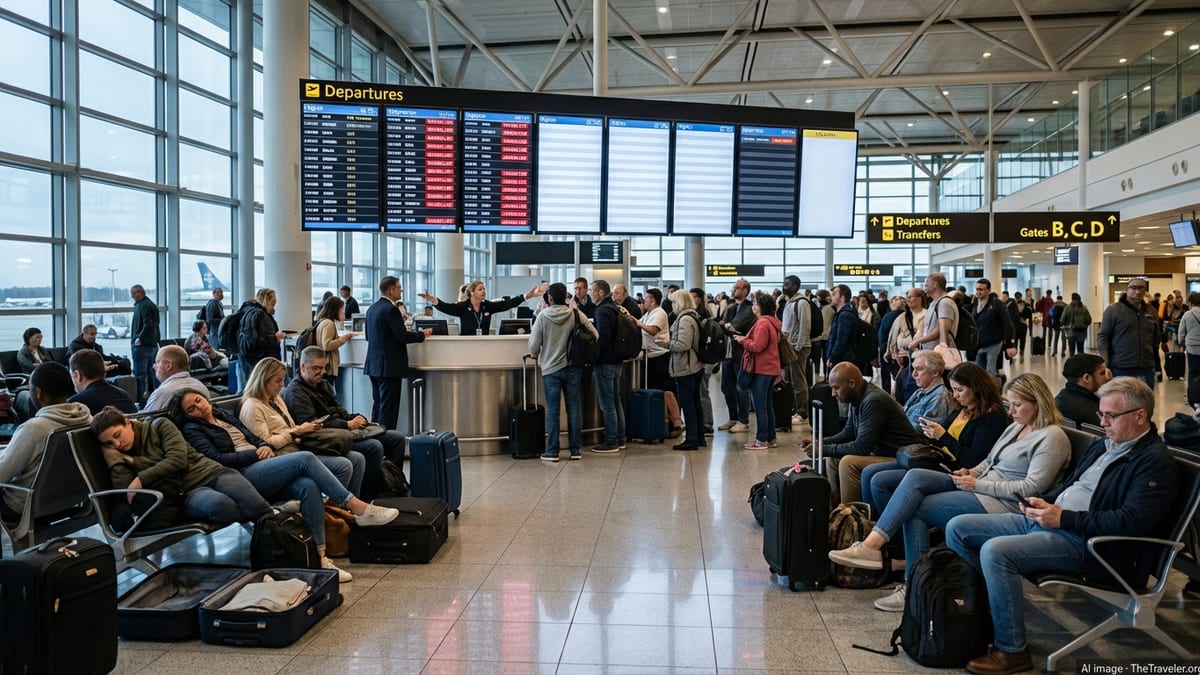
Travel professionals note that even when airports remain open, rapidly changing security conditions can lead to last-minute cancellations, diversions or restrictions on ground movements around terminals. Travelers are being urged in open-source guidance to monitor their flight status closely, maintain flexible bookings and be prepared for extended layovers or unexpected overnight stays if connections are disrupted.
Insurance implications are also in focus. Some underwriters classify war or conflict-related disruptions as exclusions, prompting travel advisers to suggest that customers review policy language carefully and consider specialist coverage when planning itineraries that involve or overfly conflict-affected regions.
Advice for travelers evaluating Middle East trips
In light of the global caution, publicly available travel-safety guidance emphasizes thorough preparation for anyone considering a journey to or through the Middle East. Travelers are encouraged to review the latest country advisories, map out areas with heightened risk indicators and assess whether their plans can be postponed, shortened or rerouted to minimize exposure to volatile zones.
Safety recommendations include maintaining a low profile, avoiding demonstrations and political gatherings, and staying alert in locations that may attract large crowds such as transport hubs, shopping centers and tourist attractions. Travelers are also encouraged to keep family or trusted contacts informed of their movements and to have backup communication methods in case cellular or internet networks are disrupted.
Public information campaigns stress the importance of registering itineraries with available citizen-tracking or crisis-notification programs, which can facilitate outreach during emergencies. Basic contingency measures, such as carrying extra medication, having digital copies of key documents and identifying multiple exit routes from a city or country, are frequently highlighted as low-cost steps that can significantly improve resilience.
Special attention is recommended for travelers who may have business operations, family ties or long-term stays in affected countries, where rapid evacuation could prove complex. For these groups, the worldwide caution serves as a prompt to reassess risk tolerance, review security arrangements and ensure that legal and financial affairs can be managed remotely if necessary.
Broader implications for global travel patterns
While the worldwide caution is focused on security, it also carries broader implications for the recovery and future trajectory of international tourism. The Middle East has been one of the fastest-growing regions for aviation and hospitality investment, with hub airports and resort destinations positioning themselves as key connectors between continents.
Renewed conflict and elevated advisory levels may dampen demand for leisure and business travel to some destinations in the short term, particularly among risk-averse travelers or corporate clients with strict duty-of-care policies. Travel analysts point out, however, that demand often rebounds once tensions ease, provided infrastructure remains intact and confidence in safety measures is restored.
For now, industry observers expect greater polarization within the region, with destinations perceived as more stable continuing to attract visitors while those associated with active conflict experience sharp declines. The global caution reinforces this divergence by pushing travelers to scrutinize individual countries rather than view the Middle East as a single, homogenous market.
As the situation evolves, travelers, airlines and tourism boards are likely to keep a close watch on advisory updates, aviation notices and regional diplomatic developments. The worldwide caution, while not unprecedented, signals a phase in which security considerations may again become a central factor in shaping global travel decisions.