


More news on this day
Hundreds of air travelers have been left stranded across the Middle East and Europe after a new wave of operational disruption led to 17 flight cancellations and 195 delays, snarling services on Flydubai, Saudia, Etihad, IndiGo and other carriers on routes linking Dubai, Jeddah, Manchester, Barcelona and several regional hubs.
Get the latest news straight to your inbox!
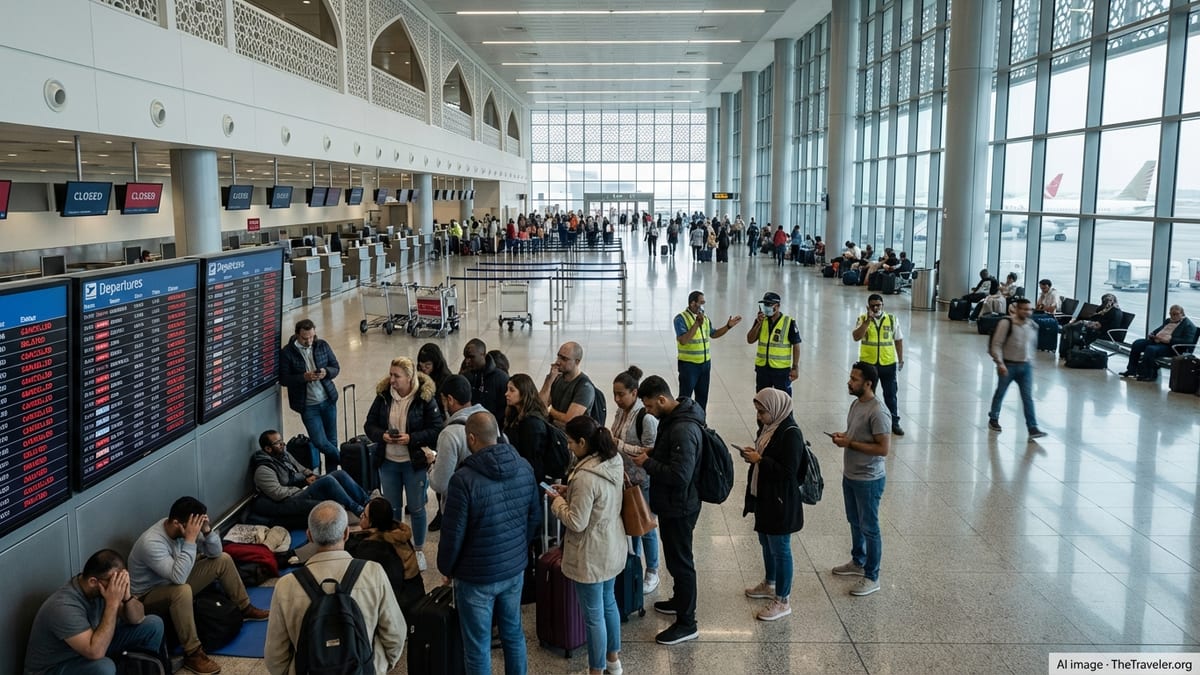
Fresh Wave of Disruption Hits Gulf and International Routes
According to recent aviation data and published industry coverage, airports in the United Arab Emirates, Saudi Arabia, Oman and neighboring states have recorded a concentrated spike in cancellations and delays since April 12, 2026. The latest figures indicate at least 17 flights cancelled and 195 delayed across key Middle Eastern gateways, with ripple effects extending into Europe and South Asia.
Dubai International and Dubai World Central remain among the most heavily affected hubs, with Flydubai and other regional airlines cutting or postponing services as they adjust to constrained airspace and congested corridors. Publicly available operational updates show carriers trimming frequencies, consolidating departures and warning travelers that day-of-travel changes remain likely.
In Saudi Arabia, disruptions at Jeddah’s King Abdulaziz International Airport have compounded the pressure. Reports indicate several cancellations and dozens of delays at the Red Sea hub, which serves as a primary entry point for religious travelers heading to Mecca. Similar patterns have been recorded in Oman, where Muscat’s connectivity into the wider Gulf and to India has been repeatedly interrupted over recent weeks.
The knock-on impact has stretched well beyond the region, with delayed and diverted aircraft affecting rotations into major European airports. Flights touching Manchester, Barcelona and other popular destinations have experienced extended block times, re-routings around sensitive airspace and late schedule changes that leave passengers with limited rebooking options.
Major Carriers Struggle to Stabilize Schedules
Among the airlines most exposed to the latest wave of disruption are Flydubai, Saudia, Etihad Airways and IndiGo, along with several smaller regional operators. Schedule data and airline notices indicate that these carriers have been forced to repeatedly revise timetables, cancel selected rotations and operate irregular frequencies on historically stable trunk routes.
Flydubai, which relies heavily on Dubai as a transfer and point-to-point hub, has faced increasing complexity in maintaining short- and medium-haul services to cities across the Middle East, South Asia and Eastern Europe. Publicly available updates describe a dynamic schedule in which some departures are brought forward, others pushed back and a minority scrapped outright when crew, aircraft or airspace constraints tighten.
Saudi flag carrier Saudia has also been affected, particularly on services linking Jeddah and other Saudi cities with the UAE and wider region. Published reports show that the airline has adjusted operations on routes traditionally carrying high volumes of religious and labor traffic, leaving some passengers with prolonged waits in transit lounges and overnight stays near airports.
Etihad Airways in Abu Dhabi and Indian low-cost carrier IndiGo, which feeds large volumes of travelers into and through Gulf hubs, are contending with similar complications. IndiGo’s extensive network into the Arabian Peninsula means that any disruption at Gulf airports or on shared air corridors rapidly cascades into its domestic and regional schedules, affecting onward connections and turnaround times.
Airspace Constraints and Security Tensions Drive Delays
The immediate wave of cancellations and delays is unfolding against a backdrop of lingering regional security tensions and partial airspace closures that have reshaped how airlines plan and operate flights across the Gulf and surrounding areas. Aviation advisories issued in recent weeks describe a patchwork of open and restricted corridors, obliging carriers to reroute or stack flights through a limited number of viable paths.
Published analyses of air-traffic flows show Saudi airspace acting as a primary east–west bridge since other routes were curtailed, placing heavy strain on air traffic control capacity and contributing to holding patterns and longer flight times. At the same time, some countries in the region have only recently begun reopening their airspace, with traffic returning in phases rather than in a single, rapid rebound.
Industry reports also highlight the operational complexity of maintaining safe distances from conflict-adjacent zones while accommodating sustained demand for travel between Europe, the Middle East and Asia. Rerouted flights frequently require additional fuel, updated crew duty rosters and revised departure slots, each of which can add minutes or hours to passengers’ journeys or trigger same-day schedule changes.
This environment has left airlines balancing safety considerations with commercial pressures and passenger expectations. Even as some carriers cautiously restore suspended routes, the system remains vulnerable to new advisories or security alerts that can quickly force further cancellations and extended delays.
Passengers Face Missed Connections and Long Waits
For travelers caught in the latest disruption, the most visible effects are missed connections, unplanned stopovers and uncertainty at departure gates. Accounts gathered from airport operations updates and traveler forums describe crowds building around information desks in Dubai and Jeddah as passengers seek clarity on revised departure times and alternative itineraries.
Transit passengers connecting between Europe and South Asia through Gulf hubs appear particularly exposed. When an inbound flight from a city such as Manchester or Barcelona arrives late due to airspace constraints, tight connection windows can vanish, leaving travelers rebooked on scarce later services or shifted onto partner airlines where seats are available.
Families, workers on fixed schedules and religious travelers heading to or from Saudi Arabia have all been affected by the irregular operations. In some instances, passengers have reported being moved between airports within the same metropolitan area, such as Dubai International and Dubai World Central, to accommodate retimed departures or replacement flights.
Airport facilities have remained open and functioning, but the volume of disrupted travelers has strained seating, customer service counters and ground transportation at peak periods. Travelers without flexible tickets or comprehensive travel insurance face the added challenge of managing the cost of meals, accommodation and onward arrangements while they wait for seats to open.
Outlook: Gradual Recovery but Ongoing Volatility
Aviation analysts following the region suggest that while the worst of the initial shock to Middle East air networks has passed, a full return to predictable schedules may still be weeks or months away. Recent updates from Gulf-based airlines and airports indicate a cautious increase in frequencies, yet emphasize that operations remain subject to rapid change.
Carriers are gradually restoring suspended city pairs and adding capacity on high-demand routes, but many are also extending flexible rebooking and refund policies, reflecting the likelihood of further disruption. Publicly available guidance consistently urges passengers not to travel to airports without confirmed departure times, and to monitor flight status channels closely on the day of travel.
Given the continued pressure on critical east–west corridors, additional delays are expected even on flights that operate more or less on schedule. Longer routings, congested air traffic sectors and stretched ground resources can all contribute to modest but cumulative slowdowns across the network.
For now, travelers planning to transit the Middle East or fly with affected carriers such as Flydubai, Saudia, Etihad and IndiGo are being advised, through widely shared travel updates and consumer guidance, to build generous buffers into their itineraries, keep contingency funds available and be prepared for evolving conditions at short notice.