


More news on this day
Air travel across the Middle East is facing renewed disruption as at least 20 flights have been cancelled and around 185 delayed in fresh operational turbulence affecting major hubs in Qatar, the United Arab Emirates, Saudi Arabia and Iraq, with services on Qatar Airways, FlyDubai, Saudia and several other regional carriers impacted at Doha, Dubai, Riyadh and Erbil.
Get the latest news straight to your inbox!
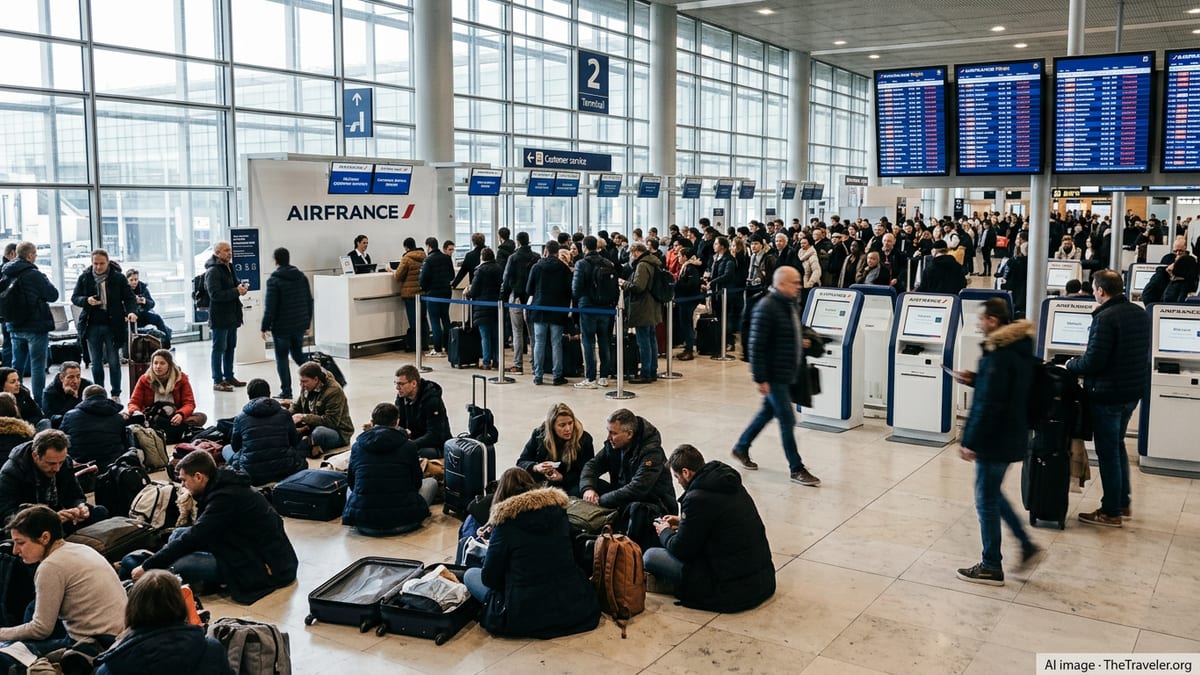
Fresh Wave of Cancellations Across Gulf and Iraqi Hubs
Recent operational data and regional aviation monitoring indicate that a new round of schedule disruption has swept through key Middle Eastern airports, with at least 20 services cancelled and roughly 185 delayed across Doha, Dubai, Riyadh and Erbil. The figures add to a pattern of instability in regional air travel in 2026, following repeated periods of airspace restrictions, capacity constraints and rolling timetable changes.
In Qatar, publicly available information shows that Doha’s Hamad International Airport continues to function as a primary transfer hub, but remains vulnerable to short-notice schedule adjustments. Travel alerts and independent tracking platforms highlight intermittent cancellations and late departures on selected Qatar Airways services, particularly on routes intersecting sensitive corridors or already operating at reduced frequencies.
In the United Arab Emirates, Dubai International Airport, one of the world’s busiest international gateways, has again emerged as a focal point for delays. Aviation-focused outlets report that Dubai has repeatedly shouldered a high share of regional disruptions this spring, with FlyDubai and other carriers adjusting flights as network pressures build and routing options narrow.
Riyadh’s King Khalid International Airport and Erbil International Airport are also registering knock-on effects. Industry coverage notes that Iraq’s air connectivity, including Erbil, has been repeatedly reconfigured in recent months as airlines recalibrate schedules into and out of the country. Saudi gateways, meanwhile, have had to absorb additional traffic from rerouted international services, contributing to congestion and extended ground times.
Qatar Airways, FlyDubai, Saudia and Others Recalibrate Networks
The latest wave of cancellations and delays is hitting a mix of full-service and low-cost operators. Qatar Airways, FlyDubai, Saudia and other regional airlines are all contending with a fluid operating environment in which network plans published only weeks earlier are being revised in response to evolving conditions.
Qatar Airways has been attempting to rebuild and expand its 2026 schedule, including the resumption and upgauging of services around the Gulf and to Iraq. At the same time, travel alerts and third-party tracking show that selected departures from Doha remain subject to late changes, including isolated cancellations on routes into higher-risk or capacity-constrained airspace. This has increased uncertainty for passengers using Doha as a transfer point between Europe, Asia and Africa.
Reports focused on the UAE suggest that FlyDubai has been among the most exposed carriers at Dubai International during recent disruption cycles. Previous operational snapshots earlier this year documented dozens of FlyDubai cancellations and delays in a single day across the carrier’s regional network, and the newest update indicates that schedule volatility has not fully subsided, even as airlines try to stabilize their timetables for the peak summer season.
In Saudi Arabia, Saudia continues to manage a high-density domestic and regional schedule centered on Riyadh and Jeddah. Aviation analysts note that when airspace restrictions or reroutings occur elsewhere in the region, Saudi hubs often experience secondary effects in the form of congested airways, stretched ground handling resources and tighter turnaround windows, all of which can contribute to additional delays and occasional cancellations.
Airspace Risks, Rerouting and Operational Constraints
Behind the latest figures on cancellations and delays lies a complex mix of airspace and operational challenges. Travel risk advisories and flight-tracking analyses emphasize that multiple Middle Eastern flight information regions remain under heightened monitoring, particularly in and around Iran and Iraq. To maintain safety margins, many long-haul flights are being rerouted via alternative corridors over Saudi Arabia, Egypt or other neighboring states, adding time in the air and compressing already tight ground handling slots.
Published guidance for travelers heading to Dubai and Doha notes that these reroutings can lengthen flight times by 30 to 60 minutes on certain intercontinental services. While the diversions keep aircraft clear of conflict-adjacent airspace, they also introduce further pressure on airline scheduling and airport capacity, particularly at hubs where runway and gate utilization are already near peak.
The ripple effect is felt especially acutely at connecting hubs like Doha and Dubai, where a late inbound aircraft can trigger missed connections and force airlines to rebook large numbers of passengers. In that context, the cancellation of at least 20 flights and delay of about 185 more across Doha, Dubai, Riyadh and Erbil represents not only a logistical challenge for carriers but also a significant disruption to itineraries that may span multiple continents.
Operational constraints are compounded by lingering route suspensions by some foreign carriers into the Gulf. Recent regional reporting shows that several international airlines remain cautious about restoring full schedules to Dubai and other Middle Eastern destinations, prolonging an environment in which available capacity is uneven and last-minute cancellations are more likely when new issues emerge.
Passengers Confront Missed Connections and Limited Alternatives
For travelers, the practical impact of the current disruption is most visible in missed connections, extended layovers and, in some cases, unexpected overnight stays. Accounts compiled in regional media and aviation forums describe passengers facing multi-hour delays on departures from Doha, Dubai and Riyadh, with onward flights no longer aligning with originally booked itineraries.
In Erbil and other Iraqi gateways, where flight options are thinner than at the major Gulf hubs, the cancellation of even a small number of services can leave travelers with few immediate alternatives, especially on long-haul routes that rely on a single daily connection through Doha, Dubai or Riyadh. Travelers may be forced to wait for the next operating service or accept rerouting through third-country hubs, often extending total journey times considerably.
Publicly available guidance from airlines and airports continues to stress that passengers should monitor their bookings closely, use official apps and websites to track live departure information, and be prepared for schedule changes up to the day of travel. Travel specialists also recommend allowing longer minimum connection times when planning itineraries through the region, given the increased risk of delay on inbound sectors.
Consumer advocates point out that, depending on the route and governing regulations, travelers affected by cancellations or severe delays may be entitled to rebooking, refunds or other remedies. However, the cross-border nature of Middle Eastern hubs, combined with varying legal frameworks, can make the process of claiming compensation complex, especially where disruptions are linked to security or airspace restrictions.
Outlook: Summer Peak Approaches Amid Persistent Volatility
The latest tally of more than 200 disrupted flights across Doha, Dubai, Riyadh and Erbil comes just as airlines in the Middle East prepare for the summer peak travel season, traditionally one of the busiest periods for regional and long-haul demand. Network announcements from carriers such as Qatar Airways show intent to grow capacity and restore suspended routes, yet the operational reality on the ground remains fluid.
Aviation analysts note that if current airspace risks and routing constraints persist, airlines may enter the peak season with little spare capacity to absorb further shocks. Even relatively small clusters of cancellations and delays, such as the 20 flights cancelled and 185 delayed in the latest update, can compound quickly when aircraft and crews are heavily utilized.
For now, publicly available information suggests that Middle Eastern airports remain open and broadly functional, but with a higher-than-normal likelihood of disruption. Travelers planning trips through Doha, Dubai, Riyadh and Erbil in the weeks ahead are being urged by travel advisors and regional coverage to build flexibility into their plans, monitor their flights regularly and consider contingency options in case of sudden schedule changes.
As airlines, regulators and airports continue to adjust to a volatile operating environment, the region’s role as a global aviation crossroads is again being tested. How quickly carriers can stabilize their networks, and whether airspace conditions improve, will determine whether this latest wave of cancellations and delays is a brief setback or a sign of a more prolonged period of uncertainty for Middle East air travel.