


Nice Côte d’Azur Airport is one of the easiest gateways in Europe for reaching the city centre, thanks to tram Line 2 that runs directly between the terminals, downtown Nice, and the Port Lympia waterfront. Used correctly, it is fast, affordable and straightforward. Used carelessly, visitors can overpay for special airport tickets, get off at the wrong stop, or miss late-night services. This guide walks you step by step through Line 2 from the airport to the city, using real-world examples so you know exactly what to expect on arrival.
Get the latest updates straight to your inbox!
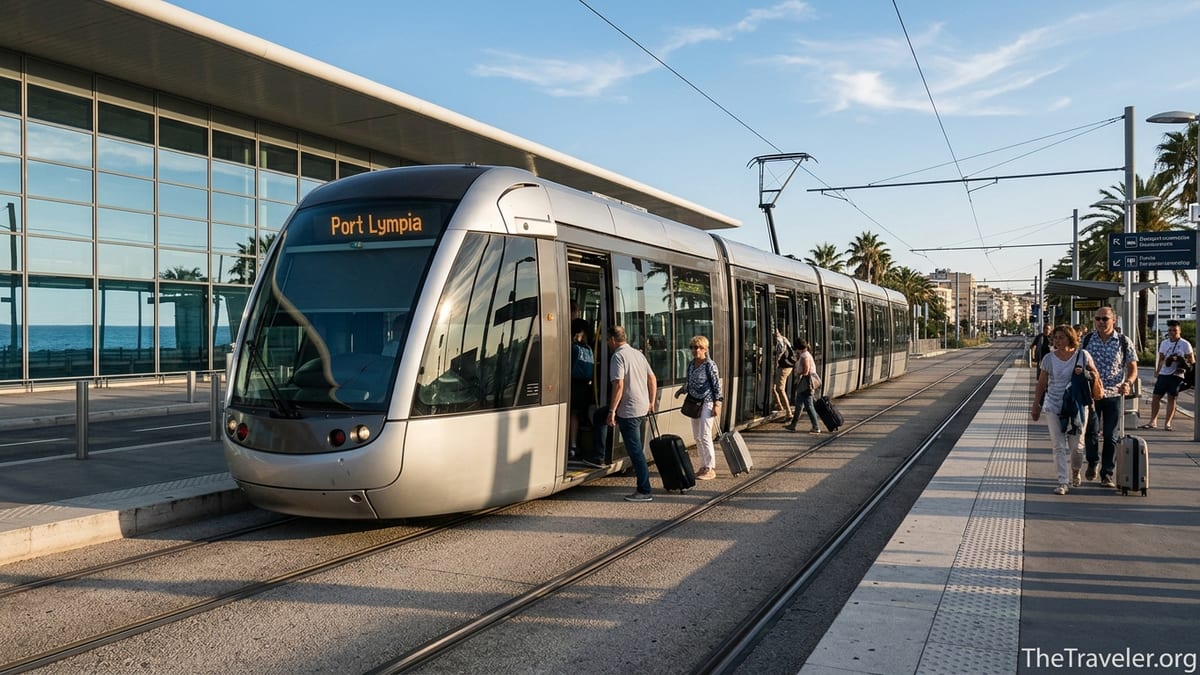
How Tram Line 2 Connects the Airport and Nice
Tram Line 2 is the backbone of public transport between Nice Côte d’Azur Airport and the city. It runs on a west–east axis between the airport area and Port Lympia, passing through key central stops such as Jean Médecin and Garibaldi. The line serves both airport terminals directly, with dedicated stations right outside Terminal 1 and Terminal 2, so most travellers can be on the platform just a few minutes after exiting the arrivals hall.
In practice, a complete journey from the airport to the end of the line at Port Lympia takes around 25 to 30 minutes in normal conditions. If you are staying near Nice-Ville main railway station, you will typically get off at Jean Médecin and then walk roughly 8 to 10 minutes uphill to the station on Avenue Thiers. Travellers booked into hotels around Place Masséna, Avenue Jean Médecin, or the Old Town often find they can walk to their accommodation in under 10 minutes from one of the central Line 2 stops.
Line 2 has a “common core” section between Port Lympia in the east and the Grand Arénas transport hub in the west, close to the airport. From Grand Arénas, services branch towards the airport terminals or towards the administrative area at CADAM. As an airport passenger you will typically ride the branch that serves Aéroport Terminal 2 and Aéroport Terminal 1, then continue along the shared track into the city centre.
For first-time visitors, it helps to think of Line 2 in three segments: the airport zone (Grand Arénas and the two airport stops), the central city segment (Alsace-Lorraine, Jean Médecin, Durandy, Garibaldi / Le Château) and the eastern end at Port Lympia. Most tourists will move back and forth along this spine, either between the airport and their hotel or for day trips across the city.
Airport Section: Terminal 1, Terminal 2 and Grand Arénas
The tram layout at Nice airport can be confusing at first glance because there is both a free airport shuttle tram and regular Line 2 services. The key point is that movement between Terminal 2, Terminal 1 and the nearby Grand Arénas / Nice Saint-Augustin railway station is free on the airport tram segment. This short internal link is designed to function as a landside shuttle, allowing passengers to connect between terminals, long-stay car parks and the wider regional transport network without paying a fare.
Outside Terminal 2, the Line 2 platforms are just in front of the arrivals exit, clearly signposted “Tram 2 Port Lympia – Centre-Ville” and “Tram 2 Grand Arénas – CADAM / Airport shuttle.” Ticket machines are located on or beside the platform, and there are information boards showing the next departures. Terminal 1 has a similar arrangement, with its own Aéroport Terminal 1 tram stop and platform ticket machines, but both are also linked into the free internal tram shuttle towards Grand Arénas.
Many budget-conscious travellers now use a simple strategy on arrival. Instead of buying an airport-specific ticket at Terminal 1 or Terminal 2, they board the free tram for the short ride to Grand Arénas, then purchase a normal city ticket there and continue on a regular Line 2 service into town. For example, a couple arriving at Terminal 2 might jump on the tram in front of the terminal, ride for a few minutes to Grand Arénas at no cost, and buy two standard single tickets from the machines at the hub, which they then validate before reboarding a tram towards Jean Médecin.
Grand Arénas itself is worth understanding because it is more than just a tram stop. It is the interchange point for the Nice Saint-Augustin railway station, regional buses and coaches, and the tram network. This is where you would switch to regional ZOU! buses for destinations along the Côte d’Azur, or board mainline trains towards Cannes, Antibes or Monaco. For some itineraries, such as staying in Antibes or Cannes, it can be quicker to ride the free tram segment to Grand Arénas and then change directly to a train instead of going all the way to Nice-Ville.
City Centre Stops: Jean Médecin, Old Town and Port Lympia
Once you leave the airport area, the tram glides along the Promenade des Anglais and into central Nice. The most important stop for many visitors is Jean Médecin, located beneath the main shopping avenue of the same name. This underground station is the primary interchange between Line 2 and Line 1. It is also the best stop for hotels around Place Masséna, the main shopping district, and the streets leading up to the Nice-Ville railway station. A typical visitor staying at a mid-range hotel just off Avenue Jean Médecin might ride Line 2 from the airport to Jean Médecin, then walk 5 minutes along the pedestrianised street to reach their lobby.
A little further east, the line surfaces again and serves Durandy and Garibaldi / Le Château. These stops are especially convenient if you are staying in the Old Town, near the antiques district, or close to the new Coulée Verte park. For example, a traveller booked into a guesthouse near Place Garibaldi can get off at Garibaldi / Le Château, cross the square, and be checking in within a few minutes, avoiding any taxi ride altogether.
Port Lympia is the last stop on Line 2 and sits just above the historic port of Nice. This is the best terminus for travellers staying in the eastern districts such as the port quarter, the start of Mont Boron, or near the coastal path towards Villefranche-sur-Mer. Cruise passengers disembarking at Nice port often use this stop to connect into the city centre, riding just a couple of stops back to Garibaldi or Jean Médecin for shops and restaurants.
Because the central stops are relatively close together, it is often quicker to ride one extra stop and walk back than to try to time your exit perfectly. For instance, if your apartment is between Durandy and Garibaldi, it may not matter much whether you get off at one or the other, since both will typically be within a 5 to 7 minute walk. Mapping your hotel location in advance and noting the nearest one or two Line 2 stops is a simple way to make arrival smoother.
Tickets, Airport Supplements and How to Pay Less
Ticketing for the tram in Nice is the single biggest source of confusion for visitors. Access to the airport stops (Aéroport Terminal 1 and Aéroport Terminal 2) requires a specific airport ticket, which is more expensive than a regular city fare. On machines at the airport, you will often see an “Airport ticket” or a product labelled around 10 euros that is targeted at air passengers and can include extras such as return validity or integration with the wider network. At the same time, the standard Lignes d’Azur single ticket for the rest of the network is around 1.70 euros and is loaded onto a reusable plastic card that itself costs a small fee.
As a result, many regular travellers have adopted workarounds. One common strategy is to avoid buying the 10 euro airport ticket entirely, and instead use the free tram segment between the terminals and Grand Arénas, where ticket machines sell normal city tickets at the standard price. For example, a solo traveller arriving at Terminal 1 could board the free tram to Grand Arénas, purchase a regular 1.70 euro single ticket at the machine there, validate it on the platform, then ride to Jean Médecin or Port Lympia like any other local passenger.
Another increasingly popular option is the official Lignes d’Azur mobile ticketing app on Android, which allows you to buy and validate single tickets or day passes on your phone using NFC. A couple visiting in high season might purchase two single tickets in the app before landing, then, on exiting Terminal 2, they simply tap their NFC-enabled phones against the tram validator as they board, making it unnecessary to deal with the airport machines. The app also sells airport products, so you should double-check that you have selected a normal ticket rather than a special “Airport” one if you want to keep costs down.
Ticket validation is crucial. Validators are installed on tram platforms and inside the vehicles. Before the tram departs, you must hold your paper ticket or NFC-enabled card/phone against the reader until it beeps, confirming your journey has started. Routine checks are carried out by inspectors, and fines for travelling without a validated ticket can be significantly higher than the cost of the original fare. If in doubt, validate again when you change lines; French practice is generally to validate each time you board a new vehicle, even when using a pass.
Tram Frequency, Operating Hours and Service Patterns
Tram Line 2 operates every day of the year except 1 May, when most public transport in France shuts down or runs on very limited service due to the national holiday. On normal days, the first trams leave the airport area shortly after 4 am and the last ones from Port Lympia reach the airport around 1 am. For most travellers, this means you can rely on the tram for early-morning flights and for arrivals up to just before midnight, but you should double-check schedules if you have a particularly late or early connection.
During the daytime, trams on the shared core of Line 2 typically run every 4 to 7 minutes, which means you rarely need to wait more than a few minutes on the platform. On the branches, such as the airport segment or the CADAM direction, the effective frequency is often closer to every 7 to 10 minutes depending on time of day. At busy periods, such as late afternoon in summer when many flights arrive close together, trams can be crowded but generally still manageable for travellers with a suitcase and a carry-on.
Real-world experience shows that while the scheduled journey from the airport to the city centre is around 25 to 30 minutes, minor delays can occur due to passenger volume or occasional traffic interference on surface sections. If you have a time-sensitive commitment in Nice, such as a dinner reservation in the Old Town or a train connection from Nice-Ville to another region, it is wise to allow at least 45 minutes from landing to reaching Jean Médecin or Port Lympia. This buffer accounts for walking from the gate, baggage claim, and the wait for the next tram.
Occasionally, unforeseen events such as suspicious luggage on the platform or technical incidents can temporarily interrupt service at the airport stops. In such cases, local advice often suggests walking from one terminal to the other, or using the short distance between Terminal 1 and the Grand Arénas hub, which is walkable in fair weather. Having a mental back-up plan, such as using a regional bus or train from Nice Saint-Augustin, can be helpful if you arrive during a disruption.
Common Tourist Mistakes and How to Avoid Them
The most frequent mistake first-time visitors make is buying the most expensive ticket offered on the airport machine without understanding the difference between special airport fares and normal city fares. A typical example is a family of four landing at Terminal 2, selecting an airport return product for each traveler at around 10 euros on the screen, and spending upwards of 40 euros on what is essentially a short tram ride into town. By using the free segment to Grand Arénas and then buying standard tickets, the same family could have paid closer to the regular price for a one-way journey, keeping a much larger share of their budget for meals or activities.
Another common error is getting off at the wrong central stop. Many visitors assume that “Nice-Ville” is directly served by the tram, when in reality you must walk from Jean Médecin to the main railway station. Travellers heading to the Old Town sometimes stay on until Port Lympia, then have to backtrack, even though a stop like Garibaldi / Le Château would have left them much closer to their accommodation. Checking your hotel’s nearest tram stop before landing, and taking a screenshot of a simplified tram map, can prevent unnecessary detours.
Overloading the tram with luggage is also a frequent issue, particularly in summer. The vehicles can become crowded around check-in and flight arrival peaks, and large suitcases in doorways can block passengers entering and exiting. Practically, you will have a smoother experience if you move with your suitcase into the central standing area after boarding, keep aisles clear, and avoid occupying designated spaces for wheelchairs or strollers. Local commuters are used to sharing the tram with visitors, but considerate behaviour makes everyone’s journey easier.
A final pitfall is not having a back-up plan if the tram is disrupted on 1 May or during a temporary suspension. Visitors arriving on Labour Day are often surprised to find no trams operating at all, leading to long lines at the taxi rank or confusion around buses. Similarly, if there is a police incident on the platform, service can be halted for safety reasons. In such cases, alternatives include walking to Nice Saint-Augustin station for a short train ride into town, using a regional bus that stops on the Promenade des Anglais, or, as a last resort, sharing a taxi or rideshare with fellow passengers to split the cost.
Practical Tips for a Smooth Airport Tram Journey
To make your journey as seamless as possible, it pays to prepare before you land. Downloading the official Lignes d’Azur app to an Android phone, setting up payment details and pre-purchasing a couple of single tickets means you can bypass ticket machines entirely. When you arrive at Terminal 2, you simply head to the tram platform, check that the destination displayed is Port Lympia, and tap your phone on the validator as you board. This is particularly handy if your flight lands late in the evening when there may be queues at the machines.
If you prefer physical tickets, carry a small amount of cash plus a bank card that works contactlessly in Europe. The machines at Grand Arénas and most other stops accept major cards and coins, but it is not uncommon for one payment method to be temporarily out of service. A couple arriving from North America, for example, might find that their magnetic-stripe-only card is not accepted, but their contactless debit card works instantly. Having options reduces the chance of being stuck on the platform with no valid ticket.
Think ahead about your walking route after you get off the tram. If your hotel is near Place Masséna, it may be quicker to alight at Jean Médecin, walk down the shopping street and cut across the square, instead of staying on to the next stop and then backtracking. Similarly, if you are staying close to the port, riding all the way to Port Lympia will save you a significant uphill walk back from the city centre. Small decisions like these can make the difference between a pleasant arrival stroll and dragging luggage over cobblestones in the midday sun.
Finally, keep an eye on local announcements if you visit during major events such as the Nice Carnival, big football matches at the Allianz Riviera stadium, or large conferences. Special tram services sometimes operate to handle crowd flows, and occasional diversions can affect normal Line 2 patterns. Hotel receptions in Nice are generally well informed about these changes, and it is worth asking at check-in whether any transport adjustments are expected during your stay.
The Takeaway
Nice Côte d’Azur Airport’s tram Line 2 is one of the most convenient airport–city links on the Mediterranean, but a little knowledge goes a long way. Understanding that the internal tram between Terminal 2, Terminal 1 and Grand Arénas is free, recognising the difference between special airport tickets and regular city fares, and knowing which stops work best for your hotel can save both time and money. In real terms, a couple can travel from the airport to a central hotel for just a few euros per person, arriving within half an hour and without setting foot in a taxi.
Plan your ticket strategy, aim for the right city-centre stop, and allow a modest buffer for any minor delays or disruptions. With these basics in mind, Line 2 becomes a simple, reliable part of your trip rather than something to worry about. The tram offers your first view of the Promenade des Anglais, the palm trees and the sea, and sets the tone for a relaxed stay on the Côte d’Azur.
FAQ
Q1. Can I ride the tram between Nice Airport terminals for free?
The short tram segment linking Terminal 2, Terminal 1 and the Grand Arénas / Nice Saint-Augustin hub is free, functioning as an internal airport shuttle.
Q2. Do I need a special airport ticket to reach the city centre by tram?
Access to the airport stops formally requires a specific airport ticket, but many travellers ride the free section to Grand Arénas and then use regular city tickets bought there.
Q3. How much does a standard tram ticket in Nice cost?
Standard single tickets on the Lignes d’Azur network are typically priced around the low-single-euro range per journey, plus a small fee for the reusable card if you buy one.
Q4. How long does the tram take from Nice Airport to Jean Médecin?
In normal conditions, the journey from the airport to Jean Médecin station is around 25 to 30 minutes, though you should allow a little extra for waiting and walking time.
Q5. Which tram stop should I use for the Old Town of Nice?
Garibaldi / Le Château and Durandy are usually the most convenient Line 2 stops for reaching the Old Town on foot, depending on the exact location of your accommodation.
Q6. Does the tram run late at night for late arrivals?
Line 2 generally runs from early morning to around 1 am, with trams serving the airport until close to midnight, but exact times vary slightly by day and season.
Q7. Is tram service available on Labour Day (1 May)?
On 1 May, tram services in Nice are heavily reduced or may not operate at all, so arriving passengers should plan on using alternative transport such as trains, buses or taxis.
Q8. How do I connect from the tram to mainline trains at Nice-Ville?
You ride Line 2 to Jean Médecin, then walk about 8 to 10 minutes up Avenue Jean Médecin to reach Nice-Ville railway station for regional and long-distance trains.
Q9. Can I buy tram tickets on my phone?
Yes, the official Lignes d’Azur mobile app, particularly on Android with NFC, allows you to purchase and validate digital tickets, reducing the need to use ticket machines.
Q10. What should I do if the tram is disrupted when I arrive?
If there is a disruption at the airport stops, options include walking to Nice Saint-Augustin station for a short train ride, using regional buses on the Promenade, or sharing a taxi.