


More news on this day
A collision between two passenger trains has left at least one person dead and 89 injured, according to early reports, as rescue crews worked amid wreckage, smoke and twisted metal to evacuate passengers and stabilize the chaotic crash site.
Get the latest news straight to your inbox!
Collision Turns Routine Journey Into Disaster
Preliminary information from published coverage indicates that the crash occurred when two passenger trains collided on a busy line, abruptly turning an ordinary weekday journey into a major rail emergency. Witness accounts collected in local media describe a sudden jolt followed by the screech of metal and a shower of debris inside several carriages.
Early tallies from official statements reported in the press suggest that at least one person was killed in the impact, while close to 90 others suffered injuries ranging from minor cuts and fractures to critical trauma. Rail operators have been cited in regional outlets as saying that both trains were carrying a significant number of commuters at the time of the collision, many of whom were standing or moving through the aisles when the impact occurred.
Images published by national and international news organizations show multiple carriages derailed, some leaning at sharp angles along the ballast and others partially crumpled at the point of impact. Rescue workers in high-visibility gear can be seen climbing through broken windows and working alongside firefighters and paramedics to reach trapped passengers.
Railway infrastructure around the crash zone has been heavily damaged, with overhead lines, track equipment and signaling hardware visibly distorted in photographs. Published commentary from transport specialists notes that damage of this scale is likely to complicate both the investigation and the eventual restoration of normal service.
Large-Scale Emergency Response Amid Wreckage
According to publicly available information from regional emergency services and rail operator updates, a large number of ambulances, fire engines and technical rescue teams were deployed within minutes of the first alerts. Local hospitals activated emergency protocols to receive a surge of casualties, while air ambulances were dispatched to transport the most seriously injured.
Footage shared by mainstream broadcasters shows responders using ladders and cutting tools to access buckled carriages, with some teams guiding passengers along improvised walkways laid across the tracks. In several images, medical personnel can be seen treating people on trackside embankments before they are transferred to stretchers and vehicles.
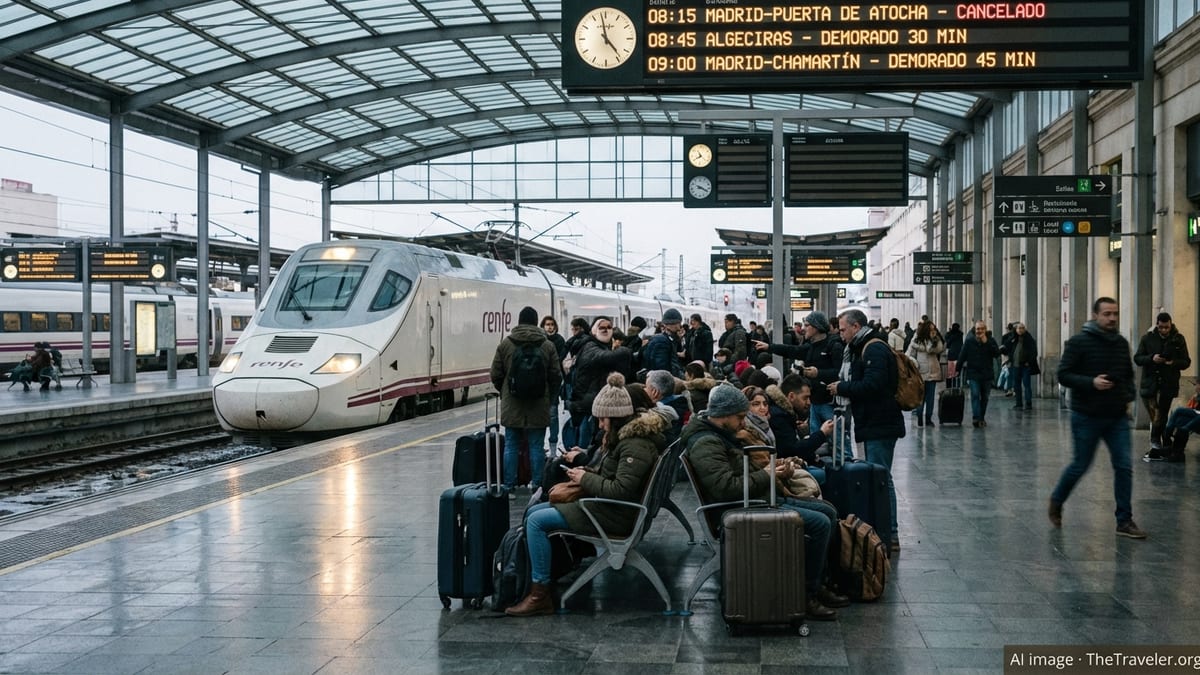
Disruption extended far beyond the immediate crash site, with rail traffic halted in both directions across the affected corridor. Rail operators issued statements through the media detailing diversions, cancellations and replacement bus services, warning that significant delays were expected for hours as the rescue phase continued.
Publicly reported tallies indicate that nearly 100 people required medical evaluation at the scene, with dozens transported to nearby hospitals. Health authorities quoted in news coverage have described injuries consistent with sudden deceleration, falls from standing positions and impacts with interior fittings such as luggage racks and seat frames.
Investigators Focus on Human Error and Signaling
Transport safety agencies and rail accident investigators have opened formal inquiries, with early attention focusing on the signaling system, train speeds and the actions of both crews in the moments before the collision. Rail safety specialists interviewed across European and regional outlets note that two-train crashes on busy passenger networks are often associated with communication failures, signaling faults or procedural lapses.
Data recorders from both trains, sometimes referred to as black boxes, are expected to play a central role in reconstructing the sequence of events. According to technical briefings cited in international coverage of past rail disasters, these devices typically capture speed, braking patterns, horn use and signal aspects, providing investigators with a detailed second-by-second record.
Published analysis from rail unions and engineering experts also points to broader systemic questions, including whether staffing levels, training regimes or maintenance practices contributed to the conditions that allowed two trains to occupy the same section of track. In similar incidents documented in Europe and Asia in recent years, final reports have often highlighted combinations of human error and infrastructure vulnerabilities rather than a single isolated cause.
Safety agencies generally take several months to issue preliminary findings, followed by more comprehensive final reports that can lead to recommendations on signaling upgrades, operating procedures and infrastructure investment. Observers quoted in national media expect this investigation to follow a similar path, given the scale of casualties and public concern.
Passengers Describe Panic and Improvised Evacuations
Accounts gathered by local and regional news outlets describe scenes of panic inside the carriages immediately after the collision. Passengers reported being thrown from seats, lights going out and clouds of dust and smoke filling the air, making it briefly difficult to see or breathe. Many described the sound of shattering glass and luggage tumbling from overhead racks as the trains ground to a halt.
With doors jammed on some carriages, travelers described turning to emergency windows and internal communication points, attempting to calm children and elderly passengers while waiting for rescuers. In several reports, passengers recounted helping one another to move along twisted corridors, forming human chains to navigate sloping floors and debris.
Rail safety commentators note that modern passenger coaches are designed to absorb significant impact forces and maintain survivable spaces, a factor that may have limited the death toll despite the severity of the collision. Seat anchoring, crumple zones and reinforced end structures have become key design features following earlier rail incidents in Europe and North America.
Publicly available rail operator information indicates that psychological support hotlines and counseling services have been made available to passengers and families. Experience from previous major transport incidents suggests that some survivors may continue to experience anxiety, sleep disturbances and other stress symptoms long after their physical injuries have healed.
Travel Disruption and Safety Questions for Rail Passengers
The collision has triggered widespread disruption for regional and long-distance travelers, with rail companies activating contingency plans and bus operators stepping in to provide limited replacement capacity. Timetable data and operator statements compiled by travel information services show a cascade of delays and cancellations extending across the wider network as trains and crews fall out of position.
For travelers, the incident has reignited familiar questions about the balance between high-frequency rail services and robust safety margins on busy corridors. Industry statistics reproduced in international coverage consistently show that rail remains one of the safest modes of mass transport per passenger kilometer, even when headline-grabbing crashes occur.
Transport analysts quoted in recent rail safety reporting emphasize that catastrophic collisions involving two passenger trains are comparatively rare, particularly in countries with modern signaling and automatic train protection systems. Nonetheless, they argue that each serious incident exposes vulnerabilities, whether in infrastructure resilience, operational culture or emergency preparedness, that can be addressed through targeted reforms.
As investigators work through the wreckage and timetables slowly return to normal, attention is likely to focus on whether funding, technology and training are keeping pace with growing passenger volumes. For the thousands of people who rely on daily rail services, the images from this crash serve as a stark reminder of why safety standards, maintenance regimes and transparent investigations remain central to public confidence in rail travel.