


More news on this day
Thousands of residents in Monmouth County are facing a second day without full electric service after a powerful storm and a nearby freight train derailment disrupted power lines and rail infrastructure, according to utility outage maps and regional transportation reports.
Get the latest news straight to your inbox!
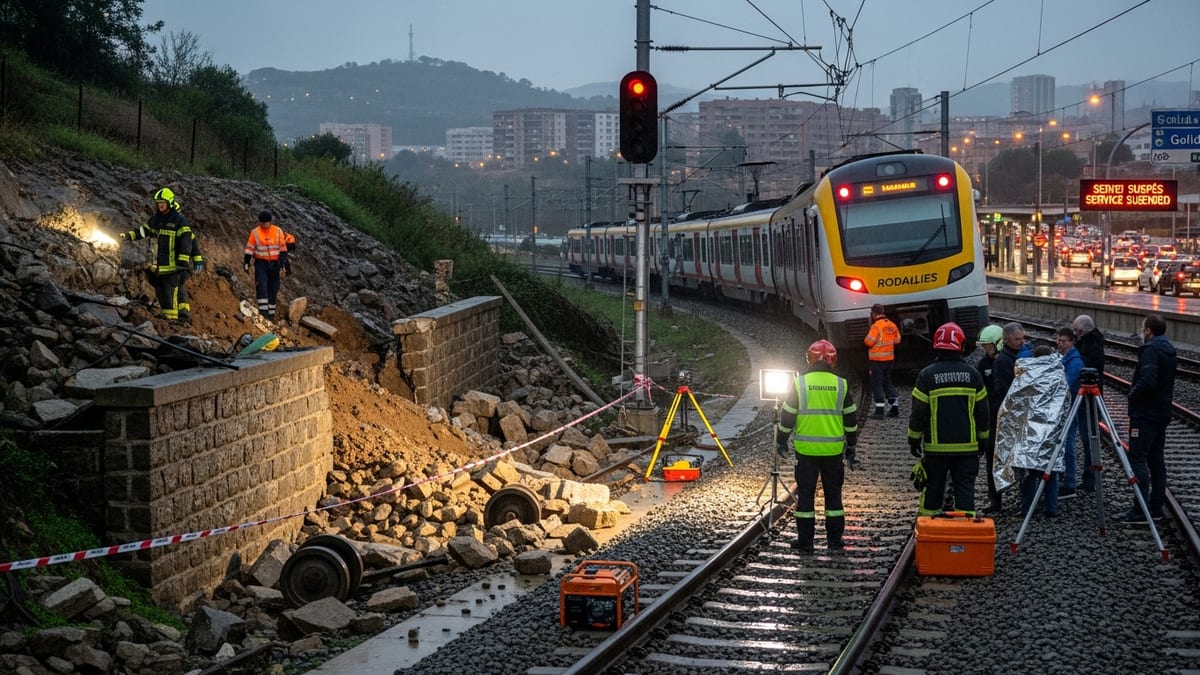
Extended outages across Monmouth County neighborhoods
Publicly available outage trackers on Wednesday show scattered but persistent power cuts across sections of Monmouth County, with several communities still reporting dark blocks and intermittent service. Utility data indicates that the number of affected customers has fallen sharply from the peak during the storm, but full restoration has not yet been achieved in pockets where wind damage and debris were heaviest.
Mapping tools used by emergency planners highlight that the hardest hit neighborhoods tend to be those with older distribution lines flanked by mature trees, a pattern that has emerged repeatedly during recent severe weather events in central New Jersey. Fallen branches, snapped poles and damage to local transformers are cited in published coverage as common causes of outages after intense thunderstorms.
Municipal updates issued in earlier seasonal storms have already warned residents that saturated ground and stressed tree limbs can increase the likelihood of lines coming down in even moderate wind gusts. The latest round of outages is reinforcing that message as residents share images of toppled trees and downed wires along suburban streets and busy county routes.
Weather summaries for the region describe the most recent storm as fast-moving but intense, with strong winds arriving on the heels of an already active spring. The quick succession of systems has left soil loose and vegetation vulnerable, contributing to the scale of the overnight damage that utilities are still working through.
Freight derailment complicates repair efforts
The restoration work has been compounded by a freight train derailment on a corridor used to move goods through the Monmouth area, according to regional rail operations reports. Freight traffic, which often shares or parallels infrastructure with passenger lines in New Jersey, can affect access to power corridors when rolling stock leaves the tracks or when damage occurs near substations and signal locations.
Transportation briefings and local media coverage indicate that crews have been focused on clearing rail cars and inspecting track beds before full rail operations can resume. Until that work is complete, some utility teams have limited access to areas where power infrastructure runs close to the right-of-way or crosses above it, slowing repairs to certain feeders and neighborhood circuits.
Rail safety protocols require inspections of signals and overhead lines after a derailment, especially in dense rail territories like coastal New Jersey. That means power engineers and rail inspectors must coordinate closely on when and where it is safe to bring in bucket trucks and heavy equipment, adding another layer of complexity to already challenging post-storm recovery work.
While most passenger services in the wider region are running on adapted schedules, rail bulletins show ongoing adjustments as freight and commuter routes are tested and brought back into regular use. Travelers are being urged through public alerts to check for late-day schedule changes as inspections continue.
Storm damage exposes grid vulnerabilities
The combination of severe weather and rail disruption is highlighting long-standing vulnerabilities in Monmouth County’s electric grid, parts of which still rely on above-ground infrastructure in heavily wooded corridors. Planning documents released in recent years have warned that coastal and inland communities alike could experience more frequent outages as storms intensify and sea levels rise.
Resilience assessments prepared for the region describe how power cuts can cascade into transportation delays when substations, signal systems and grade-crossing equipment lose electricity. Even short interruptions can trigger resets, leaving trains, buses and traffic patterns out of sync while systems come back online.
Reliability reports from Jersey Central Power & Light have pointed to ongoing investments in stronger poles, automated switches and new feeder lines in Monmouth and neighboring counties. Those projects are intended to isolate faults more quickly and limit the number of customers affected by any single incident, though the latest outages suggest that sections of the network remain exposed when storms strike a wide area.
Local officials in prior briefings have linked repeat outages to both aging infrastructure and rapid development, with new neighborhoods and commercial centers adding load to circuits that were not originally designed for current demand. The latest storm has renewed questions over how quickly upgrades can be completed and whether more aggressive tree-trimming and undergrounding programs are needed.
Commuters grapple with uncertain travel
For commuters who rely on rail and road connections between Monmouth County and northern New Jersey or New York City, the overlapping power and rail issues have translated into another day of uncertainty. Regional transit alert feeds show that service on key lines has been periodically adjusted, with minor delays and train consolidations reported as inspection work continues near the derailment site and in storm-affected zones.
Some riders have reported through social media posts that they are building extra time into their trips, anticipating crowding on trains that do run and the possibility of last-minute schedule changes. Others are opting for remote work or flexible hours where possible to avoid peak-period congestion.
Historical incident summaries for the state’s rail network show that even isolated derailments can create ripple effects far from the actual site, as dispatchers reroute equipment and reallocate crews. When those complications coincide with power interruptions to signals or stations, seemingly minor timetable changes can add up to a noticeably slower commute.
Highway traffic sensors and mapping services have also indicated heavier-than-normal volumes on major Monmouth County roadways at times, suggesting that some regular rail users shifted to driving during the disruption. That shift places added strain on local intersections and park-and-ride facilities that were already expected to carry greater loads during the busy summer season.
Recovery timeline and preparation for future events
Utilities are projecting incremental progress through midweek, with outage counts expected to fall as crews complete repairs in smaller pockets and address individual service lines. Public dashboards for the county have shown a steady downward trend in total outages since the peak during the storm, though residents in the hardest-hit streets are being advised through local updates to prepare for the possibility of another night with limited service.
Emergency management materials for Monmouth County emphasize the importance of having flashlights, batteries, and device chargers ready, along with backup plans for refrigerated medications and medical equipment that require electricity. Community centers, libraries and municipal buildings have in past events served as informal cooling and charging locations, and similar arrangements are being discussed in light of the current outages.
Planning studies for the central New Jersey coast underscore that both storms and transportation incidents are likely to pose recurring challenges as climate patterns shift and infrastructure ages. Analysts recommend better coordination between utilities, rail operators and local governments to ensure that damage assessments, access to rights-of-way and public messaging happen quickly and in sync.
For residents and commuters in Monmouth County, the latest disruptions serve as another reminder that power and transportation networks are tightly linked. As cleanup from the storm and derailment continues, attention is turning to measures that could make the next such event less disruptive, from hardened grid equipment to improved communication tools that keep riders and homeowners better informed.