


More news on this day
Air travelers across the United States faced another day of severe disruption on Sunday as more than 1,100 flights were cancelled and over 3,600 delayed nationwide, with major hubs including Chicago, Los Angeles, Philadelphia and Newark particularly hard hit, according to live aviation tracking data.
Get the latest news straight to your inbox!
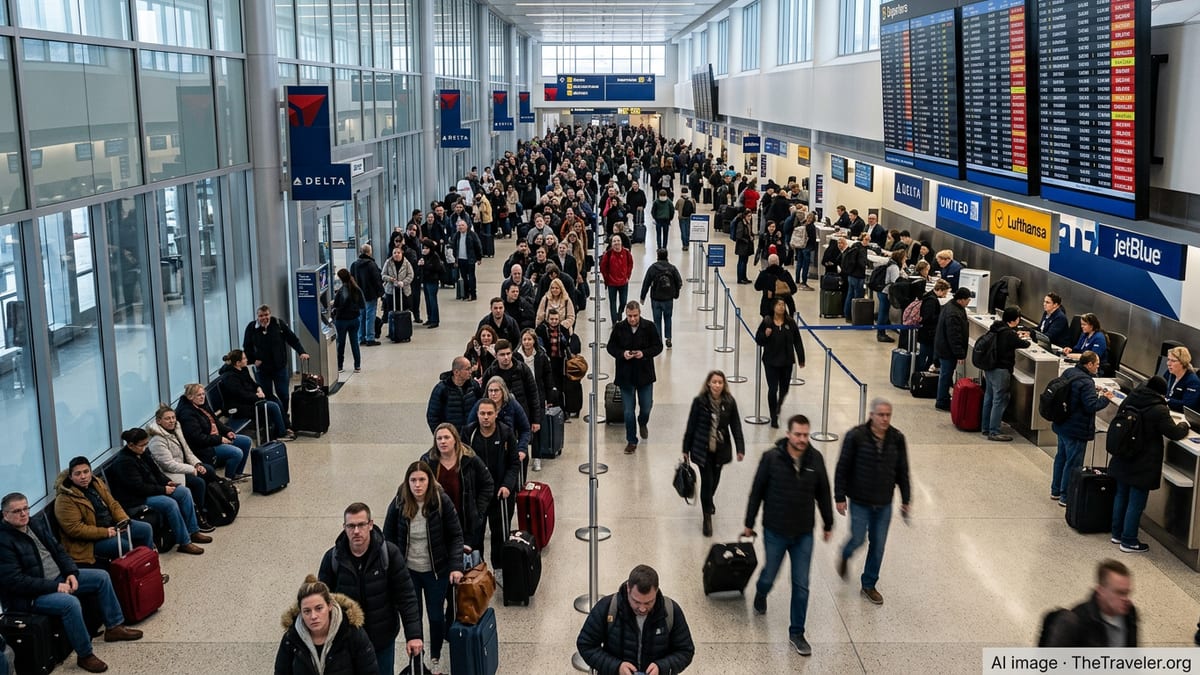
Major Hubs Struggle As Cancellations Mount
Live operational data from aviation tracking platforms shows that by Sunday afternoon, at least 1,144 flights had been cancelled within, into or out of the United States, alongside roughly 3,647 delays. The disruption has rippled through the network, affecting both domestic and international services and leaving aircraft and crews out of position at key hubs.
Chicago O’Hare, Los Angeles International, Newark Liberty and Philadelphia International featured prominently among the hardest hit airports. These hubs act as central connection points for several large carriers, so problems in one region have quickly cascaded into missed connections and rolling delays across the country.
The scale of the disruption places today among the more difficult travel days of the summer peak. With planes running full and schedules tightly packed, even a moderate spike in delays can cause knock-on effects lasting well into the evening departure banks.
American, United, Delta And Others Forced To Trim Schedules
The cancellations and delays have affected all three of the country’s largest network carriers: American Airlines, United Airlines and Delta Air Lines. Publicly available tracking boards show these airlines cancelling and delaying significant numbers of flights across their networks, particularly at their hub airports.
At Chicago O’Hare and Philadelphia, American has faced pressure on its domestic operations, with multiple flights to East Coast and Midwest destinations showing as cancelled or heavily delayed. United has seen notable disruptions at Newark and Chicago, where its dense schedules and dependence on tightly timed banked connections make the carrier especially vulnerable when conditions deteriorate.
Delta’s operations have also been affected, especially on routes that touch major coastal hubs and busy transcontinental corridors. Many of the delays are measured in hours rather than minutes, placing additional strain on crew schedules and complicating aircraft rotations for the remainder of the day.
Weather, Congestion And System Strain Behind Today’s Disruption
According to airline advisories and publicly posted travel waivers, a series of storms and unsettled weather along the East Coast over recent days has contributed to heavy air traffic control restrictions around New York and mid-Atlantic airspace. That has slowed arrivals and departures at Newark and Philadelphia, while also affecting flights to and from Chicago and Los Angeles that operate through those corridors.
Even in periods of clearer skies, the system remains under strain. Summer brings peak passenger volumes, with schedules built close to maximum capacity. When thunderstorms, ground stops or flow-control measures are introduced in one region, flights elsewhere are often held, rerouted or cancelled entirely to keep overall traffic at safe, manageable levels.
Operational experts note that these conditions can create a feedback loop. A single round of weather-related ground delays can leave aircraft and crews out of place for the rest of the day. As the disruptions compound, airlines may proactively cancel flights to stabilize operations and reduce the risk of even longer delays later in the schedule.
Impact On Travelers Across The Country
For passengers, today’s disruptions are being felt from early morning through late-night departures. Travelers connecting through Chicago, Newark, Los Angeles and Philadelphia are particularly vulnerable to missed connections as banks of inbound flights arrive late and outbound departures are held or cancelled.
Airport departure and arrival boards at the major hubs show clusters of delayed flights in the afternoon and evening waves, with waits often extending well beyond an hour. Some travelers have been rebooked onto later services or routed through alternative hubs, while others face overnight stays as seats on remaining flights fill up.
Consumer-rights information services advise passengers to monitor their flight status frequently and to use airline apps or text alerts to request rebooking as soon as a cancellation appears. In many cases, especially when weather and air traffic control restrictions are involved, compensation may be limited, but carriers typically offer rebooking options and basic assistance such as meal or hotel vouchers on a case-by-case basis.
What Passengers Can Expect As The Day Progresses
With the busiest departure periods still unfolding, operational data suggests that the totals of 1,144 cancellations and 3,647 delays could rise further into the evening. Recovery often lags behind the initial disruption, particularly when aircraft and crews must be repositioned across multiple hubs.
Travel analysts indicate that passengers scheduled to fly later in the day should brace for continued uncertainty. Even if local weather appears calm, residual congestion in the national airspace system can lead to ground delays, reroutes and last-minute schedule changes as airlines and air traffic managers work to move aircraft safely through constrained corridors.
Industry observers expect airlines to focus on protecting long-haul and international departures where possible, while trimming some shorter domestic segments to free up aircraft and crews. Travelers whose plans are flexible may find it easier to accept rebooking for later dates, which can help ease pressure on oversubscribed flights during the current disruption.