


More news on this day
Air travelers across the United States faced another difficult day as more than 1,788 flights were delayed and at least 1,346 were canceled today, according to real-time tracking data, snarling schedules at major hubs and stranding passengers nationwide.
Get the latest news straight to your inbox!
Major Hubs Bear the Brunt of Widespread Disruptions
Tracking platforms monitoring U.S. airspace show that the latest wave of disruptions is concentrated at the country’s largest hubs, with airports such as Chicago O’Hare, Dallas Fort Worth, New York’s LaGuardia and John F. Kennedy, and Newark Liberty reporting some of the heaviest impacts. High traffic volumes at these facilities mean that even moderate operational issues can quickly cascade into hundreds of delayed or canceled flights.
Publicly available data from air traffic management systems indicate that some airports are experiencing extended arrival and departure delays as traffic management initiatives are put in place to control congestion. When arrival rates are reduced, departures are often held at gates or on taxiways, backing up schedules and compressing available turnaround time for aircraft and crews.
Industry observers note that delays at one major hub can rapidly spread across the network, as aircraft and crews arriving late are then out of position for subsequent flights. As a result, travelers departing from smaller regional airports far from the worst-affected hubs can still encounter rolling delays or day-of cancellations tied to earlier bottlenecks elsewhere.
For many passengers, the knock-on effects are being felt in missed connections, unexpectedly long layovers, and rebookings that push trips into the following day. With many flights running close to capacity in midsummer, same-day alternatives are often limited, increasing the likelihood of overnight disruptions.
Weather, Congestion and Operational Strains Combine
Published aviation data and recent coverage point to a familiar combination of factors behind today’s elevated disruption numbers. Summer weather systems, including thunderstorms and convective activity in key regions, can force route changes, holding patterns, and temporary ground stops. Even short-lived cells can trigger longer-lasting ripple effects as traffic is rerouted through already busy airspace.
Beyond weather, airlines continue to manage tight schedules and complex crew rotations in a peak travel period. When storms or traffic restrictions push aircraft and flight crews off their planned rotations, recovery can take hours, particularly late in the day when fewer spare aircraft and reserve crews are available. As the day progresses, minor delays early on can accumulate into substantial schedule disruptions.
Operational strains can also arise from technical issues. Recent travel days have seen reports of system outages and brief ground stops tied to airline technology problems, which can halt check-in, boarding, or flight dispatch. Even when resolved relatively quickly, those interruptions often translate into rolling delays through the rest of the day as carriers work through backlogs.
Transportation analysts note that these patterns reflect a system operating with limited margin for error. With high demand, tight aircraft utilization, and lean staffing in some areas, the resilience of the network is frequently tested when multiple stressors hit at once.
Regional Patterns and Airports Facing the Toughest Day
Real-time dashboards tracking delays show that conditions are not uniform across the country. Several large airports in the Northeast and Mid-Atlantic have faced prolonged schedule pressure where stormy weather and constrained airspace converge with intense summer demand. When those facilities reduce arrival or departure rates, outbound flights to other regions can be held or canceled, spreading disruptions nationwide.
In the Midwest, data from air traffic operations indicate that hubs like Chicago O’Hare are experiencing periods of heavy arrival congestion, with some arriving flights held for significant periods before landing slots open. Those delays can place additional pressure on gates and crew schedules, making it harder for airlines to turn aircraft quickly for their next departures.
On the West Coast, operational impacts have generally been more moderate, but transcontinental flights are particularly vulnerable to knock-on effects from problems in the East and Midwest. Late-arriving aircraft from disrupted regions can trigger schedule adjustments for cross-country and onward international departures, leaving long-haul travelers facing changed itineraries and missed connections.
Smaller and mid-sized airports often feel the consequences through reduced frequencies or last-minute cancellations when airlines prioritize limited resources for their busiest routes. For travelers in those markets, alternatives may involve long drives to larger airports or accepting substantially later departures.
What Travelers Are Experiencing on the Ground
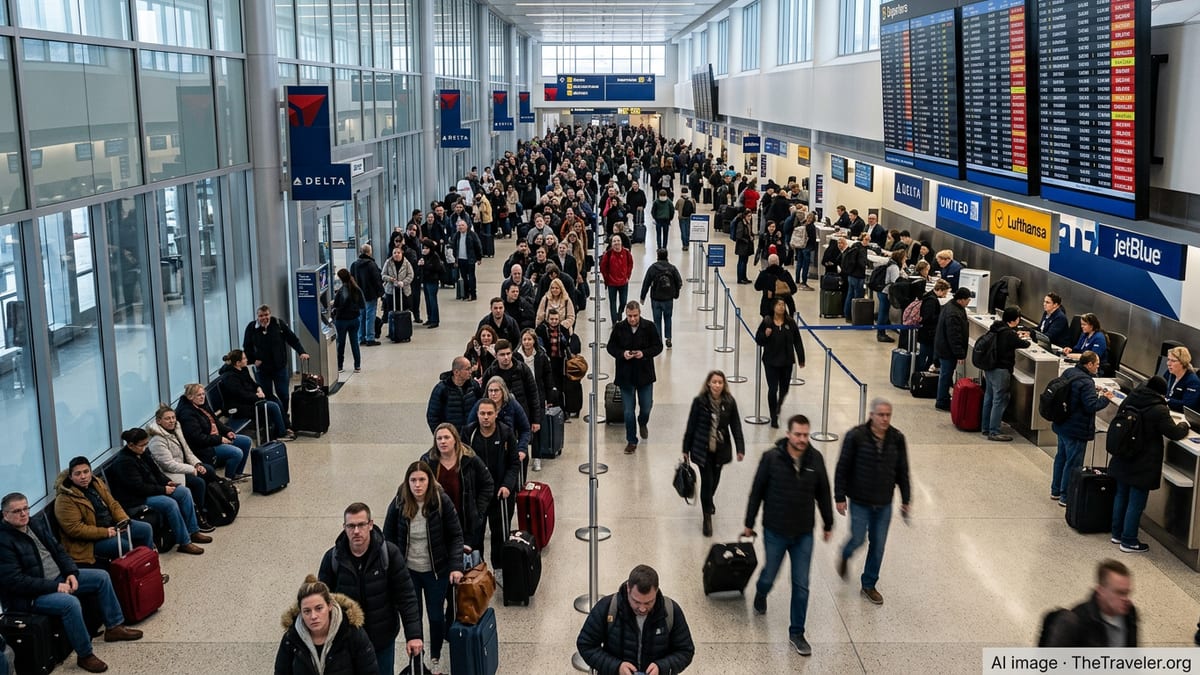
Social media posts and traveler reports from across the country describe crowded terminals, long customer-service lines, and departure boards packed with red and yellow status updates. Many passengers are contending with repeated schedule changes, rolling estimated departure times, and uncertainty over whether flights will ultimately operate.
With limited spare capacity in the system, rebooking options can be constrained, particularly for families or larger groups seeking to remain on the same itinerary. Some travelers are opting to accept connections through less direct routings or overnight stays in intermediate cities to avoid extended waits for scarce nonstop seats.
Travel experts advise that passengers facing delays should monitor both airline apps and airport displays, as status updates can change frequently. Publicly available guidance also suggests that travelers who suspect a long delay or cancellation may benefit from proactively exploring alternative flights or routes rather than waiting for automatic rebooking, especially during busy travel periods.
At many airports, concessions and lounge areas are busier than usual as passengers wait out disruptions. Reports indicate that some travelers are choosing to leave secure areas for nearby hotels when delays stretch into many hours or when it becomes clear that a same-day departure is unlikely.
Planning Ahead as Summer Travel Volatility Continues
Transportation data for recent months show that elevated levels of delays and cancellations have become a recurring feature of peak travel days, particularly around weekends and holiday periods. With demand remaining strong and seasonal weather risks persisting, industry observers expect intermittent days of significant disruption to continue through the remainder of the summer.
Consumer advocates point to tools such as federal airline cancellation and delay dashboards and real-time flight-status trackers as useful resources for travelers seeking to understand broader patterns behind their own disrupted trips. These tools can help passengers compare airline performance, understand common causes of delays, and better anticipate potential problem days.
Travel planners suggest building additional flexibility into itineraries wherever possible. That can include longer connection windows, earlier departures on critical travel days, and contingency plans for overnight stays if connections are missed. For important events, many advisers recommend arriving a day early during high-risk periods to reduce the impact of unexpected disruptions.
While today’s figures capture only a single difficult travel day, the scale of the delays and cancellations underscores the sensitivity of the U.S. air travel system to overlapping stresses. For passengers navigating airports today, and for those planning trips in the coming weeks, the latest disruptions are a reminder that patience and preparation remain essential parts of flying in a busy summer season.