


More news on this day
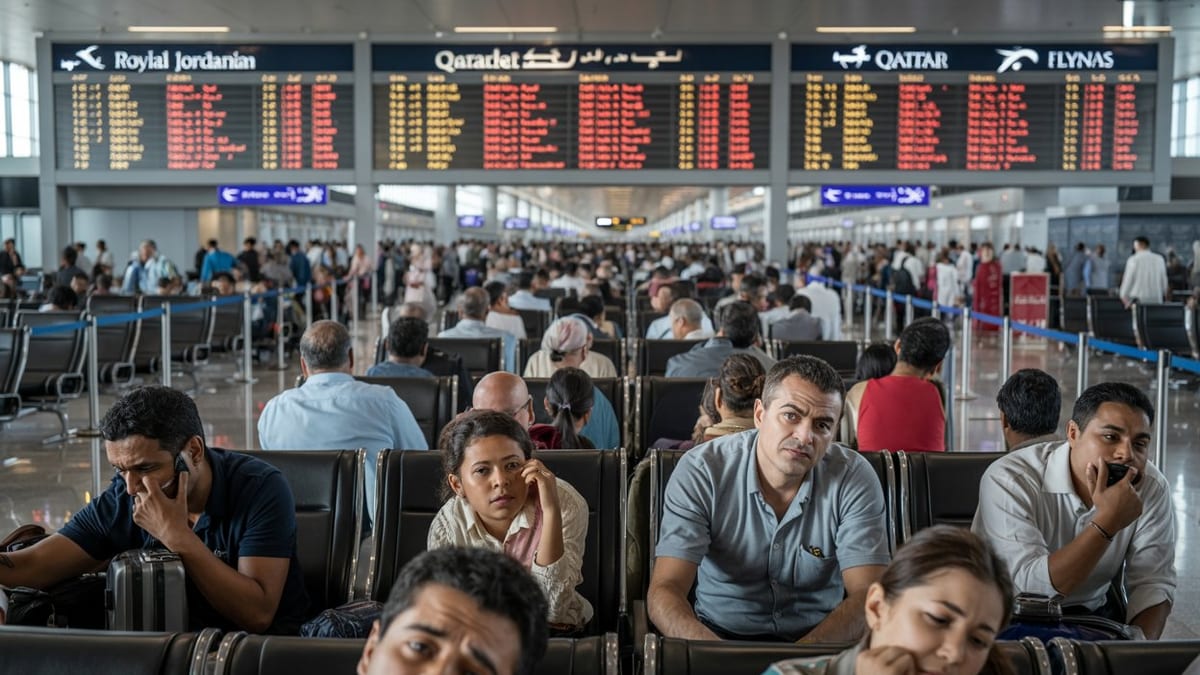
Travelers across the United States faced another bruising day of disruption today as more than 5,000 flights were delayed or canceled, with major hubs including Dallas, Las Vegas, Chicago, New York, Houston, Denver, Seattle, Minneapolis and San Diego reporting cascading schedule breakdowns that left terminal floors crowded and departure boards glowing red.
Get the latest news straight to your inbox!
Nationwide Disruption Hits Major U.S. Hubs
Live aviation tracking data for today indicates that 5,003 flights within, into or out of the United States were delayed, while at least 213 were canceled, creating widespread knock-on effects for travelers with connections and tight schedules. The pattern of disruption is concentrated at some of the country’s busiest hubs, mirroring earlier episodes this spring in which storms, airspace constraints and tight airline staffing combined to overwhelm operations.
Airports reporting some of the heaviest operational strain include Dallas Fort Worth, Chicago O’Hare, New York area airports, Houston, Denver, Seattle, Minneapolis and San Diego. Secondary hubs and leisure destinations such as Las Vegas are also seeing elevated delay rates, contributing to long lines at security checkpoints, customer service counters and airport hotels as the day wears on.
Publicly available flight performance dashboards show that delays far outnumber cancellations today, suggesting that airlines are attempting to keep most of the schedule operating, even at significantly revised times. While that strategy can help limit the number of passengers who need full rebookings or refunds, it also risks extended waits on the ground and late-night arrivals as crews and aircraft struggle to get back in position.
The latest figures echo similar disruption days reported in April, when thousands of passengers were stranded as weather and congestion snarled operations at Atlanta, Chicago, Dallas, New York, San Francisco and Newark. Those earlier events highlighted how quickly stress at a handful of major hubs can ripple through the national network and eventually hit smaller cities that depend on regional connections.
Delta, American and Regional Partners Among Most Affected
Operational data broken down by airline indicates that large network carriers and their regional partners, which collectively operate dense hub-and-spoke systems, are bearing much of the impact. Today’s disruption has hit flights marketed by Delta Air Lines and American Airlines along with flights operated by affiliated regional carriers such as SkyWest, Endeavor and Envoy. These regional airlines operate a significant share of domestic routes under the major carriers’ brands, feeding traffic into big hub airports.
Across the United States, statistics from real time flight monitoring platforms show elevated delay levels among the largest carriers by volume, including Delta and American, reflecting their concentration in key hubs like Atlanta, Dallas Fort Worth, Chicago O’Hare, New York, Houston and Minneapolis. When those hubs slow down, regional partners often experience disproportionate disruption because their schedules are built around high-frequency, tightly banked hub connections.
Performance reports published by the U.S. Department of Transportation in recent years show that carriers such as Delta, SkyWest, Endeavor and Envoy typically maintain relatively high on-time rates across the year, but are sensitive to spikes in air traffic control programs, storms and ground congestion. On days like today, even modest ground holds or diversion patterns can push tightly timed bank structures out of alignment, leading to rolling delays every hour that follows.
The presence of several regional operators in today’s disruption pattern also means smaller communities can be particularly vulnerable. When aircraft and crews are redeployed to protect trunk routes between major hubs, outlying cities may see their limited daily flights delayed until late in the day or canceled outright, amplifying the sense of being cut off for travelers relying on one or two departures.
Weather, Congestion and Infrastructure Strains Combine
While specific causes vary from airport to airport, publicly available aviation data and prior analyses point to a familiar combination of factors behind today’s numbers: unsettled weather systems over key corridors, saturated airspace around major hubs and ongoing infrastructure and staffing constraints in the national aviation system. Federal dashboards tracking causes of delay list air carrier issues, weather and national aviation system constraints as recurring drivers when disruption spikes.
At several airports, live delay trackers show departure holdups stretching beyond 20 or 30 minutes on average during peak periods, with some stretches where inbound flights are held to manage runway capacity. When those holds coincide with thunderstorms or low ceilings at downstream airports, the effect multiplies, causing aircraft to miss their next departure windows and leading to gaps in the schedule later in the day.
Industry and government data indicate that even on good-weather days, the U.S. system operates close to capacity at many high-volume hubs, leaving little margin for recovery when unexpected constraints hit. As aircraft and crews fall out of sequence, airlines may consolidate flights, swap equipment or introduce rolling delays to avoid outright cancellations, which helps some passengers but leaves others facing extended waits and missed connections.
Today’s pattern fits into a broader trend seen over recent travel seasons, where intense travel demand and constrained capacity have pushed the system to its limits. Spring and early summer are particularly vulnerable periods, with convective storms frequently intersecting high-traffic corridors that link the East Coast, Midwest and Mountain West.
Impact on Travelers and What Airlines Commit to Provide
For passengers, today’s disruptions translate into practical problems ranging from missed weddings and business meetings to unexpected overnight stays far from home. In many terminals, travelers are contending with packed gate areas and lengthy queues for rebooking help as staff work to reassign seats on remaining flights.
Guidance from the U.S. Department of Transportation notes that federal law does not require airlines to compensate passengers for delays or cancellations in most circumstances, but carriers publish their own service commitments. The department’s Airline Cancellation and Delay Dashboard summarizes these pledges, including whether specific airlines commit to provide meals, hotel accommodations and alternative travel arrangements in cases of controllable delays and cancellations.
Major U.S. airlines, including Delta and American, generally commit to offering meal vouchers or cash equivalents after long controllable delays and to arranging or reimbursing hotel stays when passengers are stranded overnight due to issues within the carrier’s control. Weather-related disruptions are often classified differently, but airlines may still provide rebooking assistance and limited amenities at their discretion.
Consumer advocates advise passengers caught up in days like today to review their carrier’s published customer service plan, monitor rebooking options via mobile apps in parallel with airport agents and keep records of expenses that might later be eligible for reimbursement. Travelers are also encouraged to check the latest federal guidance on passenger rights before future trips, particularly during peak seasons.
What Today’s Turbulence Signals for the Summer Travel Season
As the United States edges closer to the summer peak, today’s wave of 5,003 delays and 213 cancellations serves as an early warning of how quickly strain can return to the system. Demand forecasts from airlines and airport operators point to another record or near-record summer, with leisure travel remaining strong and business travel gradually rebuilding on key routes.
Recent disruption days highlighted by travel rights organizations, including significant delay clusters in April across Las Vegas, Denver, Houston, Phoenix and Washington, suggest that sustained high traffic combined with seasonal storms can produce repeated pressure points. The geography of today’s disruption, stretching from Dallas and Houston through Chicago and Denver to Seattle, Minneapolis, San Diego and the New York region, underscores how interconnected those stress points have become.
Aviation analysts note that carriers have adjusted schedules in recent seasons in an attempt to build more resilience, trimming some frequencies and spreading peak traffic more evenly across the day. Nevertheless, the scale of today’s delays shows that even redesigned schedules remain vulnerable when weather and airspace limitations coincide, especially at airports already operating near capacity.
For travelers planning trips in the weeks ahead, today’s events are likely to reinforce familiar strategies for managing risk: selecting early morning departures when possible, allowing generous connection times at major hubs, monitoring real time flight data and considering travel insurance or credit card protections that may help offset costs when disruptions occur. While no itinerary can fully avoid the possibility of a delay, understanding how and where the system tends to strain can help travelers navigate the turbulence with slightly more control.