


More news on this day
Flight operations across Moscow’s main airports have been repeatedly disrupted in recent weeks, leaving passengers facing multi-hour delays, diversions and cancellations as temporary airspace closures and strained schedules ripple through one of Europe’s busiest aviation hubs.
Get the latest news straight to your inbox!
Airspace Closures Trigger Waves of Delays
Published coverage indicates that Moscow’s three largest airports, Sheremetyevo, Domodedovo and Vnukovo, have all experienced temporary suspensions of arrivals and departures following security incidents and airspace restrictions over the capital region this summer. On several occasions, airspace over the city was closed for a period, forcing controllers to halt takeoffs and landings and divert inbound traffic to alternate airports.
According to Russian media reports, one such shutdown affected all three major airports simultaneously, with departures and arrivals temporarily suspended as air-defense activity was reported in the wider Moscow area. Information carried by state-linked outlets described a full halt to passenger operations at Vnukovo, Sheremetyevo and Domodedovo, with flights returning to normal only after the restrictions were lifted later the same day.
These closures have often been short in duration, measured in hours rather than days, but the knock-on effects for passengers have been significant. Aircraft and crews displaced by diversions can take much longer to return to normal rotations, meaning that even after runway operations resume, passengers continue to encounter delays and rolling schedule changes.
Live timetable data from Moscow-area airports on subsequent days show elevated numbers of delayed and cancelled flights compared with routine patterns, underscoring how a brief airspace stoppage can create lingering disruption that lasts well into the following travel period.
More Than a Hundred Flights Delayed or Cancelled
On several peak travel days in August, local travel coverage reported that more than a hundred flights were either delayed or cancelled at Moscow airports as disruptions cascaded across domestic and international routes. One mid-August incident saw dozens of departures pushed back by several hours, particularly at Vnukovo and Domodedovo, while a smaller but still notable number of services were cancelled outright.
Reports based on aggregated airport board data pointed to congestion throughout the day, with morning delays spilling into the afternoon and evening schedules. Flights to popular leisure destinations such as southern Russia and the Black Sea coast, as well as services to Central Asia and the Caucasus, were among those most affected, as aircraft arriving late from earlier legs could not be turned around on time.
Publicly available flight boards for Moscow on key disruption days list long sequences of services marked as delayed, often by one to three hours, alongside cancellations to regional cities and neighboring countries. In some cases, individual flights that did operate departed significantly behind schedule, affecting connecting passengers onward to other destinations.
Industry observers note that Russia’s civil aviation network is already operating with reduced fleet flexibility, so when large numbers of flights are interrupted on a single day, there is limited spare capacity to re-accommodate passengers quickly. This structural constraint has contributed to the length of time many travelers are spending at terminals waiting for updated departure times.
Passengers Stranded in Terminals for Hours
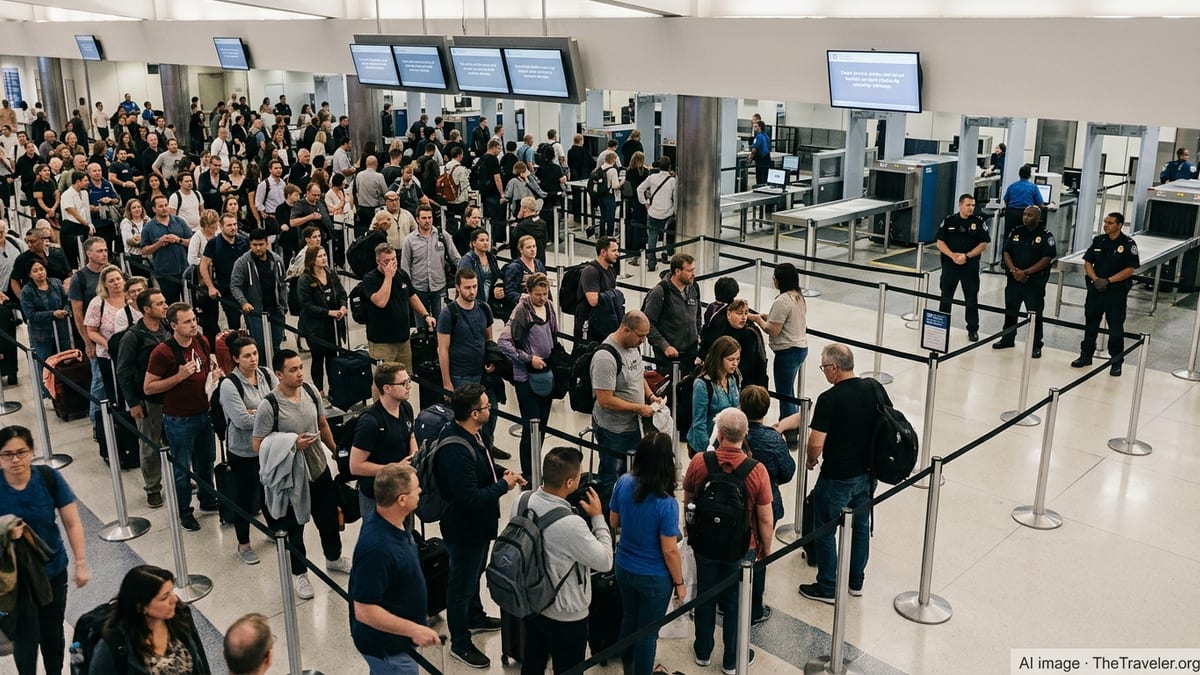
Russian-language news sites and social media posts from recent disruption days describe crowded terminals and long waits at departure gates as travelers tried to navigate shifting schedules. Passengers reported spending several hours in departure halls at Moscow airports while departures were paused or repeatedly rescheduled, with some describing overnight waits when evening flights were first delayed and then cancelled.
Accounts shared publicly highlight a lack of timely information in some instances, with departure boards and mobile apps updating more slowly than passengers expected. Travelers described learning about cancellations only after multiple rolling delays, or arriving at the airport to find that their flight had been pushed back by several hours compared with its original departure time.
For those with onward connections, the disruption has proven particularly challenging. Some passengers flying from regional Russian cities to Moscow and then onward to international destinations reported missing their connections entirely due to late arrivals into the capital. In such cases, rebooking options have often been limited, especially on heavily booked summer routes.
Despite the difficulties, published coverage also notes that basic services at Moscow’s main airports, including food outlets and seating areas, remained available during the disruptions, even as waits lengthened. However, prolonged delays placed additional pressure on these facilities, with some passengers describing crowded cafes and long lines at customer-service desks.
Operational Recovery and Ongoing Vulnerabilities
Airport and aviation data suggest that operations at Moscow’s airports typically resume within hours after airspace restrictions are lifted, with flight boards showing a gradual return from cancelled and delayed statuses to more routine patterns. In late August, for example, online arrival and departure boards for Sheremetyevo, Domodedovo and Vnukovo indicated that most flights were operating, albeit with a noticeable tail of delays compared with normal days.
Nonetheless, recent history shows that the system remains vulnerable to further interruptions. Drone-related security incidents and temporary air-defense measures in the region have repeatedly led to precautionary airspace closures in 2026, and analysts following Russian aviation expect such events to continue posing a risk of sudden disruption.
For passengers, this environment means that travel via Moscow can involve a higher degree of schedule uncertainty than in previous years. Travel advisories and independent flight-monitoring services emphasize the importance of checking the real-time status of flights to and from Moscow and allowing extra time for connections, especially during periods of heightened regional tension or adverse weather.
Travel industry specialists also point out that some international carriers have adjusted schedules, routings or frequencies into Moscow over the past year, which can further limit rebooking options when disruptions occur. This places additional emphasis on flexible tickets, travel insurance that covers delays and cancellations, and careful itinerary planning for those who must transit through the city.
What Travelers Can Do When Disruptions Hit
With the possibility of renewed closures or large-scale delays at Moscow airports, travel experts recommend several practical steps for passengers who find themselves stranded. Monitoring multiple sources of information, including airline apps, airport websites and independent flight-tracking services, can help travelers gain a clearer picture of how long disruptions may last.
Published guidance from consumer advocates stresses the importance of familiarizing oneself with fare conditions and any applicable passenger rights before travel, as compensation and rebooking rules can vary widely depending on the airline and ticket type. In cases of extensive delays or cancellations, passengers may be able to request meal vouchers, hotel accommodation or alternative routings, although availability is not guaranteed during mass disruptions.
For future trips, some travelers are choosing longer connection windows or even overnight stays when using Moscow as a transfer point, building in extra time to absorb potential delays. Others are exploring routings that bypass the capital altogether, especially for journeys within European Russia where alternative rail or regional air links may be available.
As the summer travel period continues and geopolitical tensions remain elevated, publicly accessible aviation data and news reports suggest that Moscow’s airspace is likely to face further pressure. For passengers, careful planning and real-time monitoring are becoming essential tools for managing the risk of being left waiting for hours on the concourse.
Sources: TASS report on temporary closure of Moscow airports; Lenta.ru coverage of August flight delays and cancellations; The Moscow Times report on temporary suspension of flights; Airportia Moscow metropolitan flight-status data