


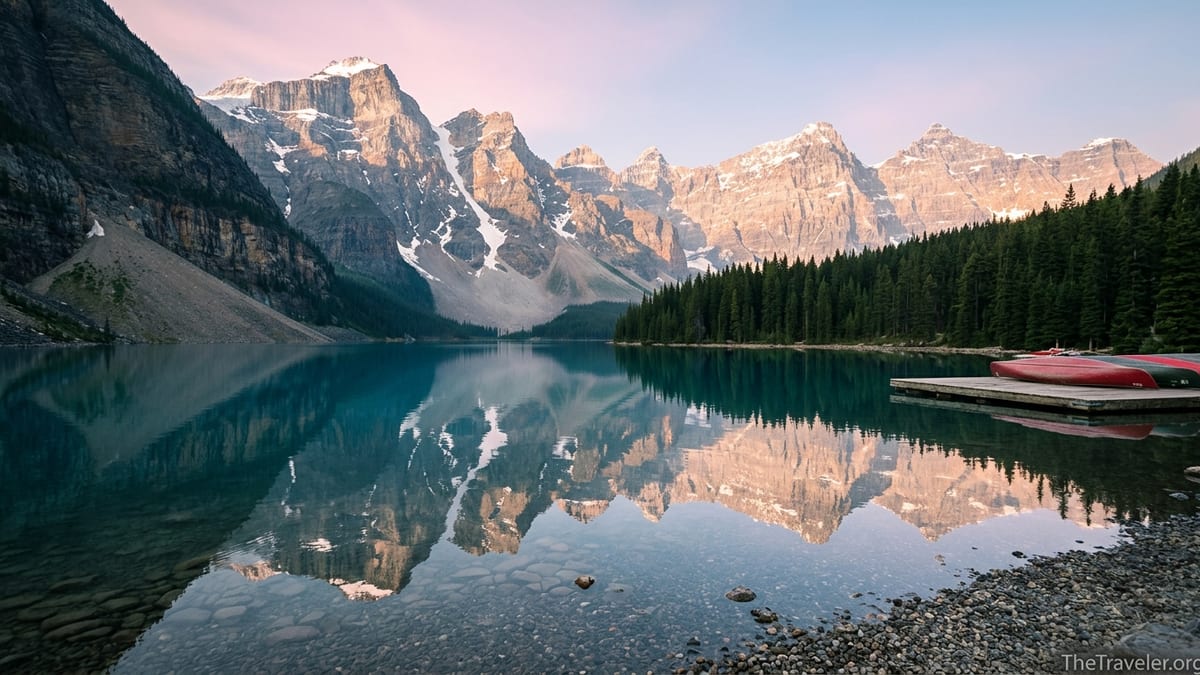
Everyone comes to Banff with the same photographs in mind: a canoe gliding across Lake Louise, sunrise over the blue mirror of Moraine Lake, jagged peaks reflected in water so clear it feels unreal. The lakes deliver on that promise. But what surprises many visitors is how quickly Banff becomes about much more than a pretty shoreline. From hot springs and wildflower meadows to unexpected food finds and quiet side valleys, the real romance of Banff often begins once you step away from the water’s edge.
Get the latest updates straight to your inbox!
The Lakes That Lure You In
The story for most travelers starts with the lakes. Lake Louise sits roughly 60 kilometers northwest of the town of Banff, a glacial basin of turquoise water ringed by peaks and the Victoria Glacier. Moraine Lake, about 14 kilometers further up the valley, is smaller but more dramatic, its intense blue framed by the Valley of the Ten Peaks. Together, they are the images that fill brochures, Instagram feeds and family calendars.
Visiting these lakes in 2026 takes a bit of planning. Private vehicles have been banned from Moraine Lake’s narrow access road in recent seasons, and demand for shuttle seats to both lakes routinely exceeds supply in July and August. Parks Canada operates frequent shuttles from the Lake Louise Park and Ride between early June and early October, and a separate Roam Transit service connects the town of Banff to Lake Louise. Tickets often sell out for peak weekends, so many travelers now build their entire Banff itinerary around whatever lake shuttle times they can secure.
When visitors finally step off the bus, the first reaction is usually awe, followed quickly by the reality of crowds. By 9 am on a clear July day, the rock pile viewpoint at Moraine Lake can feel like a small stadium, and the lakeshore trail at Lake Louise becomes a slow procession of cameras and trekking poles. For some, that is enough: a few photos, a hot chocolate in the Fairmont lobby, and back to the shuttle line. Others start looking for a quieter corner, and that is when Banff begins to open up.
Many travelers discover that the best lake experiences come from leaving the shoreline. A couple who booked a 6:30 am shuttle to Moraine Lake, for example, might push beyond the rock pile and follow the forested trail toward Consolation Lakes. Within 20 minutes of walking, the crowds thin, the air cools, and they find themselves watching pikas dart among boulders with only the sound of water in the distance. The lakes are still the star, but the supporting scenery quietly steals the show.
From Iconic Shores to Unexpected Trails
Once visitors realize how quickly they can escape the busiest viewpoints, Banff’s trail network starts to feel like a hidden bonus. Around Lake Louise alone, the progression from tourist path to true mountain trail happens in the space of an hour. Walk the flat 2-kilometer path along the north shore and you will share space with strollers and selfie sticks. Continue uphill on the Plain of Six Glaciers trail, and suddenly you are on a high balcony trail with cliffs rising above and the lake far below, the noise replaced by the grind of crampons from mountaineers on the glacier.
A similar shift happens at Johnston Canyon, a classic half-day trip that many visitors first see advertised as a simple walkway to waterfalls. By 10 am on a summer weekend, the lower catwalks can feel almost urban. Yet those who continue beyond the upper falls toward the so-called Ink Pots, a series of cold mineral springs in an open meadow, often report that the crowds vanish after the first kilometer. Families with school-age kids can manage the hike at a relaxed pace, stopping to peer into emerald pools while marmots chirp from nearby rocks.
For travelers staying several days, Sunshine Meadows offers one of Banff’s most quietly spectacular experiences. Accessed via the Sunshine Village gondola or shuttle from a base area west of Banff, this high alpine basin becomes a wildflower sea in July, with trails leading past Rock Isle Lake and out toward larch-studded ridges. Because it involves an extra transfer and ticket, many lake-focused visitors skip it, which keeps the meadows comparatively calm even in high season. Yet ask those who went, and they will often rank Sunshine Meadows alongside Lake Louise as the highlight of their trip.
Even short walks near town can change the tone of a Banff visit. A traveler who arrived expecting only postcard lakes might wander the Fenland Trail, a flat loop through spruce forest on the edge of town, and end up watching elk graze in the Bow River wetlands as early morning mist rises from the water. The realization sets in: Banff is not only about where the buses go.
The Town of Banff: From Basecamp to Character Destination
Many travelers initially treat the town of Banff as a mere basecamp, a place to sleep before the next shuttle to Lake Louise or Moraine. After a couple of days, it begins to feel like a destination in its own right. Banff Avenue, with its mix of local outfitters, bakeries, galleries and gear shops, turns into an evening ritual as important as any hike.
Breakfast is often where visitors first notice the town’s appeal. Early risers heading for shuttles line up at small cafes near Banff Avenue for flat whites and breakfast sandwiches. Sourdough-focused bakeries that opened in recent years sell croissants and loaves that rival big-city bakeries, and coffee institutions that locals have used as de facto living rooms for decades serve strong espresso and dense hot chocolate in heavy ceramic mugs. A traveler who planned to grab a quick pastry might instead linger at a window seat, watching guides load rafting gear onto trailers as the first sunlight hits Cascade Mountain.
By afternoon, when many lake visitors are filing back toward their hotel rooms, Banff’s side streets come into their own. Independent bookstores showcase photography books on the Rockies, while small galleries display local painters’ interpretations of familiar peaks. Gear shops hire staff who have actually skied the couloirs and paddled the rivers they talk about, turning quick shopping stops into informal planning sessions. A visitor curious about a shoulder-season trip might end up receiving a five-minute explanation of snow levels on local passes from the person ringing up their rain jacket.
Dining in Banff also tends to exceed expectations once travelers look beyond the main strip. Casual spots serve Alberta beef burgers and local craft beer to hikers still in their trail pants, while more upscale restaurants pair regional ingredients with mountain views. Prices are not low, but splitting a wood-fired pizza and salad with a friend can feel reasonable in a town where the scenery alone would justify a premium. For many visitors, the nightly choice becomes less about refueling for the next day and more about trying one more place before they leave.
Soaking, Stargazing and Slowing Down
The moment many travelers truly fall for Banff comes in the quieter experiences that follow a day at the lakes. An evening soak at Banff Upper Hot Springs, for instance, often rewrites the narrative of a crowded day. The hot pool, fed by naturally heated mineral water, sits on the side of Sulphur Mountain with views toward Mount Rundle. After jostling for space at busy viewpoints earlier, slipping into 40-degree water while cool mountain air brushes your shoulders feels like a reward, not just a tourist box to tick.
On clear nights, Banff’s dark skies become another surprise. While the town itself has streetlights and a busy main avenue, it takes only a short drive or bus ride to reach much darker viewpoints. Travelers who planned to collapse after a long day sometimes rally for a late-night visit to a roadside turnout on the Bow Valley Parkway or a quiet spot along the Vermilion Lakes. Standing there under a sky dense with stars, with the faint roar of the Bow River in the distance, the daytime rush at Lake Louise feels very far away.
Wildlife encounters also play a role in turning quick visits into lasting memories. Official advice is clear: keep a generous distance, never feed animals and carry bear spray on many trails. Within those guidelines, moments can still feel intimate. A family driving back from Lake Minnewanka at dusk might pull over to watch a herd of elk cross a meadow, or a solo traveler on an early morning walk near the Banff Springs Golf Course might catch a glimpse of a coyote trotting along the riverbank. These unscripted experiences, not visible on any shuttle schedule, are the ones guests recount weeks later.
Above all, Banff encourages a slower rhythm once visitors let go of the pressure to see everything in two or three days. A traveler who originally booked only two nights might extend their stay after realizing how satisfying it is to spend a rainy afternoon in the Banff Park Museum, or to linger over coffee as clouds lift from the surrounding peaks. The lakes may draw you in, but the pace of life in the valley is what convinces many to return.
Beyond Banff: The Icefields Parkway and Side Valleys
For travelers with a rental car or seat on a day tour, the Icefields Parkway often becomes the unexpected highlight of a Banff-centered trip. This 232-kilometer highway between Lake Louise and Jasper threads through a corridor of peaks, icefields and braided rivers. While it features its own famous stops, such as the Columbia Icefield area and numerous roadside glaciers, much of the magic lies in the unnamed pullouts and picnic areas that see only a fraction of the traffic of Lake Louise.
A typical first-time visitor might leave Lake Louise in mid-morning, expecting to reach the Columbia Icefield Discovery Centre by early afternoon. Instead, they find themselves stopping repeatedly: once to watch milky glacial water churn under a bridge, again to photograph a roadside waterfall, later to sit on a riverbank with a sandwich from a Banff bakery. By the time they arrive at the icefield, the day has become less about any single destination and more about feeling immersed in a huge mountain landscape.
Closer to Banff, side valleys and lakes that rarely trend online quietly impress those who seek them out. Lake Minnewanka, only a short drive from town, offers lakeside trails, picnic areas and boat tours that feel calmer than the scenes at Lake Louise. The Bow Valley Parkway, an alternate route between Banff and Lake Louise, winds through dense forest and meadows that are prime habitat for bears and elk. Because the speed limit is lower and parts of the road are occasionally restricted to bikes or buses in peak season, many travelers experience their first truly quiet roadside viewpoint there.
Even in peak summer, a visitor who times their day around these less famous locations can enjoy long stretches of solitude. An early start to Lake Louise or Moraine Lake, followed by an afternoon exploring the Bow Valley Parkway or Minnewanka area, often results in a more balanced experience than trying to squeeze both marquee lakes into the same midday window. It is in these quieter corners that travelers begin to feel not just like spectators, but temporary residents of the Rockies.
Practical Ways to Experience “More Than the Lakes”
Turning a lake-focused itinerary into a richer Banff experience often comes down to a few practical choices. First, booking shuttle seats as early as possible frees visitors from daily anxiety. Once those fixed points are set, they can build the rest of their days around slower activities rather than spending every evening refreshing reservation pages. Budget-conscious travelers often pair an early shuttle day with a low-cost afternoon, such as biking the Banff Legacy Trail between Banff and Canmore or exploring free viewpoints like Surprise Corner and the Hoodoos.
Second, staying at least three nights in or near Banff changes the feel of a trip. With only one or two nights, travelers tend to cram both Lake Louise and Moraine Lake into a single long day, leaving little energy for anything else. Add a third or fourth night and suddenly there is time for an evening soak at the hot springs, a half-day at Sunshine Meadows, or a leisurely stroll through town without a departure deadline looming. Even if accommodation costs more than in nearby Canmore, many visitors later say that the extra night was worth it for the calmer pace.
Third, embracing Banff’s weather makes it easier to appreciate what the park offers beyond its most photogenic moments. Stormy afternoons, which can roll in quickly in July and August, may obscure lake views but make museums, galleries and cafes especially inviting. A traveler caught in a rain squall on the Lake Louise Lakeshore trail might spend the rest of the afternoon at a cozy cafe on Banff Avenue, listening to guides swap stories of past seasons. Those conversations, filled with local knowledge about favorite shoulder-season trails or under-the-radar viewpoints, often inspire return trips in May or September.
Finally, learning a bit about Banff’s history deepens the sense of place. The park was originally established in the 1880s around newly discovered hot springs, with the town of Banff growing up as a railway resort long before social media popularized turquoise lakes. Visiting the Banff Park Museum or the Cave and Basin National Historic Site connects today’s shuttle queues with a longer story of tourism, conservation and Indigenous presence in the valley. For many travelers, understanding that Banff began with hot water in a cave, not with a canoe on a lake, subtly shifts what they value most about their visit.
The Takeaway
Banff’s turquoise lakes are every bit as beautiful as their photographs suggest, and for most visitors they will always be the initial reason to book a flight to Calgary or a long drive across the prairies. Yet the travelers who leave most satisfied tend to be those who treat the lakes as a gateway rather than the whole journey. They arrive for Moraine Lake’s famous rock pile view and Lake Louise’s green-blue expanse, but they return home talking about a quiet corner of Sunshine Meadows, an unexpected wildlife sighting on the Bow Valley Parkway, or a slow morning at a Banff cafe watching the mountains change color with the light.
In the end, this is Banff’s quiet trick. It uses the world’s most photogenic lakes to invite you in, then surrounds you with experiences that cannot be captured in a single frame: the smell of spruce after rain, the shock of cold river water on your fingers, the soft hiss of hot springs in winter, and the feeling of walking down Banff Avenue at dusk knowing that the mountains are all around you, even when you are not looking directly at them. Travelers may come for the lakes, but they fall in love with everything that waits just beyond the shoreline.
FAQ
Q1. Do I need a car to see Lake Louise and Moraine Lake?
It is possible to visit both lakes without a car by using Parks Canada shuttles from the Lake Louise Park and Ride and Roam Transit services from the town of Banff. Many travelers choose this option to avoid parking stress and busy mountain roads.
Q2. When is the best time of year to visit Banff’s lakes?
The main lake season typically runs from early June to early October, when shuttles operate and trails are snow free. July and August offer the warmest weather but also the largest crowds, while June and September are slightly quieter with more variable conditions.
Q3. How early should I book shuttle tickets for Lake Louise and Moraine Lake?
Shuttle reservations for peak summer dates can sell out quickly after they open, often months in advance. As soon as Parks Canada and local transit agencies release their summer schedules, it is wise to book lake shuttles before finalizing other trip details.
Q4. Are there good alternatives if shuttle tickets are sold out?
If shuttle times are unavailable, travelers can look at guided sightseeing tours that include the lakes, explore other areas like Lake Minnewanka or the Bow Valley Parkway, or shift their plans to shoulder-season dates when demand is lower.
Q5. Is Banff still worth visiting if the weather is rainy or smoky?
Yes. While poor visibility affects lake views, Banff offers indoor attractions such as museums and galleries, plus hot springs, cafes and low-elevation walks that remain enjoyable in less than perfect weather.
Q6. How many days should I plan for Banff if I want more than just the lakes?
Spending at least three full days in the area allows time for one or two lake days plus additional activities, such as Sunshine Meadows, the Icefields Parkway, hot springs and leisurely exploration of the town of Banff.
Q7. What should I budget for daily expenses in Banff?
Daily costs vary, but travelers can expect to pay for a national park pass, accommodation, meals and any paid activities such as gondolas or hot springs. Choosing picnic lunches, public transit and free hikes helps keep costs in check.
Q8. Is Banff suitable for families with young children?
Yes. Many lakeside paths, short hikes like Johnston Canyon’s lower falls and attractions such as the Banff Park Museum are family friendly. Strollers are common on popular trails, and shuttles can accommodate families with some advance planning.
Q9. How can I see wildlife safely in Banff?
The safest way to see wildlife is from a distance, either from a vehicle on roads like the Bow Valley Parkway or from well used trails. Visitors should follow park guidelines, carry bear spray where recommended and never approach or feed animals.
Q10. Is it possible to visit Jasper and the Icefields Parkway on the same trip?
Many travelers combine Banff with Jasper by driving or taking a tour along the Icefields Parkway between Lake Louise and Jasper. Allowing at least one full day for the drive, with multiple stops, creates a memorable extension to a lake-focused Banff itinerary.