


More news on this day
Aegean Airlines’ stepped up investment in Volotea is reinforcing the Spanish low cost carrier’s balance sheet at a pivotal moment, with improved liquidity, rising profitability and fresh capital commitments combining to set the stage for what industry observers describe as a record breaking expansion in 2026.
Get the latest news straight to your inbox!
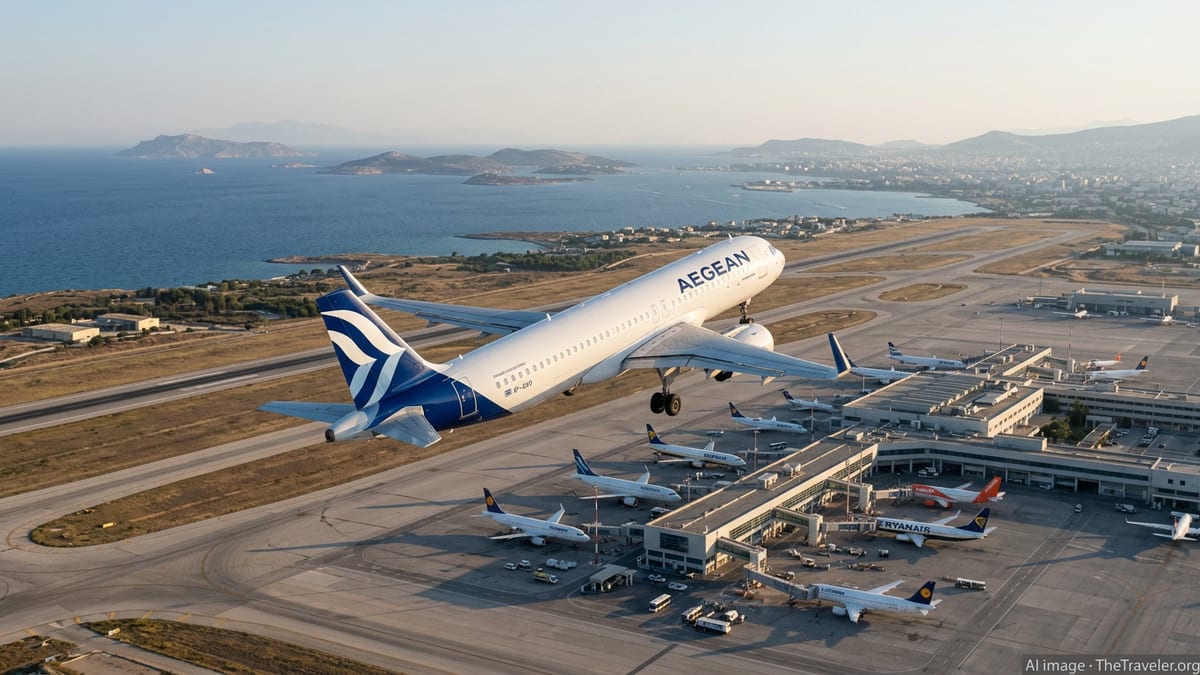
Equity Support Deepens as Aegean Raises Its Stake
Publicly available information shows that Aegean began building its position in Volotea in 2024, initially committing around 25 to 31 million euros for a minority holding of roughly 13 percent, with an option to move toward 21 percent over time. Subsequent disclosures indicate that the Greek carrier has since increased its economic exposure to about 20 percent through a mix of equity and participatory instruments, making it one of Volotea’s most influential shareholders.
Recent aviation industry coverage reports that Aegean invested a further 6 million euros in 2025, bringing its total outlay so far to about 37 million euros and lifting its effective stake close to the 20 percent threshold. The structure of the investment, which includes convertible or participatory loans, allows Aegean to preserve the right to convert into additional equity while giving Volotea immediate balance sheet support.
According to specialist airline reporting, Aegean now plans an additional 10 million euro injection in 2026, albeit smaller than the upper range originally contemplated when the two sides first outlined their partnership. Analysts note that the reduced size of the upcoming tranche reflects Volotea’s stronger financial position and lower near term capital needs, rather than any cooling of strategic interest.
The gradualist approach allows Aegean to time its capital commitments alongside Volotea’s performance and market conditions, while still underpinning the Spanish carrier’s access to growth funding ahead of the 2026 season.
Volotea’s Financial Turnaround Reaches a New Milestone
Volotea’s finances have been steadily improving, creating a more solid platform for expansion. Public financial data referenced in recent profiles points to the airline surpassing 148 million euros in EBITDA in 2024, accompanied by double digit revenue growth and continued focus on connecting small and mid sized European cities. The carrier has also been repeatedly recognized in industry rankings for customer satisfaction and low cost service quality, reinforcing its competitive positioning.
Reports on the capital structure describe how earlier funding rounds, combined with the Aegean backed equity reinforcement of up to 100 million euros, significantly strengthened Volotea’s liquidity. The airline’s improved cash generation has allowed it to reduce the scale of later capital calls compared with initial plans, a development that observers see as evidence of a maturing business model.
Aviation analysts highlight that the latest stage of Aegean’s support coincides with Volotea entering what appears to be its most profitable phase to date. Enhanced profitability, coupled with a more diversified shareholder base, is seen as a financial milestone for a carrier that spent much of its first decade focused on network build out and market entry.
This turning point is particularly important because it shifts the narrative from survival and consolidation toward managed, capital backed growth. For investors and competitors, the combination of rising earnings and strategic backing from a larger network airline signals that Volotea is preparing to play a more assertive role in European regional markets.
Joint Venture Synergies Boost Network and Revenue Potential
The financial story is closely linked to the commercial joint venture that Aegean and Volotea have been assembling since 2021. Industry coverage notes that the two airlines first established a partnership focused on connecting regional cities, before expanding to a full codeshare arrangement in 2024 that now spans well over one hundred routes across Europe.
Reports indicate that this cooperation has already led to more Volotea flights linking Greece with Italy and France, while giving Aegean additional feed into its Athens and Thessaloniki hubs from secondary cities. For Volotea, access to Aegean’s distribution channels and loyalty base supports higher load factors and yields, particularly on leisure focused routes that connect Mediterranean destinations.
The deepening equity relationship has also aligned incentives on schedule planning and capacity deployment. By coordinating frequencies, seasonal ramps and network experiments, the two carriers can reduce overlap and target under served city pairs, improving the revenue potential of their combined networks. Analysts suggest that these commercial synergies, underpinned by capital, are key to making an accelerated 2026 expansion financially sustainable.
At the same time, maintaining separate brands and distinct cost structures allows each airline to target its core markets. Aegean continues to focus on full service operations and connectivity through Greece, while Volotea retains its identity as a point to point low cost specialist in small and medium sized European cities.
Preparations for a Record 2026 Growth Push
Forward looking commentary from aviation analysts points to 2026 as a pivotal year for Volotea’s growth trajectory. With fleet plans and additional capital coming into focus, expectations are building that the carrier will seek to achieve its largest ever capacity increase, using Aegean’s backing as a buffer against market volatility and cost pressures.
Volotea has already signaled its intent to keep expanding in France, Italy, Spain and Greece, where it has developed a niche network of routes bypassing major hubs. Industry reports suggest the airline is evaluating further base openings and seasonal stations, with particular attention to Mediterranean leisure markets that benefit from strong inbound tourism from northern Europe.
Aegean’s own growth program, which includes new generation narrowbody deliveries in 2026 and beyond, creates additional scope for the partners to coordinate aircraft deployment and share traffic. As both carriers add capacity, there is potential for more cross feeding between Volotea’s regional services and Aegean’s longer range European and Middle Eastern network.
Market watchers caution that a record breaking 2026 expansion will depend on macroeconomic conditions and competitive responses from other low cost groups. However, they note that Volotea enters the planning phase with stronger margins, a reinforced equity base and a committed strategic investor, factors that collectively lower the risk of overextension.
Implications for European Short Haul Competition
The growing Aegean Volotea axis is drawing attention in the wider European short haul market, where consolidation and cross border partnerships have accelerated in recent years. According to analysis published by specialist outlets, the tie up gives both airlines greater scale in Mediterranean leisure and regional segments, positioning them as a more formidable competitor to pan European low cost giants.
For travelers, the partnership could translate into more nonstop options between smaller cities, particularly during the peak summer season, as well as smoother connections through Greek hubs on tickets combining both carriers. The codeshare structure enables itinerary combinations that were previously difficult to book on a single ticket, potentially enhancing choice on routes that fall outside the main low cost corridors.
For rival airlines and airports, the planned 2026 expansion tests the resilience of regional markets that have become increasingly important profit pools. Secondary airports in France, Italy, Spain and Greece may benefit from higher traffic volumes, while larger network carriers could face pressure on yields where the Aegean Volotea partnership offers attractive alternatives.
With Aegean’s financial support helping Volotea cross a key profitability threshold, the coming eighteen months are expected to show whether this hybrid model of low cost operations backed by a full service investor can carve out a durable niche amid Europe’s fast evolving airline landscape.