


For many visitors, Andheri is the true gateway to Mumbai. The suburb’s busy railway station and metro hub sit just a few kilometers from Chhatrapati Shivaji Maharaj International Airport, and getting between the two efficiently can save both time and money. This guide walks you through the best local options from the airport to Andheri railway station, with real-world examples, typical costs and clear advice on what makes sense for different types of travelers.
Get the latest updates straight to your inbox!
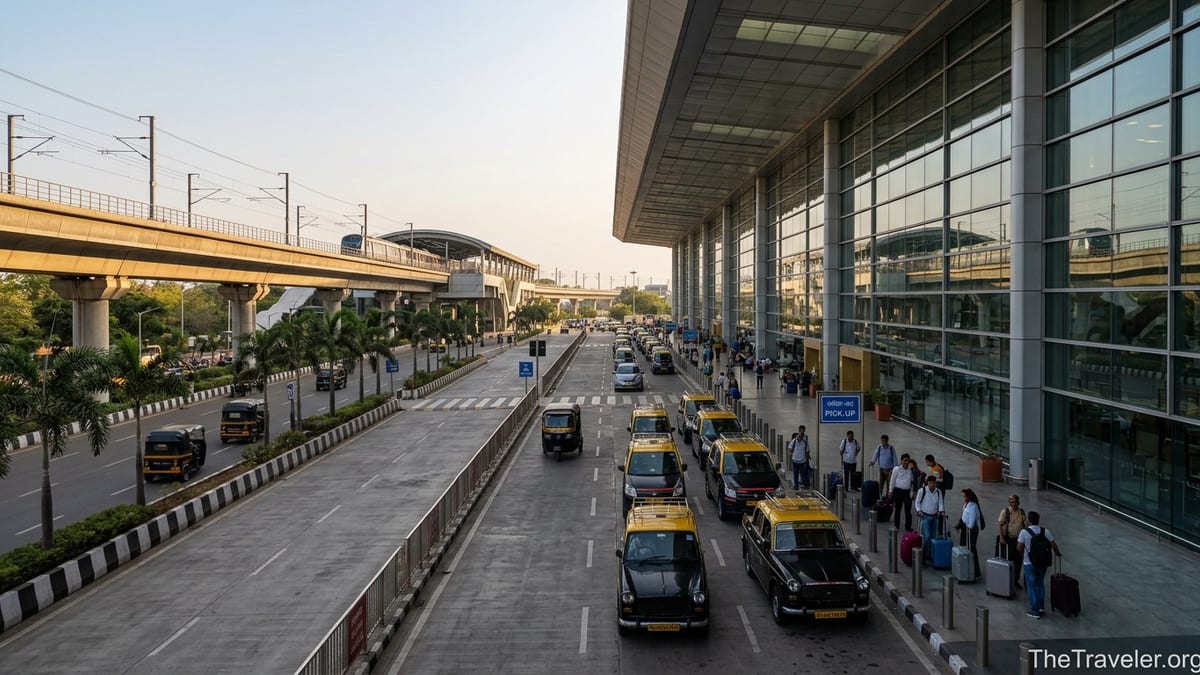
Understanding the Route: Terminals, Sides of Andheri, and Peak Hours
Mumbai’s Chhatrapati Shivaji Maharaj International Airport has two main passenger terminals: Terminal 2 (T2) for most international and many domestic flights, and Terminal 1 (T1) for several low-cost domestic carriers. Andheri railway station, on the Western Railway suburban line, lies to the north-west of both terminals and serves as a key interchange for local trains, buses and the metro. In distance terms, you are usually dealing with 4 to 7 kilometers from the airport to the station, depending on the route your vehicle takes.
Andheri station itself is split into East and West, with separate exits and surrounding neighborhoods. The main railway concourse, long-distance bus stands and the Andheri metro station are on the eastern side, reachable via road bridges and a network of elevated walkways. If you have accommodation near Andheri West, you will often still want to reach the station first, then cross over using the station’s bridges or onward buses and autos. Knowing whether your hotel or meeting point is in Andheri East or West will help you decide where to get off and which connection to choose.
Traffic conditions play a major role. During morning rush hours roughly between 8:00 and 11:00, and evening peaks around 17:30 to 21:00, the Western Express Highway and surrounding roads near the airport can become congested, occasionally turning a 15-minute hop into a 45-minute crawl. At quieter times, such as late night or mid-afternoon, taxis can cover the distance very quickly. Public transport, particularly the metro, remains comparatively predictable, with trains typically every few minutes during the day.
Most travelers either choose the straightforward but more expensive option of a taxi or ride-hailing car, or combine a short auto or cab ride with the metro or a BEST bus for a budget-friendly trip. The right option for you depends on your luggage, tolerance for crowds, and whether you are arriving at T1 or T2.
Fastest Option for Most: Airport Metro to Andheri
With the rapid build-out of Mumbai’s metro network, one of the most reliable ways to reach Andheri railway station from the airport is now by metro. From T2, you can walk or use an internal shuttle to the Airport T2 metro station on the north side of the terminal complex. Trains on the relevant line typically run every few minutes, and the ride to Andheri metro station takes around 15 minutes, passing a handful of intermediate stations before arriving directly at Andheri. Typical fares for this short journey are modest by international standards, generally in the range of 20 to 40 rupees depending on the exact line and any transfers.
From T1, the connection is slightly less direct. You can either take a short auto rickshaw ride or a local bus to the nearest metro stop, such as Airport Road or a dedicated airport-linked station, then continue to Andheri by metro. In practice, this means a 10-minute road hop followed by a 10 to 15-minute train ride. Unless you are arriving very late at night when metro services are reduced, this route is often faster than taking a taxi all the way through surface traffic, especially during the evening peak.
The main advantage of the metro is predictability. A traveler landing at T2 around 18:00, for example, can be on a train within 20 to 30 minutes of clearing baggage and immigration, and usually reach Andheri station area within 20 minutes of boarding. Even if the roads outside are jammed, the total journey can often be kept under an hour from terminal to station. The trains are air conditioned, and stations are signposted in English, Hindi and Marathi, which helps first-time visitors.
The downside is luggage and crowds. During peak office commute hours, metro cars serving Andheri can be very crowded, with most passengers standing. If you have two large suitcases and a backpack, squeezing into a packed coach may be stressful. In that situation, consider traveling a little outside peak times, waiting for the next train if the first is too crowded, or using a taxi for the whole route. For solo travelers with a single suitcase or backpack, the metro is usually the most convenient option overall.
Airport Buses and Local BEST Services
Brihanmumbai Electric Supply and Transport, better known as BEST, operates an extensive red and yellow bus network that includes services to and from both airport terminals. Several of these routes either terminate at or pass very close to Andheri railway station, making them a very economical option if you are comfortable with local-style travel and do not mind a slightly slower journey.
Specific route numbers can change over time, but in recent years routes such as 321 and its limited or express variants have been known to connect the airport area to Andheri station or nearby junctions. On the ground, you will see clearly labeled bus stops just outside the terminal access roads, often a short walk from the main arrival exits. Fares are low, typically under 30 rupees for a journey of this length, and tickets are purchased from a conductor on board or through prepaid smart cards used by regular commuters.
Consider the case of a budget traveler arriving at T1 with a single cabin bag and a daypack. Instead of heading straight for the taxi line, they follow airport signage or ask security staff for the nearest BEST bus stop toward Andheri station. Within 10 to 20 minutes, a bus marked for Andheri or a key intermediate junction arrives. The bus ride may take 25 to 40 minutes, depending on traffic and intermediate stops, but the overall cost is tiny compared with even the cheapest auto rickshaw, and the traveler gets dropped near Andheri East, just a short walk or auto ride from the station entrance.
The main trade-offs are comfort and clarity. Buses can be crowded during rush hour, and luggage storage is limited to whatever space you can manage near your seat or feet. Signboards are usually bilingual but can scroll quickly, and conductors may not always speak extensive English, though they will often recognize the word “Andheri” immediately. If you are nervous about missing your stop, use the bus only for the leg from the airport to a clear terminus like Andheri station, rather than attempting complex intermediate transfers on your first day.
Taxis and Ride-hailing: Easiest With Luggage
For most visitors carrying large bags or arriving late at night, a taxi or app-based ride remains the simplest way to reach Andheri railway station. Both terminals have official taxi counters and designated pick-up zones, including prepaid black-and-yellow taxis and higher-priced air-conditioned cabs. Ride-hailing services such as Ola and Uber typically operate from slightly separate pick-up areas, which are clearly indicated on in-app maps once you enter the terminal’s pickup zone.
In real terms, the distance from T2 to Andheri station is short, so metered fares are usually moderate when traffic is light. Depending on the class of taxi and time of day, you might pay in the vicinity of 200 to 400 rupees for the trip, plus any parking or airport access charge if the driver has waited inside the terminal precinct. When congestion is heavy or if ride-hailing surge pricing is in effect, the fare can climb higher, sometimes approaching 500 to 600 rupees for a comfortable sedan in peak evening hours.
As an example, imagine landing at T2 with two checked bags after a long-haul flight at 23:30. The metro may be running reduced services or may not fit your comfort level at that hour. Instead, you walk to the official taxi counter inside the terminal, quote “Andheri railway station East” to the staff, pay a fixed prepaid amount in cash or by card, and receive a slip with the cab number. You then follow signs to the prepaid taxi lane outside the arrivals area, hand the slip to the driver and go directly to the station without having to negotiate en route. This approach costs more than the metro but greatly reduces hassle.
For ride-hailing, a common strategy is to use airport Wi-Fi to book a car once you reach the arrivals hall. Check estimated fares for a standard hatchback versus a larger sedan, and be prepared for a 10 to 20-minute wait during busy times. When specifying your destination, use “Andheri railway station East” or a nearby landmark to avoid confusion, as simply entering “Andheri” can route the driver to the wider suburb rather than the station. Always confirm the fare estimate and vehicle details in the app before stepping into the car.
Auto Rickshaws, Short Hops, and Hybrid Routes
Three-wheeled auto rickshaws are a defining feature of Mumbai’s streets and can be an excellent option for short hops between the airport and adjoining neighborhoods, including parts of Andheri. Autos are metered and regulated, and they are allowed to operate in much of the suburban area around the airport. However, they are not permitted into certain parts of the airport’s inner access roads, so you may need to walk out to a designated auto stand or a nearby junction such as the highway slip road or a known bus stop just outside the terminal complex.
A common hybrid strategy is to combine an auto ride with the metro or suburban train. For instance, from T1 you might walk or take the airport shuttle to a public road junction and then hire an auto to the nearest metro station, such as Airport Road or another convenient stop. The ride might cost around 40 to 80 rupees depending on distance and traffic, after which you switch to the metro for the bulk of the journey to Andheri. This approach keeps costs low while avoiding the heaviest road congestion.
Another real-world scenario involves travelers staying in Andheri East, a short distance from the station but not quite walkable with bags. In this case, taking an auto from the airport directly to your guesthouse or serviced apartment often makes sense. The fare is usually cheaper than a full taxi, and travel times are similar over such a short distance, especially in non-peak hours. If you later need to reach Andheri railway station to catch a local train south to Churchgate or north toward Borivali, a quick auto ride of 5 to 10 minutes will get you to the station entrance.
The main downsides of autos are exposure to heat and noise, limited space for large suitcases, and occasional refusals during heavy rain or peak hours. Try to keep large luggage between your knees or on the small luggage shelf at the side if available, and always insist the driver uses the meter instead of negotiating a flat fare unless you already know a reasonable price for the route.
Suburban Train Connections and When They Make Sense
Mumbai’s suburban railway system is the city’s lifeline, and Andheri station on the Western line is one of its busiest nodes. While there is no direct train from within the airport to Andheri, many travelers choose to reach Andheri station first and then continue by train to other parts of Mumbai, such as Churchgate, Dadar, Bandra or Borivali. Once you are at Andheri, frequent local trains run in both directions, often every few minutes during the daytime.
A typical use case is a commuter-style traveler heading to South Mumbai during peak hours. From the airport they might take the metro or a taxi to Andheri station, then transfer to a fast or slow train toward Churchgate. Even if the roads through Bandra and Dadar are gridlocked, the rail journey from Andheri to Churchgate can take about 30 to 40 minutes on a slow train, sometimes less on a fast one, making the total door-to-door time competitive with a direct taxi from the airport all the way to the southern business districts.
However, the suburban trains can be extremely crowded at rush hour, significantly more so than the metro. Carriages are often standing-room-only, and boarding with large luggage can be challenging. If you are not used to crowded rail systems and are carrying more than a small suitcase, it may be wise to avoid suburban trains during peak times or at least aim for the non-peak sections of the day, such as mid-morning or early afternoon. Many first-time visitors instead take a taxi directly to their final destination and only use the trains once they are traveling light.
For onward connections, Andheri station also links to the Andheri metro station on an elevated structure, making it convenient to switch from suburban trains to the metro network. This is useful if, for example, you arrive from the airport by metro to Andheri, then take a suburban train to Bandra for an evening meeting, or vice versa. Understanding that Andheri acts as a multi-modal node will help you plan routes that minimize time lost in road traffic.
Luggage, Safety, and Practical Tips on the Ground
Your choice of transport from Mumbai airport to Andheri railway station will often come down to how much luggage you have and your comfort level with crowds. With just a cabin-sized suitcase and a backpack, the metro or a combination of auto and metro is usually practical. You can stand near the doors and keep your bag by your side, avoiding rush-hour trains if possible. For this setup, many travelers cap their total spend to under 100 rupees and still reach Andheri quickly.
With one or two large checked bags, a more door-to-door solution is often sensible, particularly after a long flight. Taxis and pre-booked cabs allow you to store luggage in the boot and sit comfortably in air conditioning. You might spend 300 to 600 rupees to reach Andheri station or a nearby hotel, but you will avoid wrestling heavy suitcases up and down metro station stairs or through station crowds. If your budget allows it, this can be money very well spent for the first leg of your trip.
In terms of safety, the airport area and routes to Andheri are busy and generally feel secure, but normal city precautions apply. Keep valuables zipped and close to your body, especially in crowded buses or trains, and avoid displaying large sums of cash or expensive electronics openly. At night, especially after midnight, many travelers prefer taxis or app-based rides over walking along dark side streets or waiting for infrequent buses.
Always carry small denomination notes and coins for autos and buses, as drivers and conductors may struggle to change large bills. If you plan to rely on public transport extensively during your stay, consider asking your hotel or a local friend to help you download the latest official transport apps or fare charts before you travel so you have an approximate idea of what each leg should cost. This will make you more confident when declining inflated flat fares or choosing between modes.
When Each Route Makes Sense: Sample Traveler Profiles
To decide between metro, bus, taxi, auto and suburban train, it helps to think through concrete scenarios. Imagine a solo backpacker landing at T2 at 10:00 on a weekday with just one 40-liter pack. For this traveler, the metro from Airport T2 to Andheri is almost ideal: it is cheap, fast, and requires minimal walking within stations. From Andheri, they can either continue by metro or suburban train or simply exit at the station and walk to a hostel in Andheri East.
Now consider a family of four arriving at T1 at 19:30 with three large suitcases and two small children. Navigating crowded metro platforms or buses with tired kids and heavy bags will be uncomfortable. In this case, a prepaid airport taxi or an app-based cab directly to a hotel near Andheri station or Andheri West is often worth the extra cost. Total fare will be higher, but the children can sit safely, luggage is out of the way in the boot, and the only steps to manage are at the hotel entrance.
A third scenario involves a business traveler on a tight schedule during the morning rush, needing to catch a southbound train from Andheri to reach an office near Churchgate by 9:30. For them, combining a short taxi or auto ride from the airport to Andheri station with a fast suburban train could be the most time-efficient option. The train leg avoids road congestion through Bandra and Dadar, and if they travel with a single laptop bag and perhaps a small carry-on, the crowded train is manageable.
Finally, think about late-night arrivals. After midnight, metro services may have ended or be running infrequently, and buses may be sparse. At these hours, taxis and ride-hailing become the default choice. A solo traveler arriving at 01:00 might still opt for a taxi to Andheri station or a nearby hotel, accepting the slightly higher cost in exchange for a straightforward, well-lit, and relatively quick journey on quieter roads.
FAQ
Q1. What is the quickest way from Mumbai airport to Andheri railway station?
The quickest option for most daytime arrivals is usually the metro from the airport area to Andheri, as it avoids road traffic and runs frequently.
Q2. How much does a taxi from Mumbai airport to Andheri station typically cost?
Taxi fares vary with traffic and vehicle type, but many travelers pay somewhere in the region of 200 to 400 rupees in normal conditions, more at peak times.
Q3. Is it safe to take public buses from the airport to Andheri with luggage?
Buses are widely used and generally safe, but can be crowded and offer limited space for large bags, so they are best suited for travelers with light luggage.
Q4. Can I use auto rickshaws directly from the terminal gates?
Autos are not usually allowed right up to the terminal doors, but official auto stands or public junctions just outside the airport access roads are easy to reach on foot.
Q5. Are Mumbai suburban trains from Andheri suitable for first-time visitors?
They are efficient but extremely crowded at peak hours; first-time visitors with heavy luggage may find them challenging and might prefer metro or taxi instead.
Q6. Do metro and buses run late at night from the airport to Andheri?
Services reduce significantly late at night, and after midnight options are limited, so most late-night arrivals rely on taxis or app-based rides.
Q7. Which side of Andheri station should I use for onward metro connections?
Most metro and bus interchanges are accessed from the Andheri East side, so specify “Andheri East” if your goal is quick access to onward public transport.
Q8. How long does the airport-to-Andheri journey usually take?
In light traffic, taxis and autos can do it in 15 to 25 minutes, while metro journeys often take around 20 minutes station to station, plus transfer time.
Q9. Should I change money at the airport before using local transport?
Having some rupees in small denominations is very helpful for buses, autos and smaller taxis, so many travelers exchange a modest amount at the airport.
Q10. Is it worth pre-booking a car from the airport to Andheri?
Pre-booking can be worthwhile if you arrive at odd hours, travel with family or lots of luggage, or simply prefer a fixed price and a driver waiting for you.