


More news on this day
Munich Airport is rolling out Celonis process-mining technology to monitor baggage handling in real time, aiming to pinpoint delays, reduce mishandled luggage and improve passengers’ chances of making tight connections across its busy European hub.
Get the latest news straight to your inbox!
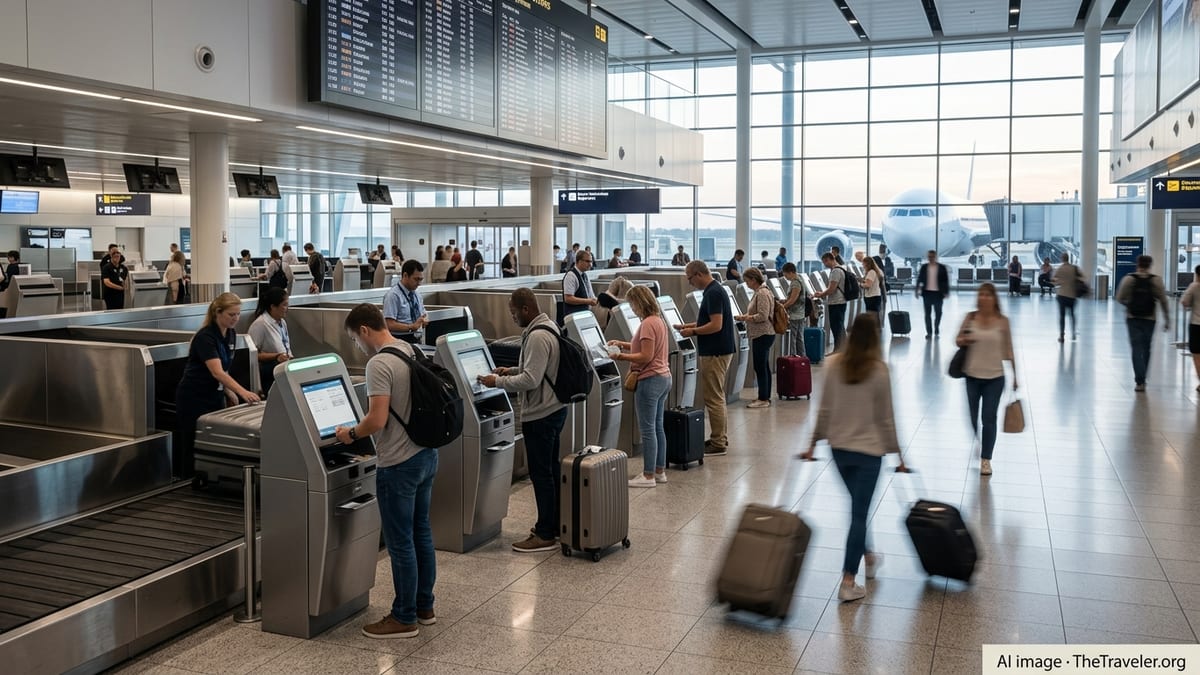
Data Platform Targets a Persistent Pain Point for Travelers
The move reflects growing pressure on major hubs to tackle baggage disruption after several years of volatile travel demand and staffing constraints. Munich, one of Europe’s key transfer airports, handles millions of transfer bags annually, making reliable and predictable baggage flows central to its reputation and airline partnerships.
By integrating Celonis software with its baggage handling and airport operational systems, Munich Airport can map each step of a bag’s journey, from check-in to loading and final delivery. The platform reconstructs these process chains from event data, highlighting where delays or irregularities most often occur. Publicly available information on Celonis implementations indicates that the company’s tools are designed to surface bottlenecks, quantify their impact and suggest targeted interventions.
For travelers, the focus is on practical outcomes rather than technology for its own sake. Faster identification of missed or late bags, more accurate estimates of delivery times and earlier alerts to ground teams are expected to mitigate missed connections and long waits at carousels. Reports on recent airport digitization projects across Europe suggest that real-time insights of this kind can significantly cut the rate of mishandled baggage.
Munich’s decision also reflects broader efforts among hub airports to differentiate through reliability rather than just size or route networks. In a competitive market where delays can quickly fuel social media criticism, improvements in something as basic as baggage delivery can influence airline scheduling decisions and passenger loyalty.
How Process Mining Follows Each Bag Through the System
Celonis is widely associated with a discipline known as process mining, which reconstructs and analyzes workflows based on digital footprints left in operational systems. In the context of baggage handling, these footprints range from scan events at check-in and sorting nodes to loading confirmations at aircraft doors and arrivals at claim belts.
Once connected to these data sources, Celonis software can display live process maps showing where bags are currently located and how long they have spent in each stage. Historical data sets are used to establish benchmarks for normal performance, allowing deviations to be flagged rapidly. If bags bound for a particular outbound flight are stuck at a sorting point longer than usual, the system can highlight the delay before it results in missed connections.
According to published coverage of similar deployments, airports and airlines can set rules to prioritize bags for short transfer connections, allocate additional staff to emerging hotspots or adjust ground handling tasks in real time. Over longer periods, the detailed records help operations teams understand whether delays stem primarily from staffing levels, equipment capacity, schedule design or specific airlines and routes.
For an airport the size of Munich, where multiple ground service providers, airlines and technology vendors must coordinate around tight aircraft turnaround windows, the visibility offered by process mining is positioned as a way to align stakeholders around the same performance metrics.
Improving Connections and Reducing Irregular Operations
Baggage delays can have a cascading effect on the wider travel experience, particularly at transfer-focused hubs. When bags miss connections, travelers are forced to file claims, make unplanned purchases and in some cases alter itineraries, while airlines and airports face higher handling and compensation costs.
Munich Airport’s adoption of Celonis aims to reduce the number of such irregular operations by identifying at-risk bags early. If a bag checked in at a non-hub station is slow to arrive at Munich or is delayed in the inbound unloading process, data-fed dashboards can bring it to the attention of ground handlers responsible for the onward flight. In some cases that may translate into holding a flight briefly or dispatching a dedicated runner to transfer the bag.
Publicly available information on aviation analytics projects suggests that connecting baggage data to broader operational systems can also improve gate planning and stand allocation. By understanding where baggage congestion is likely to build, dispatchers can adjust aircraft parking positions or towing schedules to ease pressure on certain piers or baggage halls.
For airlines using Munich as a hub, any reduction in baggage-related disruption supports tighter scheduling and better use of aircraft time. For the airport operator, lower rates of mishandled luggage may help contain customer service costs and support its positioning as a premium gateway in the German and European markets.
Munich Joins a Wider Digital Shift in Airport Operations
The partnership fits into a broader trend of airports adopting data platforms originally developed for corporate process optimization. Celonis, founded in Germany, has expanded from enterprise resource planning analysis into sectors such as logistics and transportation, where fragmented data often obscures inefficiencies.
Across the aviation industry, operators are experimenting with machine learning, predictive analytics and digital twins to forecast passenger flows, aircraft rotations and baggage volumes. Research into queue modeling and delay propagation has emphasized the value of real-time data in managing disruptions, and airports from Sydney to major U.S. hubs have reported incremental gains from data-driven approaches to staffing and resource allocation.
Munich’s use of Celonis slots into these wider efforts by focusing specifically on one of the most visible elements of airport performance. Baggage reliability is a frequent topic in traveler forums and consumer surveys, and sustained issues can shape perceptions of an airport far more than terminal architecture or retail offerings.
Industry observers note that the success of such technology deployments depends not only on software capabilities but also on organizational follow-through. To turn insights into better outcomes, airports must adapt processes, training and incentives, ensuring that front-line teams can act quickly on the information generated by analytics platforms.
Next Steps: From Insight to Measurable Performance Gains
With the Celonis system in place, the next phase for Munich Airport will be translating dashboards and insights into quantifiable improvements in baggage performance indicators. These typically include the percentage of bags making their intended flight, average delivery times to carousels and the volume of delayed or mishandled baggage per thousand passengers.
According to publicly available information on airport digitization programs, early stages often focus on building trust in the data and refining alert thresholds to avoid overwhelming staff with notifications. Over time, as teams grow more familiar with the system, airports can introduce more advanced capabilities such as predictive alerts based on weather forecasts, air traffic constraints or known schedule disruptions.
Should Munich succeed in cutting baggage delays and improving reliability, the project may serve as a reference point for other mid- to large-sized hubs seeking to modernize their ground operations without wholesale replacement of physical infrastructure. In that scenario, process mining platforms like Celonis would function as a digital layer on top of existing systems, coordinating complex baggage flows more efficiently.
For passengers passing through Munich in the coming seasons, the clearest measure of progress will not be the technology in the background but shorter waits at carousels and a higher likelihood that checked bags arrive where and when they are supposed to.