


On recent trips through Frankfurt, Munich, Chicago and Doha, I set out to answer a question that many frequent flyers quietly debate: how do Lufthansa’s premium lounges really stack up against some of the best airport lounges in the world? After spending time in Lufthansa’s Business, Senator and First Class Lounges in Frankfurt and Munich, then walking into United Polaris Lounges in Chicago and Newark and Qatar Airways’ Al Mourjan Business Lounge in Doha, the contrasts became impossible to ignore. This review looks at Lufthansa’s lounge experience not in isolation, but in direct comparison with other premium airport lounges many long-haul travelers already know.
Get the latest updates straight to your inbox!
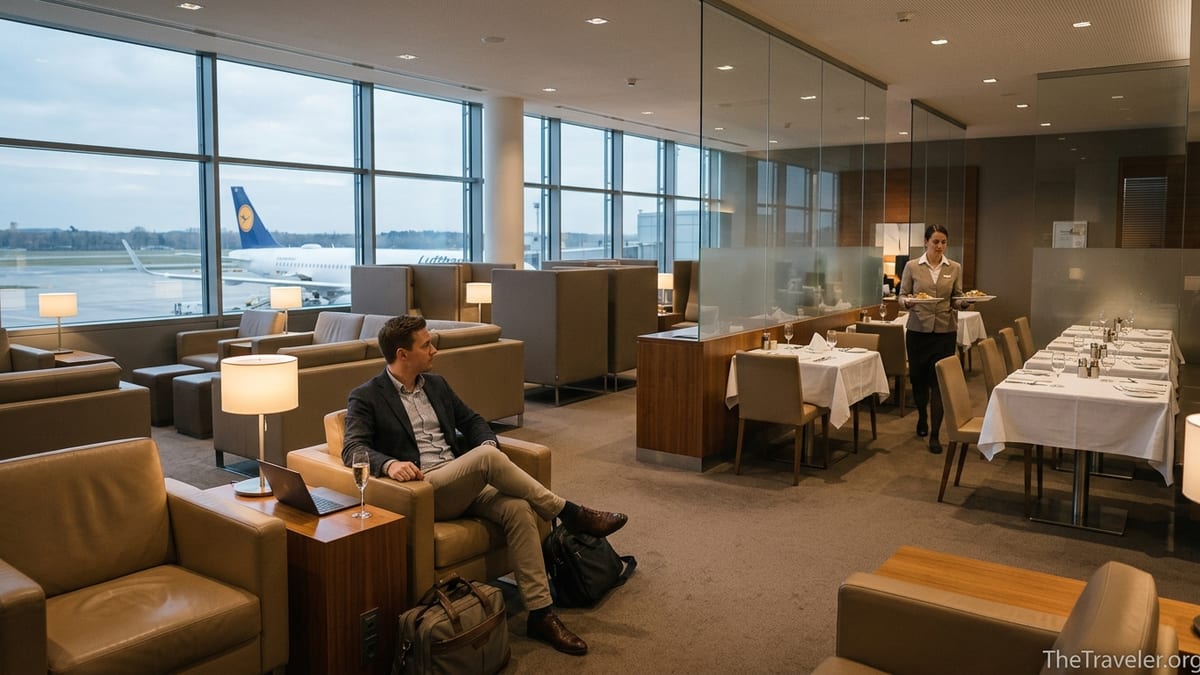
Where Lufthansa’s Lounge Network Shines and Where It Shows Its Age
Lufthansa’s lounge network is one of the largest in Europe. In Frankfurt and Munich alone you will find multiple Business and Senator Lounges, plus dedicated First Class Lounges and in Frankfurt the famous First Class Terminal. Across Germany and at major outstations like New York JFK or Washington Dulles, Lufthansa passengers typically have access to a branded lounge rather than a generic contract facility. That scale matters if you are a Star Alliance loyalist connecting through Europe several times a year, because it dramatically increases the odds that you will find a consistent space to eat, work or shower between flights.
However, once you begin to compare Lufthansa’s lounges to newer concepts like United’s Polaris Lounges in Chicago, Newark or San Francisco, or Qatar Airways’ Al Mourjan Business Lounge at Doha, the age of some Lufthansa spaces becomes obvious. United’s Polaris lounges, which are limited to long haul business class and select partner premium cabins, feel more like compact luxury hotels than airline clubs, with à la carte dining rooms, barista coffee and private daybeds. Qatar’s main Al Mourjan lounge in Doha stretches over roughly 10,000 square meters, with soaring ceilings, water features and two full-service dining areas that rival five-star hotels in the Gulf. Against that backdrop, parts of the Lufthansa network look and feel more functional than aspirational.
The tradeoff is that Lufthansa offers broader coverage and easier access. A Frankfurt-based business traveler on a mid-morning flight to Vienna in economy can still pay to access a Business Lounge or enter with Star Alliance Gold status, whereas the same traveler departing Chicago on a domestic United flight would not be able to enter a Polaris lounge at all. If you prioritize reliable access on ordinary work trips, Lufthansa’s network can feel more useful day to day than some of the flashier but far more exclusive competitors.
Inside Lufthansa’s Business and Senator Lounges: Solid but Rarely Spectacular
Most travelers will first encounter Lufthansa’s Business or Senator Lounges, which share a broadly similar template. In Frankfurt’s Terminal 1, a typical Business Lounge offers a self-service buffet with hot dishes like pasta, schnitzel or curry, cold salads and breads, a staffed bar with draft beer and basic spirits, and plenty of café-style seating. Senator Lounges add slightly upgraded drinks, including better wines and occasionally a more varied hot food selection, and are reserved for Star Alliance Gold members plus premium cabin travelers.
Compared with a standard U.S. membership lounge, such as a typical United Club, Lufthansa’s Business Lounges feel slightly more generous on food, particularly during peak meal windows when hot dishes are replenished frequently. Showers are a standard feature in major Lufthansa lounges, which is not always the case in smaller United Clubs or contract lounges. On an overnight flight from New York to Frankfurt in economy, being able to shower on arrival in the morning Business Lounge before heading into meetings can be a genuine productivity saver.
Where the Lufthansa Business and Senator Lounges begin to fall behind newer competitors is in design and ambiance. Many of the seating areas, especially in older Frankfurt lounges, prioritize capacity over comfort. Rows of identical armchairs, few secluded nooks and limited natural light can give busy lounges a canteen-like feel during rush hours. That contrasts sharply with Qatar’s Al Mourjan Business Lounge, where you find tall leather chairs arranged around quiet water features, and floor-to-ceiling windows offering apron views, or with United Polaris lounges that carve out semi-private cubicles with task lighting and power at nearly every seat.
Pricing and access policies underscore the positioning. On many Lufthansa-operated flights in Europe, a passenger in economy can add lounge access at booking or check-in for a fee that often lands roughly in the 40 to 60 euro range, depending on route and demand. Even if exact prices fluctuate, this is designed to make the lounges feel like an add-on service rather than an ultra-elite space. In contrast, United does not sell day passes to Polaris lounges at any price and Qatar’s Al Mourjan access is normally tied to a business class ticket, with paid entry starting in the ballpark of low three figures in U.S. dollars. The Lufthansa product is intentionally more democratic, but that means it rarely delivers the sense of sanctuary that the very top-tier lounges do.
Lufthansa First Class Lounges and the Frankfurt First Class Terminal
Lufthansa’s real answer to flagship products like United Polaris or Qatar Al Mourjan is not its Business Lounges at all, but its First Class Lounges and, uniquely, the First Class Terminal in Frankfurt. Access is tightly controlled. In practice, it is for passengers traveling same day in Lufthansa or Swiss First Class, with some nuances for same-day connections and very high-tier frequent flyers on select tickets. Importantly, you cannot simply pay your way in, and holding Star Alliance Gold status without a qualifying first class boarding pass will not open these doors.
Inside Frankfurt’s First Class Lounge in Terminal 1 you step into a very different world from the main Business and Senator facilities. Seating shifts from rows of identical armchairs to clusters of leather armchairs and sofas arranged like living rooms, with warm wood tones and soft lighting. Tables are properly set with linen and glassware for full table service dining. A dedicated quiet area with daybeds encourages real rest between long haul sectors. High-quality shower suites with bathtubs and the airline’s collectible yellow rubber ducks have become something of a minor cult item among aviation enthusiasts.
The separate First Class Terminal, located in its own building at Frankfurt Airport, is the most distinctive part of Lufthansa’s ground product. Here, after clearing dedicated security, you can settle into a quiet space that feels more like a small private club than an airport lounge. Staff offer sit-down à la carte dining with dishes that, in recent reviews, have been compared favourably to high-end restaurants in Frankfurt. When your flight is ready, a personal assistant escorts you downstairs to a waiting limousine or van and you are driven across the tarmac directly to your aircraft. That private car transfer is the kind of detail that moves Lufthansa’s First Class ground experience into the same conversation as the best first class lounges in the world.
Recent traveler reports indicate that Lufthansa continues to invest in its first class ground product, most notably with a refreshed First Class Lounge in Munich’s Terminal 2 that reopened in late May 2026 after renovation. Flyers describe expanded seating areas with tan leather sofas, individual work booths, and an updated dining program featuring multiple rotating à la carte menus, including limited-time menus tied to major events. If your priority is a true flagship lounge experience within Europe, these First Class Lounges, rather than the more common Business Lounges, are where Lufthansa competes most convincingly with the likes of Qatar and other Gulf carriers.
Comparing Dining: Buffet Comfort vs À La Carte Indulgence
Dining is where the gap between Lufthansa’s mainstream lounges and newer premium concepts becomes most obvious. In a typical Lufthansa Business Lounge in Frankfurt at lunchtime, you might find a self-service buffet with a couple of hot dishes, such as a pasta with tomato sauce and a regional meat option, alongside soup, salads, bread and a dessert or two. It is hearty and practical, designed to get you fed quickly between flights. In Senator Lounges, there may be a marginally better selection of wines and slightly more variety, but the model remains buffet-based.
Walk into United’s Polaris Lounge in Chicago or Newark at a similar time of day and the contrast is striking. In addition to a buffet, there is a seated restaurant area with menus that offer starters, mains and desserts brought to your table by waitstaff. Travelers regularly order steak, fish or composed salads plated to restaurant standards, alongside barista-made coffee drinks and cocktails mixed at a central bar. Qatar’s Al Mourjan Business Lounge at Doha also combines extensive buffets with a full à la carte restaurant upstairs, where dishes range from Middle Eastern specialties to western comfort food. These lounges aim to replace or significantly supplement the meal you might otherwise eat on board.
Lufthansa narrows the gap considerably in its First Class Lounges and the First Class Terminal. There, instead of heating up your own plate from a chafing dish, you are handed a menu and encouraged to linger over multiple courses. Recent patrons in Frankfurt and Munich mention restaurant-style presentations, with starters like seasonal salads or soups, mains such as grilled fish or steak and plated desserts that would not look out of place in an upscale city brasserie. The wine lists also step up a level, and it is here rather than in the Business Lounges that you are most likely to find higher-end champagne poured without fuss.
For many travelers this raises a practical question. If you are flying in Lufthansa business class and connecting through Frankfurt or Munich, is it worth going out of your way to eat in the lounge rather than on the plane? In my experience, if you have access to a First Class Lounge due to a segment in Lufthansa or Swiss First, absolutely plan to dine heavily on the ground. If you are only eligible for the Business or Senator Lounges, use them for a solid snack or light meal, but do not expect the kind of memorable pre-flight dining you might get at a Polaris or Al Mourjan style facility.
Space, Design and the Feel of Each Lounge
Space is an area where Lufthansa’s lounges can feel inconsistent. In off-peak periods, a Business or Senator Lounge in Frankfurt can be pleasantly quiet, with enough seating that you can find a corner to work. At peak times, especially during the morning and late afternoon banks of transatlantic departures, some lounges feel stretched. Seating fills up quickly, families cluster around power outlets, and queues can form at the buffet. The overall impression in those moments is of a well-used transit lounge rather than a true retreat from the terminal.
By contrast, Qatar’s Al Mourjan Business Lounge in Doha is engineered to wow. Even during busy transfer waves, its enormous footprint and very high ceilings prevent it from feeling as crowded as it actually is. There are long sightlines, sculptural staircases, and different zones for dining, lounging and quiet work. United’s Polaris lounges, while much smaller, use partitions, varied furniture and clever lighting to build a sense of privacy in what might otherwise be a dense footprint. In Chicago, a series of semi-enclosed booths with personal lamps and high-backed chairs lets solo travelers feel cocooned, even when every seat is technically filled.
Lufthansa’s design choices in its First Class Lounges tilt more toward this premium model. In Munich’s refreshed First Class Lounge, travelers describe generous spacing between seating clusters, an intimate cigar lounge separated from the main seating area, and a more residential style of interior design. Frankfurt’s First Class Terminal takes privacy even further, with relatively few guests at any one time and staff maintaining an almost hotel-like atmosphere. If design and a sense of escape are top priorities, the clear message is that Lufthansa can deliver, but that quality is concentrated mostly in the first class ground experience rather than evenly spread across the network.
For everyday business and leisure travelers who will rarely see the inside of a First Class lounge, this distinction matters. If you are choosing between an itinerary that routes you through Frankfurt on Lufthansa in business class or through Chicago or Newark on United in Polaris, and lounge quality is a major factor, the United routing may well feel more rewarding on the ground. On the other hand, if your travels are primarily intra-European and you value the reliability of knowing there is a familiar Business Lounge at almost every German departure point, Lufthansa’s consistency may matter more than the occasional wow factor elsewhere.
Practical Tips to Get the Best From Lufthansa Lounges
One of the easiest ways to improve your Lufthansa lounge experience is to be strategic about which lounge you choose when there are multiple options. In Frankfurt Terminal 1, for example, different Business and Senator Lounges can vary in crowding depending on the time of day and which gates are handling long-haul departures. It is often worth walking an extra few minutes to a slightly further lounge that serves fewer heavy banks of flights. Local travelers often have a favourite lounge based on this, preferring a quieter space a short walk away from the busiest Schengen gates.
Timing also matters. If you have flexibility, aim to visit during the quieter middle periods between the morning and evening waves. Food quality at the buffets tends to be best shortly after fresh trays are brought out, and showers are easier to secure before the peak rush. In Frankfurt’s Business Lounges, arriving at around 10:30 in the morning, after the early transatlantic banks but before midday, often yields a much calmer environment than arriving just after a dozen long-haul flights have landed within an hour of each other.
Travelers connecting from Lufthansa or Swiss First into a European business class flight should pay close attention to lounge eligibility rules. In many cases, same-day first class passengers arriving into Frankfurt or Munich retain access to First Class Lounges for their connection, even if their onward leg is in business class. That can dramatically change the feel of a layover. Meanwhile, passengers flying in economy or premium economy can sometimes buy access to Business Lounges on eligible flights when checking in online or at the airport, but this option is not consistently available at every station and it is not offered for the First Class Lounges or the Frankfurt First Class Terminal.
Finally, remember that you are not obligated to spend your entire layover in the first lounge you see. If a Business Lounge is packed and feels chaotic, it is perfectly reasonable to scan the departures board, identify another Lufthansa lounge near your gate and relocate. That ten-minute walk can be the difference between battling for a power outlet and settling into a quiet chair with a decent view of the ramp.
The Takeaway
After comparing Lufthansa’s lounges to some of the best premium airport lounges currently available, a nuanced picture emerges. Lufthansa’s ordinary Business and Senator Lounges, which most passengers will encounter, are reliable, functional and widely available, but they rarely deliver the sense of occasion you get in a United Polaris Lounge or Qatar’s Al Mourjan Business Lounge. Buffets are solid rather than imaginative, seating is efficient rather than luxurious, and design choices in older lounges can feel dated compared with the more recent wave of high-concept spaces.
Where Lufthansa truly competes at the top of the market is in its First Class Lounges and the Frankfurt First Class Terminal. There, the airline offers à la carte dining, high-end drinks, proper rest spaces and, in the case of the First Class Terminal, a chauffeured ride directly to your aircraft. Recent refurbishments in Munich’s First Class Lounge show that Lufthansa is still investing in this product, and for travelers lucky enough to access it, the ground experience can be a genuine highlight of a trip.
If you are deciding whether to route through a Lufthansa hub or through airports with alternative premium lounges, let your ticket and your expectations guide you. A United Polaris itinerary might make more sense if premium ground service is central to your trip and you are in long haul business class. A Qatar connection via Doha will almost certainly deliver a more dramatic lounge environment. On the other hand, if you value network breadth, predictable access and a distinctly German sense of order, Lufthansa’s lounges will quietly do their job, especially if you know which ones to seek out and when.
In the end, Lufthansa’s lounges are less about jaw-dropping first impressions and more about dependable utility, with a few genuinely world-class outliers at the very top. Understanding that split is the key to avoiding disappointment and getting the most from what Lufthansa currently offers on the ground.
FAQ
Q1. Who can access Lufthansa Business and Senator Lounges?
Access to Lufthansa Business Lounges is generally available to passengers traveling in business class on Lufthansa or Star Alliance partners, as well as some frequent flyers and those who have purchased lounge access with eligible tickets. Senator Lounges are typically reserved for Star Alliance Gold status holders and premium cabin travelers, but specific eligibility can vary by route and ticket type.
Q2. Can I buy access to a Lufthansa lounge if I am flying economy?
On many Lufthansa-operated flights, especially within Europe, passengers in economy or premium economy can purchase access to a Business Lounge during booking, online check-in or at the airport. Availability and pricing vary by airport, and this option usually applies only to Business Lounges, not to Senator or First Class Lounges.
Q3. How do Lufthansa’s lounges compare to United Polaris Lounges?
Lufthansa’s standard Business and Senator Lounges offer solid buffets, drinks and showers, but they typically lack the à la carte dining, barista coffee and private daybeds found in United’s Polaris lounges. Lufthansa’s First Class Lounges and the First Class Terminal in Frankfurt are more directly comparable to the Polaris concept in terms of exclusivity and overall quality.
Q4. What makes the Lufthansa First Class Terminal in Frankfurt special?
The Lufthansa First Class Terminal is a separate building at Frankfurt Airport with dedicated security, full restaurant-style dining, quiet rooms, high-end showers and a private car transfer directly to your aircraft. It is reserved mainly for Lufthansa and Swiss first class passengers on same-day flights, making it one of the most exclusive ground experiences in commercial aviation.
Q5. Are showers available in all Lufthansa lounges?
Showers are commonly available in major Lufthansa Business, Senator and First Class Lounges at hubs like Frankfurt and Munich, as well as in some key outstations. Smaller lounges and partner-operated facilities may not offer showers, so it is wise to check lounge details in advance if freshening up is important to your trip.
Q6. Is the food in Lufthansa lounges good enough to replace an in-flight meal?
In Business and Senator Lounges, the buffet food is usually adequate for a light or moderate meal, but it rarely matches the restaurant-style quality offered by top-tier lounges such as United Polaris or Qatar’s Al Mourjan. In Lufthansa’s First Class Lounges and the First Class Terminal, the à la carte dining is strong enough that many travelers choose to eat most of their main meal on the ground.
Q7. Which Lufthansa hub is better for lounges, Frankfurt or Munich?
Both hubs offer multiple Business and Senator Lounges, but recent renovations in Munich’s First Class Lounge have given it a particularly fresh and refined feel for first class travelers. Frankfurt has the unique advantage of the standalone First Class Terminal. For most business class and status passengers, the differences between hubs are modest and often depend more on specific lounge locations and crowding at the time of travel.
Q8. How crowded are Lufthansa lounges during peak times?
During major departure waves, especially morning and late afternoon at Frankfurt and Munich, Lufthansa Business and Senator Lounges can become quite crowded, with limited seating and busy buffets. Arriving outside of these peak windows or walking to a less central lounge can significantly improve your experience.
Q9. Do Lufthansa lounges offer good working conditions for business travelers?
Most Lufthansa lounges provide reliable Wi-Fi, ample power outlets and a mix of desk-height and lounge seating, which is sufficient for routine work. However, privacy can be limited in busier lounges compared with newer premium lounges that emphasize semi-enclosed work pods and quieter zones.
Q10. If I value lounge quality most, should I choose Lufthansa, United Polaris or Qatar Airways for a long haul trip?
If top-tier lounge quality is your main priority and you are flying in business class, United Polaris and Qatar Airways’ Al Mourjan lounges usually offer a more luxurious and memorable ground experience than Lufthansa’s standard Business and Senator Lounges. Lufthansa becomes a stronger contender if you have access to its First Class Lounges or the First Class Terminal, or if you prioritize the breadth and consistency of its lounge network across Europe.