


Nairobi’s Jomo Kenyatta International Airport (JKIA) is busy, spread out, and can feel chaotic the first time you arrive. The good news is that ride‑hailing apps like Uber and Bolt work well here, and with a little preparation you can move from baggage claim to your hotel with minimal stress. This guide walks you through pickup zones, typical prices, app and SIM card tips, safety, luggage handling, late‑night arrivals, and when it might make sense to choose an airport taxi instead.
Get the latest updates straight to your inbox!
Understanding JKIA’s Layout and Ride-Hail Zones
Jomo Kenyatta International Airport sits in Embakasi, about 13 kilometers from central Nairobi. The airport currently operates from one main terminal complex known as Terminal 1, which is divided into concourses 1A to 1E, plus a separate Terminal 2. International flights generally use Terminal 1A and 1E, while many regional and some low‑cost operations use the other concourses or Terminal 2. All arriving passengers, however, end up funneled toward the same general arrivals area and public landside zone, which is where you will connect with your Uber, Bolt or taxi.
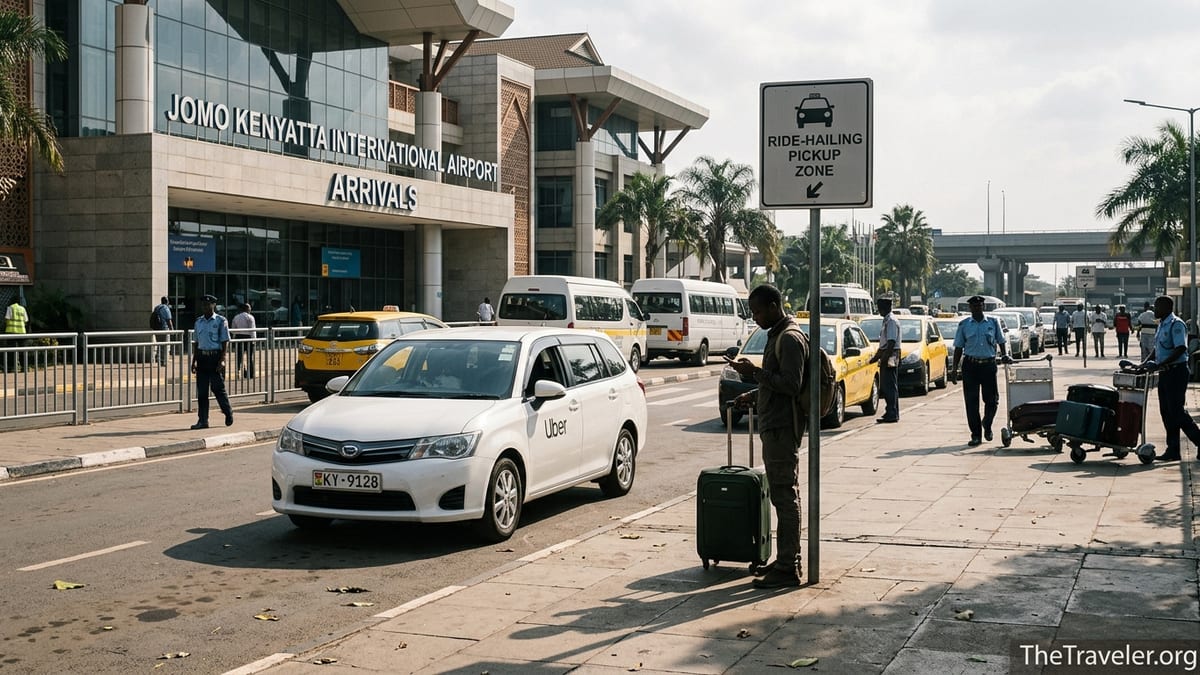
After immigration, baggage claim and customs, you exit into an arrivals hall that has ATMs, money changers and mobile network desks. From here, you walk outside to the forecourt. Different sections of the curb are signed for official taxis, hotel shuttles, tour operators and app‑based ride‑hailing. You may see signage referring to “e‑hailing” or “ride‑hailing” pickup zones instead of specific app brand names. Bolt’s own airport information notes that pickup points at Nairobi airport can vary and are shown inside the app at the time you request, which is why following the onscreen map is more reliable than following generic directions you found in an old blog.
Expect that the app’s pin may drop near a labeled ride‑hailing area a short walk from the main doors, sometimes beyond the densest crowd of greeters and taxi touts. In practice, arriving passengers commonly report walking 2 to 5 minutes to meet their driver, especially during busy evening banks of flights when the curb directly in front of the doors is heavily regulated. If in doubt, send your driver a quick chat message such as “I am at Terminal 1A, outside Door 2 by the e‑hailing sign” and wait where there is good lighting and foot traffic.
Where Exactly to Meet Your Uber or Bolt
Uber’s dedicated Nairobi airport page confirms that rides can be requested to and from JKIA and highlights that you will be guided to a pickup point in the app rather than hailing from the general taxi rank. Bolt’s airport guide for Nairobi says the same: once you set your destination and request, the app will show the pickup point, and you may also see physical “ride‑hailing pickup” signs at the terminal. This means the precise spot may shift slightly as airport management adjusts traffic flow, but the live app instructions take those changes into account.
For a typical international arrival into Terminal 1A, you leave customs, proceed into the arrivals hall, then exit through the sliding doors to the main curb. Immediately outside, you will find the licensed taxi rank toward one side and zones for hotel shuttles and private drivers on the other. The ride‑hailing zone is often beyond the first row of vehicles, in an area where private cars and app drivers can stop briefly without blocking the official taxi lanes. At Terminal 2, the logic is similar: follow the signs outside, then the app’s map to a general ride‑hailing area.
Because signage and lane management change, the most practical approach is to first request your ride in the app and then match what you see on the ground to what the map and written instructions show. If you are unsure, use the in‑app call or chat functions to confirm landmarks: for example, “I am near the yellow airport taxis stand” or “I am standing by the parking pay station.” Many Nairobi drivers are used to helping first‑time visitors navigate JKIA’s forecourt and will tell you exactly whether to walk to the right or left from the main exit.
Typical Uber & Bolt Prices from JKIA
Pricing for Uber and Bolt at JKIA is dynamic and responds to time of day, traffic and demand. However, there are fairly stable ballpark ranges that most travelers see when going from the airport to central Nairobi. Official guidance given to recent international conference delegates in 2025 quoted a typical taxi fare from the airport to the central business district in the range of roughly 2,500 to 3,000 Kenyan shillings, depending on traffic. That means if your Uber or Bolt quote is dramatically higher than 3,500 shillings for a standard car in non‑peak conditions, you are likely paying a surge premium or selecting a higher category than necessary.
As of mid‑2026, many travelers report UberX or Bolt basic rides to areas around the city center, Upper Hill or Westlands commonly falling somewhere in the 1,600 to 2,800 shilling range in normal traffic, with higher peaks during rain or rush hour. A mid‑afternoon arrival on a weekday might show around 2,000 shillings from JKIA to a business hotel near Kenyatta Avenue, while a late‑night arrival around midnight, when roads are clearer, could sometimes be slightly cheaper if there is no big demand spike.
On the other hand, if you are traveling with a family of four and large safari bags to a Westlands hotel, you may prefer requesting a larger UberXL or Bolt vehicle type when available. Those larger options often quote 30 to 60 percent above standard, so a 2,000 shilling X ride might become roughly 3,000 shillings for an XL. When comparing, check whether your hotel offers a fixed‑price transfer. Some Nairobi hotels quote around 4,000 to 6,000 shillings for a private SUV airport pickup, which is more expensive than Uber in typical conditions but may be competitive during heavy surge pricing.
For journeys beyond the city center, such as from JKIA to Karen, Gigiri or the major shopping malls to the north, expect the price to rise with both distance and the possibility of traffic jams at bottlenecks along Mombasa Road or the Nairobi Expressway feeders. The key is to open both Uber and Bolt when you collect your luggage, compare the upfront quoted prices, and remember that you can always walk to the official taxi rank to ask for a firm cash quote as a reality check before committing.
Wi-Fi, SIM Cards and Getting Your App Online
To request Uber or Bolt at JKIA you need a data connection. Jomo Kenyatta International Airport provides public Wi‑Fi in the terminal, though performance can vary during peak times. A common tactic is to connect to the airport Wi‑Fi while still in the baggage hall or arrivals area, use it to log in to your apps, and request your ride just before you exit toward the curb. This works well if the signal reaches the pickup zone. If not, you may find that your phone drops offline as you move outside, in which case having a local SIM card is far more convenient.
Recent arrival guidance for JKIA confirms that you pass SIM card desks and ATMs in the arrivals hall as you leave customs. Safaricom and Airtel operate visible counters here, and both require your passport to register a SIM in your name due to Kenyan regulation. Travelers consistently describe Safaricom as having the broadest coverage and strong data performance across Nairobi and on safari routes, so if you only plan to buy one local SIM, Safaricom is usually the default choice. A typical tourist package might include several gigabytes of data valid for a few weeks plus local calling minutes, sold at the counter in a single bundle.
Opening hours of these SIM desks can vary by day and staffing, but Safaricom airport outlets are widely reported to operate extended hours, with some travelers finding them open around the clock and others in the very early morning sometimes asked to wait until staff return. To avoid surprises, consider setting up an eSIM from a global provider or Safaricom itself before travel, or rely on your home carrier’s roaming until you can purchase a local SIM later in the city. The most robust setup is to use airport Wi‑Fi to get online immediately, then buy a local SIM before leaving the arrivals hall so that you are not dependent on inconsistent Wi‑Fi once you step outside.
If you are arriving very late or after a long connection, remember that your phone may have little battery left when you land. JKIA has charging points in some waiting areas, but they are not guaranteed to be free. Packing a small power bank can ensure that you have enough charge to verify your ride details, call or chat with the driver, and show your hotel address even if luggage delays keep you in the airport for longer than expected.
Booking, Communicating and Handling Luggage
When you open Uber or Bolt at JKIA, the apps will usually detect “Jomo Kenyatta International Airport” as your pickup. Double‑check that the terminal or concourse matches where you actually are, especially if you arrived on a regional flight using a different section of Terminal 1 or via Terminal 2. Set your destination using a specific hotel or office name, not just a neighborhood, because Nairobi has multiple similarly named estates and roads. For example, search directly for “Sarova Stanley” instead of simply “city centre hotel.”
Once you have a driver assigned, look closely at the car’s make, color, and license plate. Nairobi has a high volume of white Toyota sedans, so reading the plate is more reliable than scanning for a generic white car. The apps allow you to call or chat with your driver over data; many Nairobi drivers will proactively send a message such as “I am at e‑hailing bay near exit” or ask what you are wearing so they can spot you. Respond with concise information like “blue backpack, standing near Door 3.” English is widely spoken, and drivers used to airport work are generally comfortable giving and receiving directions in English.
For luggage, a standard UberX or Bolt car in Nairobi is typically a small to mid‑size sedan. Two travelers with one large suitcase and a personal item each usually fit fine. Three people with three full‑size checked bags quickly approach the limit, and four adults with four 23‑kilogram suitcases will almost always be too much for a regular car. In those cases, consider either requesting a larger category where available or splitting into two standard cars. If you have an unusual amount of gear, such as camera equipment or camping kits, you can use the in‑app chat before the driver arrives to confirm whether everything will fit or whether they prefer you to cancel and rebook a larger vehicle.
At the curb, you handle your own bags unless the driver volunteers to help. Tipping is not mandatory in Kenya but is appreciated. For example, rounding up a 2,400 shilling fare to 2,700 or 3,000 in cash for a driver who helps you maneuver three heavy bags and patiently waits while you sort out a hotel check‑in issue is considered generous but not extravagant. You can also use the in‑app tip feature if your card is linked, although many local riders still pay in cash when that option is enabled.
Late-Night Arrivals, Safety and Taxi Alternatives
JKIA is a 24‑hour airport, and flights regularly arrive late at night and around dawn. Uber and Bolt drivers also operate around the clock, though availability can dip somewhat in the very small hours. Nairobi users on local forums consistently report using ride‑hailing to or from the airport even close to midnight without issue, but they also emphasize common‑sense precautions. These include waiting for your car in a well‑lit, populated area, checking the plate number carefully, sharing your trip status with someone you trust and avoiding getting into any vehicle that does not match the details in the app.
If you are landing alone after midnight, particularly on your first visit to Nairobi, you may want to compare the convenience and perceived safety of three main options: a pre‑booked hotel or tour operator transfer, an airport taxi from the official rank, or an app ride. A pre‑booked transfer is often the most expensive per kilometer but simplifies the process: a driver waits with a sign in the arrivals hall and escorts you directly to a parked vehicle in a designated area. Many mid‑range and upscale Nairobi hotels offer this service and will add the charge to your room bill.
The official taxi rank at JKIA hosts licensed taxis that operate on negotiated fares. For a straightforward trip to a well‑known central hotel at midnight, a typical agreed price may be close to the 2,500 to 3,000 shilling ballpark. Always agree on the fare before boarding and confirm whether it includes expressway tolls if you choose to use the Nairobi Expressway, which can significantly cut travel time at night. The main downside of the taxi rank is dealing with touts who may approach you inside or just outside the arrivals hall; the safest response is to politely decline unsolicited offers and walk directly to the clearly marked taxi area or your pre‑arranged ride.
When using Uber or Bolt late at night, avoid accepting rides from drivers who say they are from the app but cannot show you an active trip in the platform. Never let someone “take you to their car while they start the trip later” or pay outside the app for a ride that is supposedly cheaper but untracked. Rely on the platform’s safety features, such as live GPS tracking and trip receipts, and be wary of any pressure to cancel your ride and pay in cash at a different rate unless you are the one choosing to do so.
Expressway vs Regular Route, Traffic and Travel Times
The road between JKIA and central Nairobi has historically been congested, especially during weekday mornings and early evenings. To ease this, Kenya developed the Nairobi Expressway, an elevated toll road that links the airport corridor with key city points. A ride‑hailing driver can choose between using the expressway or the regular Mombasa Road surface route. The expressway usually shortens the airport to central business district drive to roughly 20 to 30 minutes in light traffic, while the regular route can take well over an hour during peak jams.
Not all ride‑hailing drivers automatically take the expressway, because the toll fee comes out of their pocket unless you agree to reimburse it. If quick arrival is a priority, you can message your driver after pickup and say that you are happy to pay for the expressway toll. They may either add an agreed cash amount at the end of the trip or, depending on their settings and any in‑app tools available at the time, incorporate it via an appropriate route selection. As a traveler, the extra cost is modest compared to the value of cutting a long, tiring ride after a long‑haul flight.
For example, arriving from Europe in the evening, you might see an Uber quote of around 2,200 shillings for a standard ride to a hotel near the Kenyatta International Convention Centre. If you decline the expressway, you may sit in stop‑and‑go traffic on Mombasa Road for 45 to 60 minutes. If you accept the expressway and reimburse the toll, your total door‑to‑door time could fall to around 25 minutes. That time saving matters if you are arriving late and have an early morning safari departure the next day.
Weather can also affect timing. Heavy afternoon thunderstorms sometimes slow traffic significantly, and the combination of rain and evening rush hour can create long queues at the expressway ramps. Build in a buffer if you are heading from the city to JKIA during such periods, even with ride‑hailing. Checking an offline map app for live or recent traffic patterns before you leave your hotel can help you decide when to request your ride and whether to push your driver to use the expressway.
The Takeaway
Using Uber or Bolt at Nairobi’s Jomo Kenyatta International Airport is straightforward as long as you prepare for three main variables: connectivity, pickup location and price. Get your phone online via airport Wi‑Fi or a local Safaricom or Airtel SIM in the arrivals hall, then request your ride only after clearing customs. Follow the live in‑app directions to the ride‑hailing pickup zone instead of relying on old maps or generic instructions.
Typical fares to central Nairobi usually cluster around the same range as official airport taxis, with Uber and Bolt often coming in slightly cheaper under normal conditions and more expensive during surges or when you choose a larger vehicle. Have a sense of the going rate before you land, and do not be afraid to compare both apps plus a quoted taxi fare before committing. For late‑night arrivals or if you are anxious about your first arrival in the city, consider paying extra for a hotel‑arranged transfer, especially if you are traveling with children or bulky luggage.
When in doubt, prioritize safety and clarity over shaving a few hundred shillings off your fare. Confirm plates, meet in well‑lit areas, use the apps’ trip‑sharing functions, and decline any unsolicited ride offers that bypass the platform. With these habits, Nairobi’s ride‑hailing ecosystem can be an efficient, budget‑friendly way to start or end your Kenyan journey at JKIA.
FAQ
Q1. Can I use Uber and Bolt at Nairobi’s Jomo Kenyatta International Airport?
Yes. Both Uber and Bolt operate at JKIA, and you can request rides to and from the airport using their apps. Pickup locations are shown inside each app once you set the airport as your origin or destination.
Q2. Where do I meet my Uber or Bolt driver at JKIA?
After exiting customs into the arrivals hall, follow the signs to the public curb and look for areas marked for ride‑hailing or e‑hailing. Then follow the in‑app map to the specific pickup bay and confirm the exact spot with your driver via chat or call if needed.
Q3. How much does an Uber or Bolt ride from JKIA to central Nairobi cost?
Prices vary, but a standard ride to the central business district or nearby business hotels often falls in the broad range of about 1,600 to 2,800 Kenyan shillings in normal conditions, roughly comparable to airport taxis that typically quote between about 2,500 and 3,000 shillings.
Q4. Do I need a local SIM card to request a ride at JKIA?
You can sometimes rely on airport Wi‑Fi to request a ride, but having a local Safaricom or Airtel SIM is far more reliable once you step outside. SIM desks in the arrivals hall can register a card with your passport and sell tourist data bundles on the spot.
Q5. Is it safe to use Uber or Bolt late at night from JKIA?
Many travelers and locals use ride‑hailing after midnight without problems, but you should follow common‑sense precautions: wait in well‑lit areas, confirm the plate number, share your trip with someone you trust and avoid rides that are not tracked in the app.
Q6. What if my flight is very late and there are few drivers on the apps?
If you open Uber or Bolt and see long wait times, consider walking to the official taxi rank and asking for a fixed fare to your hotel, or use a pre‑booked transfer arranged through your accommodation or tour operator, which is often the most reliable option for arrivals in the very early hours.
Q7. Will my luggage fit in a standard UberX or Bolt car?
A standard sedan comfortably fits two people with one large suitcase each. Three or four travelers with full‑size checked bags may need to book a larger category where available or split into two cars. If unsure, ask your driver via the in‑app chat before they arrive.
Q8. Can drivers use the Nairobi Expressway from the airport?
Yes. Many drivers will use the expressway if you agree to cover the toll, which can significantly cut travel time between JKIA and the city. Discuss it briefly with your driver at the start of the trip and agree how you will reimburse the toll.
Q9. Should I tip my Uber or Bolt driver in Nairobi?
Tipping is not mandatory, but rounding up or adding a modest extra amount is appreciated, especially if your driver helps with heavy luggage or waits patiently during delays. You can tip in cash or, where supported, via the app.
Q10. When is it better to book a hotel or private transfer instead of using apps?
If you are arriving very late at night, traveling with young children or bulky gear, or feel anxious about navigating the airport on your own, a pre‑arranged hotel or tour‑operator transfer can be worth the higher price for the added simplicity and peace of mind.