


More news on this day
Air travel across Asia and the Middle East experienced fresh turbulence today as publicly available flight-tracking dashboards showed 3,931 delays and 267 cancellations affecting services in Thailand, Japan, the United Arab Emirates, South Korea, Malaysia, China and India, disrupting schedules for carriers such as AirAsia, Emirates, Japan Airlines and Korean Air at major hubs including Tokyo, Seoul, Bangkok and Dubai.
Get the latest news straight to your inbox!
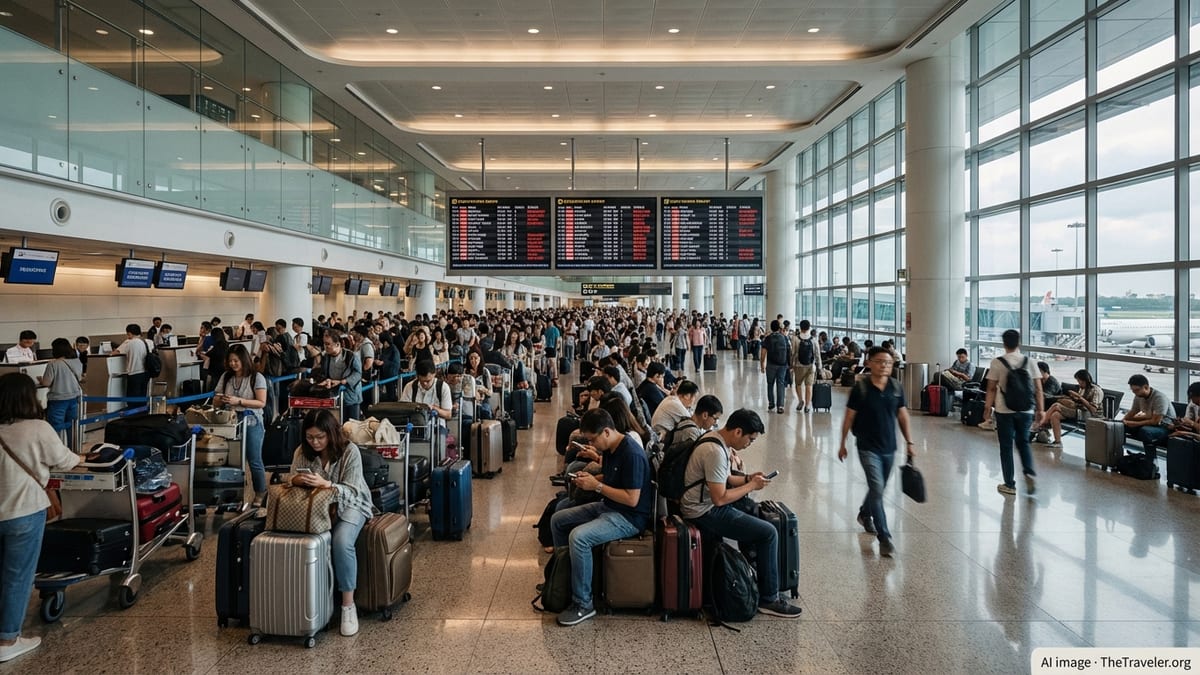
Widespread Disruptions From Tokyo To Dubai
Data aggregated from real time flight tracking platforms and airport status boards on May 23 indicated that the bulk of delays and cancellations were clustered around some of Asia’s busiest hubs, including Tokyo Haneda and Narita, Seoul Incheon, Bangkok Suvarnabhumi, Kuala Lumpur International, Dubai International, and key airports in mainland China and India. While the severity of disruption varied from airport to airport, passengers across the region reported prolonged waits, rolling departure time changes and a shortage of available rebooking options on peak routes.
Regional media coverage and aviation analytics sites pointed to a combination of operational constraints, congested airspace on popular corridors, and knock on effects from earlier schedule changes implemented in recent weeks. Some carriers had already trimmed frequencies or suspended particular routes in April and early May, which left networks less flexible once additional same day delays began to accumulate.
In Japan, recent reports documented a pattern of rising schedule disruptions at major airports, including dozens of delays and a smaller number of cancellations at Haneda, Narita, Fukuoka and Kansai in mid May. Similar trends have been noted on China Japan routes, where a substantial share of flights scheduled around the May holiday period were withdrawn earlier in the season, limiting alternatives for travelers when further disruptions surfaced.
In the Gulf, Dubai International remained a critical transit node linking Asia with Europe and Africa. Published accounts from recent weeks described intermittent cancellations on select long haul services, particularly where airlines adjusted routings or timings in response to evolving geopolitical and operational considerations. These existing pressures left carriers more exposed when today’s wave of regional delays spread through interconnected schedules.
Low Cost Carriers And Flagship Airlines Hit
The latest disruption affected both low cost and full service airlines. Travel notices and customer updates from AirAsia, one of the region’s largest budget carriers, already showed a series of schedule adjustments, temporary route suspensions and frequency reductions from early May through late October on selected services from Kuala Lumpur and other Southeast Asian gateways. Against this backdrop, additional day of operations delays today meant more passengers on already consolidated routes faced missed connections and overnight stopovers.
Flag carriers were not spared. Japan Airlines and its partners have recently reshaped some domestic and regional services in response to volatile demand patterns and structural changes in Japan’s aviation network. Separate coverage of early May disruptions highlighted cancellations on routes linking Tokyo with other Japanese cities and international destinations, and today’s congestion appeared to add further strain to those reconfigured timetables.
Korean Air, a key operator at Seoul Incheon, has also been navigating a period of network transition as it progresses with the integration of Asiana Airlines. Public information on the merger notes that the combined group is adjusting capacity and destinations through 2026. With Incheon functioning as a central hub for Northeast Asia, any cluster of delays can quickly spread across both short haul and long haul services, affecting travelers bound for cities such as Tokyo, Bangkok and Dubai.
Emirates, based in Dubai, has in recent months made schedule changes on certain Asia routes, including previously documented cancellations on Osaka services during April and short notice adjustments during periods of heightened regional tension. While the airline continues to serve more than 130 destinations worldwide, today’s spike in delays across multiple Asian gateways increased connection risks for passengers using Dubai as a transfer point between Asia and Europe or the Americas.
Key Hubs In Japan, South Korea And Southeast Asia Under Pressure
Japan’s airport system has been under particular scrutiny this spring as a series of route cancellations and delays reshaped travel into and within the country. Industry trackers reported that by late April a significant share of flights between mainland China and Japan slated for the May holiday period had already been cancelled, reflecting a complex mix of geopolitical tensions, demand recalibration and airline level decisions. The latest tally of 3,931 delays and 267 cancellations across Asia added to the sense that recovery in the Japan market remains fragile.
Tokyo Haneda and Narita continue to handle large volumes of domestic and international traffic. Recent analyses of day specific disruptions pointed to dozens of delayed flights in and out of these airports on several occasions in May, affecting carriers such as Jetstar Japan, Japan Airlines and international partners including KLM. Even when outright cancellations remain comparatively limited, a high volume of rolling delays can significantly lengthen journey times for passengers connecting within Japan or onward to other parts of Asia.
In South Korea, Seoul Incheon has generally been regarded as one of the more stable hubs in the region, yet publicly available data and passenger accounts show that selected routes have also experienced cancellations since March and April, particularly on services linked to regional conflicts or longer haul operations. As delays mounted across neighboring markets today, Incheon’s role as a transfer point between Northeast and Southeast Asia meant that any late running arrivals from Japan, Thailand or China risked triggering missed onward departures.
Further south, Bangkok Suvarnabhumi and Kuala Lumpur International saw knock on impacts from schedule changes announced by regional carriers in recent weeks. Some Thai and Malaysian operators had already suspended or reduced frequencies on services to the Middle East and selected East Asian cities, reflecting aircraft availability and security assessments. When today’s wider disruption hit, these thinner schedules left fewer options for same day reaccommodation, particularly for travelers booked on low cost tickets without flexible change provisions.
Passengers Face Missed Connections And Rebooking Challenges
For travelers, the immediate impact of nearly 4,000 delays and hundreds of cancellations in a single day was felt in extended transit times and complex rebooking processes. Reports from consumer forums across the region described passengers in Tokyo, Seoul, Bangkok and Dubai encountering long queues at transfer desks and struggling to find alternative routings on already busy weekend services.
Budget carriers such as AirAsia typically offer lower base fares but more restrictive change and refund policies, leaving some customers weighing whether to accept travel credits, shift their trips by days or switch to rival airlines at higher last minute prices. Passengers affected by repeated cancellations in recent weeks reported shifting future bookings away from routes that have seen the highest concentration of adjustments since March.
On the full service side, travelers on Emirates, Japan Airlines and Korean Air often have more expansive rebooking rights, but they too faced challenges when entire flights or connecting banks were disrupted. When long haul segments through Dubai, Tokyo or Seoul arrive significantly behind schedule, options for same day onward travel can narrow quickly, especially on routes where airlines had already trimmed frequencies earlier in the season.
Travel advisors and online booking tools have increasingly recommended that passengers build longer connection windows and consider overnight stays at major hubs when crossing multiple Asian regions this spring. With network capacity still in flux and geopolitical risks persisting, today’s figures on delays and cancellations underscored how even routine weather or operational issues can rapidly cascade through a tightly interconnected aviation system.
Outlook For Summer Travel Across Asia
The timing of the latest disruptions is particularly sensitive, as many airlines are currently finalizing their summer schedules and marketing peak season fares across Asia. Announcements from several carriers during the past three months have detailed both route expansions and suspensions, illustrating a patchwork recovery in international travel where some corridors are growing quickly while others remain constrained by politics, security concerns or structural changes in demand.
Japan and South Korea, which have seen strong inbound tourism interest from Europe, North America and Southeast Asia, are expected to remain high on travelers’ wish lists through the 2026 summer. At the same time, previously reported cancellations on certain China Japan and Middle East Asia routes highlight that capacity may not fully match demand even during peak holiday periods. Travelers planning multi stop itineraries that involve Tokyo, Seoul, Bangkok or Dubai may face higher fares and reduced flexibility as airlines prioritize the most profitable and operationally reliable services.
For Southeast Asian hubs such as Kuala Lumpur and Bangkok, the ongoing adjustments at low cost carriers will be an important variable in determining how smoothly the summer peak unfolds. Carriers that have already published advance notices of suspensions, like some of AirAsia’s affected routes, may be better placed to manage customer expectations than those that rely on short notice cancellations. However, today’s disruption numbers suggest that even with advance planning, the region’s aviation network remains vulnerable to sudden shocks.
Aviation analysts note that persistent geopolitical uncertainty, evolving security assessments and the complex integration of airline networks across Asia and the Middle East are likely to keep operational risk elevated for the foreseeable future. For now, the tally of 3,931 delays and 267 cancellations stands as a reminder that passengers flying through major hubs from Tokyo and Seoul to Bangkok, Kuala Lumpur, Dubai and beyond should remain prepared for last minute changes, even as overall travel demand continues to climb.