


More news on this day
Recent board and leadership appointments across Australia’s aviation sector are strengthening how airports, regulators and tourism agencies work together to drive visitor growth, trade flows and major infrastructure investment.
Get the latest news straight to your inbox!
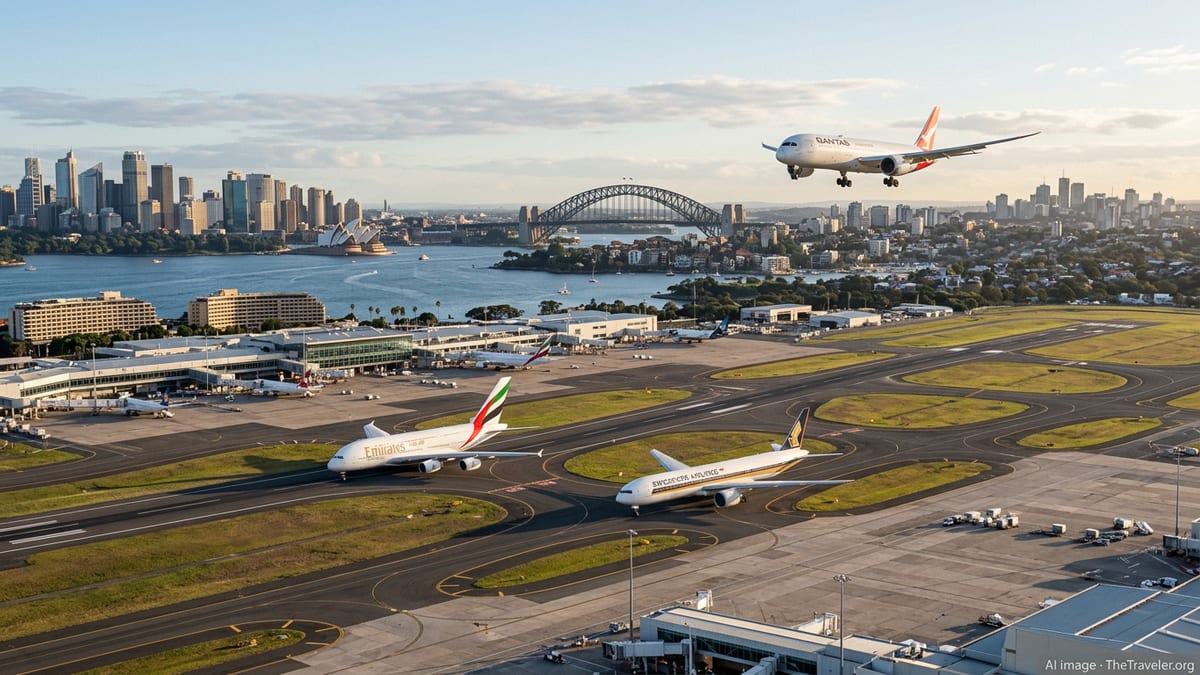
Fresh faces on Australian Airports Association board
Publicly available information shows that the Australian Airports Association (AAA) has added two senior airport executives to its board, underscoring the industry’s focus on commercial growth and regional connectivity. Perth Airport chief corporate services officer and general counsel Simon McPhee has been appointed as an AAA director, while Launceston Airport chief executive Katie Cooper has taken up a member‑elected position representing large airports.([airports.asn.au](https://airports.asn.au/media-releases/?utm_source=openai))
According to published coverage, the appointments expand the AAA board’s mix of legal, regulatory and operational expertise at a time when airports are investing heavily in terminal upgrades, airfield capacity and passenger experience improvements. Both executives oversee portfolios that include airline partnerships, non‑aeronautical revenue and stakeholder engagement, areas that are central to tourism and trade outcomes for gateway airports.([travelweekly.com.au](https://travelweekly.com.au/two-new-directors-welcomed-to-aaa-board/?utm_source=openai))
Industry documents indicate that Australian airports collectively plan more than 20 billion Australian dollars in infrastructure upgrades over the next seven years, including new piers, runway works and commercial developments designed to support long‑haul connectivity and freight. Strengthening governance at industry level is seen as a way to align these investments with national objectives for visitor economy growth and supply‑chain resilience.([airports.asn.au](https://airports.asn.au/wp-content/uploads/2025/03/Airports-The-Gateway-To-Growth-_-Federal-Election-Asks_070325.pdf?utm_source=openai))
The AAA’s refreshed leadership comes as the association steps up advocacy on issues such as seamless travel, aviation pricing oversight and modernised border systems. Its policy agenda highlights the need for airports, airlines, tourism bodies and government agencies to coordinate on capacity planning and service standards in order to remain competitive with regional hubs in Asia and the Middle East.([airports.asn.au](https://airports.asn.au/wp-content/uploads/2025/03/Airports-The-Gateway-To-Growth-_-Federal-Election-Asks_070325.pdf?utm_source=openai))
Regulatory boards sharpen focus on aviation safety and performance
Changes at the Civil Aviation Safety Authority (CASA) are also reshaping Australia’s aviation leadership landscape. In May 2026 the federal government appointed Greg Hughes to the CASA board and reappointed chief executive Pip Spence, reinforcing continuity in the organisation charged with setting and enforcing safety standards across airlines, airports and airspace.([minister.infrastructure.gov.au](https://minister.infrastructure.gov.au/c-king/media-release/leadership-appointments-support-civil-aviation-safety?utm_source=openai))
Reports indicate that CASA’s board has a broad remit covering aircraft maintenance, aerodrome standards, licensing and operational approvals. With international travel volumes rebuilding and airlines adding capacity on Asia Pacific routes, board oversight of safety and regulatory modernization is widely viewed as critical to maintaining confidence among passengers, inbound tour operators and airfreight customers.([minister.infrastructure.gov.au](https://minister.infrastructure.gov.au/c-king/media-release/leadership-appointments-support-civil-aviation-safety?utm_source=openai))
These leadership moves are occurring alongside a wider government program to streamline travel documentation and improve border flows. The Australia Travel Declaration is being rolled out nationally as a digital replacement for paper arrival cards, with more than 56 million Australian dollars committed for implementation at all international airports and seaports by the end of 2027. Regulators and airport operators see such initiatives as essential to handling growth without compromising security or biosecurity settings.([abf.gov.au](https://www.abf.gov.au/newsroom-subsite/Pages/Australia-Travel-Declaration-to-be-rolled-out-nationwide.aspx?utm_source=openai))
Industry submissions to parliamentary committees have consistently argued that regulatory certainty and modern, risk‑based oversight are prerequisites for long‑term airport investment. As new directors take their seats, CASA and related bodies are expected to play a larger role in guiding technology adoption, from advanced screening systems to digital air traffic tools that can unlock additional slot capacity at constrained gateways.([minister.infrastructure.gov.au](https://minister.infrastructure.gov.au/c-king/media-release/leadership-appointments-support-civil-aviation-safety?utm_source=openai))
Tourism and trade boards add aviation expertise
Beyond core aviation agencies, tourism and trade boards are increasingly drawing on airport leadership to inform strategy. Brisbane Airport chief executive Gert‑Jan de Graaff sits on the board of Tourism and Events Queensland, providing direct input from a major international gateway into the state’s marketing and route development priorities. Public statements highlight the importance of aligning destination campaigns with airport and airline capacity to maximise visitor spend.([bne.com.au](https://www.bne.com.au/brisbane-airport-ceo-appointed-to-tourism-role?utm_source=openai))
At national level, Tourism Australia has recently strengthened its aviation credentials in executive ranks. The agency’s appointment of Kath O’Brien as executive general manager global markets brought in more than two decades of tourism and airline experience, including responsibility for commercial performance and partnerships in her previous role with Air New Zealand in Australia. Her brief includes working with carriers, airports and distribution partners to grow high‑yield inbound travel.([tourism.australia.com](https://www.tourism.australia.com/en/news-and-events/news/tourism-australia-appoints-new-executive-general-manager-global-markets.html?utm_source=openai))
Earlier appointments to the Tourism Australia board itself, outlined in ministerial releases, added directors with backgrounds spanning international trade, hospitality and digital marketing. Analysts note that this blend of skills is intended to help Australia compete for visitors in a crowded global marketplace while expanding higher‑value segments such as premium leisure and business events, which rely heavily on long‑haul air links and airport infrastructure.([trademinister.gov.au](https://www.trademinister.gov.au/minister/don-farrell/media-release/tourism-australia-board-appointments?utm_source=openai))
These governance shifts mirror developments in state tourism bodies, where airport chief executives and senior aviation executives increasingly hold board or advisory roles. The trend reflects recognition that air access, terminal capacity and on‑airport retail offerings have become core elements of the visitor experience, influencing both length of stay and overall expenditure.([airports.asn.au](https://airports.asn.au/events/airport-retail-commercial-forum-2026/?utm_source=openai))
Infrastructure pipelines and border reforms to support growth
Major Australian airports are simultaneously advancing multibillion‑dollar capital works programs designed to handle forecast growth in passenger and freight volumes. Melbourne Airport, for example, has outlined a 4.5 billion Australian dollar upgrade of its international terminal focused on capacity, efficiency and passenger amenity, with sector leaders arguing that complementary reforms to border processing are needed to fully realise the benefits of such investments.([airports.asn.au](https://airports.asn.au/wp-content/uploads/2026/03/TTF-We-need-a-modern-world-class-border-say-tourism-leaders.pdf?utm_source=openai))
Perth Airport has flagged a leadership transition on its board as it progresses a transformation agenda aimed at creating a “world‑class” travel experience and unlocking economic benefits for Western Australia. A recent statement confirmed the retirement of long‑serving chair Robert Cole and the planned appointment of a new chair to oversee the next phase of development, including terminal consolidation and expanded international services.([perthairport.com.au](https://www.perthairport.com.au/home/corporate/articles/2026/07/08/02/54/a-statement-from-perth-airport?utm_source=openai))
Nationally, airports and tourism bodies are urging continued investment in digital border infrastructure to match these physical upgrades. The phased rollout of the Australia Travel Declaration as a permanent, online pre‑arrival process is central to this push, with industry forums arguing that faster, more predictable border checks can lift airport throughput, support additional flight frequencies and improve the overall perception of Australia as an easy place to visit and trade with.([abf.gov.au](https://www.abf.gov.au/newsroom-subsite/Pages/Australia-Travel-Declaration-to-be-rolled-out-nationwide.aspx?utm_source=openai))
According to submissions cited in government communiques, Australia’s aviation and tourism leaders view integrated planning across terminals, airside operations, border agencies and surface transport as essential to capturing a greater share of Asia Pacific travel growth. The rising number of senior aviation figures on boards across tourism, trade and regulatory organisations indicates that governance structures are moving in that direction.([airports.asn.au](https://airports.asn.au/wp-content/uploads/2025/03/Airports-The-Gateway-To-Growth-_-Federal-Election-Asks_070325.pdf?utm_source=openai))
Sector leadership converges around a shared growth agenda
The network of board and executive appointments across airports, regulators and tourism agencies points to a more coordinated leadership model for Australia’s aviation ecosystem. Industry strategies released by the AAA emphasise “seamless travel” targets toward 2030, with calls for joint working groups that bring together airports, airlines, tourism organisations and economic development agencies to address bottlenecks and plan capacity.([airports.asn.au](https://airports.asn.au/wp-content/uploads/2025/03/Airports-The-Gateway-To-Growth-_-Federal-Election-Asks_070325.pdf?utm_source=openai))
Parliamentary inquiry evidence from the AAA underscores how aviation infrastructure underpins regional tourism, skills mobility and international education, sectors that depend on reliable and affordable air access. New board members with strong regional and legal backgrounds are expected to influence how the association advocates for investment in smaller airports and improved connectivity between capital cities and emerging visitor destinations.([aph.gov.au](https://www.aph.gov.au/DocumentStore.ashx?hearingid=30758&submissions=false&utm_source=openai))
At the same time, civil aviation safety leadership and border policy reforms are being framed as enabling conditions for growth rather than constraints. With CASA renewing its board composition and the Australian Border Force pursuing digital declarations, the emphasis is increasingly on proportionate regulation that allows airports and airlines to innovate while maintaining high safety and security benchmarks.([abf.gov.au](https://www.abf.gov.au/newsroom-subsite/Pages/Australia-Travel-Declaration-to-be-rolled-out-nationwide.aspx?utm_source=openai))
As these governance changes bed in, observers note that Australia’s aviation sector is positioning itself to compete more effectively for long‑haul routes, freight flows and high‑spend visitors. The convergence of airport, tourism and regulatory leadership at board level suggests that decisions on infrastructure, marketing and policy will be more tightly aligned with the country’s long‑term tourism and trade ambitions.
Australian Airports Association media releases