


Landing at Seattle–Tacoma International Airport (SEA) can feel hectic, whether you are arriving from a short hop down the West Coast or a long-haul international flight. While locals love to debate the merits of Link light rail versus rideshare, for many visitors a classic taxi direct to a downtown hotel is still the simplest option. This guide walks you through exactly how airport taxis work at SEA, what you are likely to pay into central Seattle, and when a cab beats the train in real-world situations.
Get the latest updates straight to your inbox!
How the Seattle Airport Taxi System Works Today
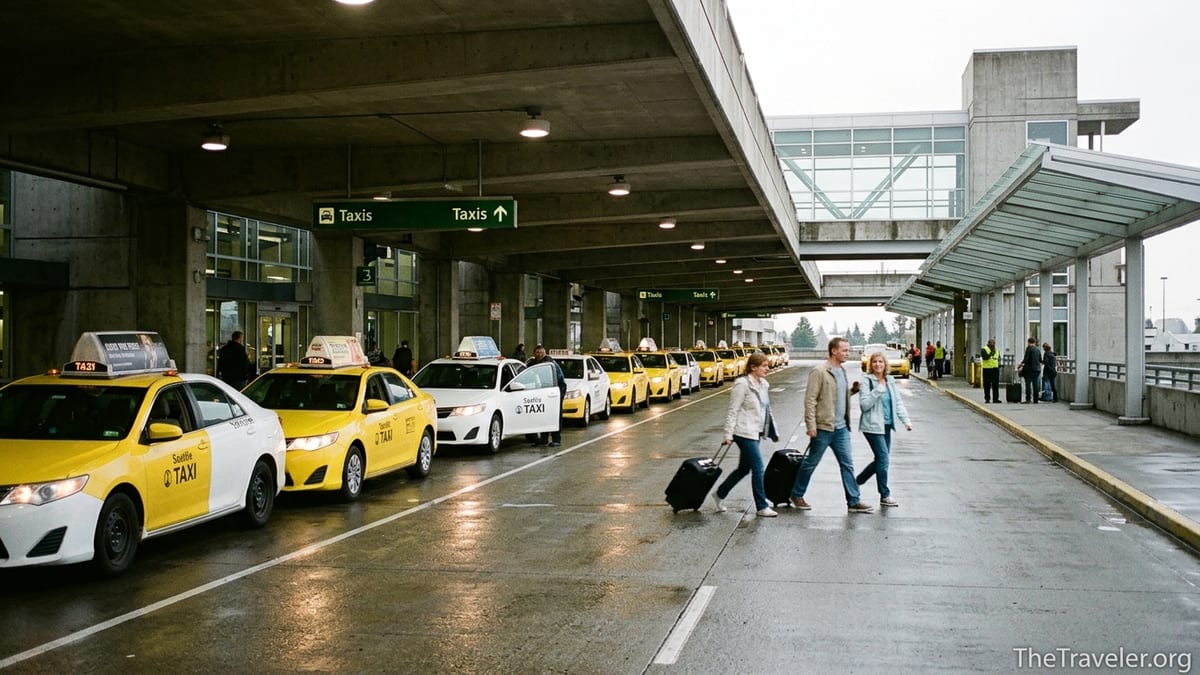
Seattle–Tacoma International Airport uses a structured ground transportation system, with taxis managed in a designated area of the airport’s parking garage rather than curbside at arrivals. After collecting your luggage, you follow the signs for "Ground Transportation" and then for "Taxi/Rideshare" into the main parking structure. The taxi queue is on the third floor of the garage, separate from the app-based rideshare lanes. Airport staff, usually wearing high-visibility vests, direct passengers into the next available cab so lines move quickly even at busy times.
Taxis serving Sea-Tac must be licensed and meet Port of Seattle requirements, which cover vehicle inspections, insurance, and driver permits. That means the cabs at the official rank are generally regulated, meter-equipped vehicles rather than unlicensed operators. You will mostly see standard yellow or white sedans and minivans from a few large fleets rather than independent drivers. While Seattle’s taxi industry has shrunk with the rise of rideshare, there is still a consistent supply at the airport, particularly during common arrival windows from early morning through late evening.
Unlike in some cities, you do not need to pre-book a taxi just to get from Sea-Tac into downtown Seattle during normal hours. For example, a mid-afternoon arrival from Los Angeles or Vancouver will typically find a short line and a steady stream of cabs. Very late at night or in the early morning hours you may wait slightly longer, but travelers arriving on 23:30 or even 00:30 flights commonly report finding an available taxi without significant delay.
Do keep in mind that airport taxis pay a fee on each airport pickup, which is built into their pricing. This is one reason the fare from the airport into town is often a bit higher than the reverse trip from a downtown hotel back to Sea-Tac, even for similar distance and traffic conditions.
Taxi Fares from Sea-Tac to Downtown: What to Expect
Sea-Tac to downtown Seattle is roughly 13 to 15 miles depending on your hotel’s exact location and the route your driver chooses. Under typical traffic, the journey takes around 20 to 30 minutes by taxi, longer in heavy rush-hour congestion or during major events near the stadiums. Seattle taxi fares are calculated using a combination of a base flag drop, a per-mile rate, and time-based charges when traffic is slow. The exact numbers can change with local regulations and company choices, so think in ranges rather than fixed amounts.
In practical terms, most recent real-world reports for a standard taxi ride from the Sea-Tac taxi rank to a central downtown address such as the Westin Seattle on Fifth Avenue, a hotel near Pike Place Market, or an office around Columbia Center fall in the ballpark of 45 to 65 US dollars before tip, depending on traffic and time of day. Light traffic late at night or on a Sunday morning might land you closer to the lower end of that range. A weekday late afternoon run in heavy I-5 congestion could climb toward the upper end, particularly if the meter spends a lot of time counting by the minute in slow traffic.
Travelers should also be aware of flat-rate offerings that operate in the opposite direction. Some major taxi companies advertise a flat fare from the downtown core back to Sea-Tac, often around the mid-40-dollar range for hotels within a defined central zone. For example, a ride booked from a downtown hotel between Belltown and the stadium district to the airport might be quoted at a flat rate per taxi, which can be cost-effective if you are two or three travelers sharing the cab. Those flat rates typically apply only from the city to the airport, not from the airport into town, where regular metered fares are the norm.
Compared with Link light rail, which currently costs only a few dollars per person between Sea-Tac/Airport Station and downtown stations such as Westlake or University Street, a taxi is clearly more expensive on a per-person basis for solo travelers. But if you are a family of four with luggage heading to a hotel like the Hyatt Regency, Fairmont Olympic, or Embassy Suites Pioneer Square, a 55 dollar taxi door to door can end up comparable to or only slightly more than four separate light rail tickets plus a rideshare or second taxi from the station, especially in bad weather or with tired kids.
Official Taxi Ranks and How to Use Them
The key to a smooth taxi experience at Sea-Tac is to use the official rank in the parking garage rather than attempting to hail a cab curbside at arrivals. After exiting baggage claim in either the main terminal or the international arrivals facility, follow the overhead signs marked "Ground Transportation" and walk across the sky bridge into the parking garage. On the third level, you will see separate zones for taxis, app-based rideshare pickups, and shuttles. Look specifically for the taxi queue and the uniformed dispatcher.
Dispatchers manage the flow of vehicles from a holding area to the passenger loading curb. When you reach the front of the line, the dispatcher usually asks your destination and may assign you to a particular cab, especially if you are heading somewhere further afield like Bellevue or Tacoma rather than central Seattle. Do not feel pressured to share a ride unless you have agreed to it; standard practice is one party per cab unless you choose otherwise with people you know.
You do not need to negotiate the fare in advance for a standard metered trip into downtown Seattle. The taxi should have the official rate card posted in the window or on the back of the front seat, and the meter must be visible from the rear passenger area. Before the car moves, a quick confirmation like "We’re going to the Hilton Seattle downtown, that will just be on the meter, right?" is perfectly normal and helps avoid misunderstandings. Drivers are generally familiar with downtown hotels and will know common properties such as the Sheraton Grand, Motif, or Marriott Waterfront by name.
If anyone approaches you inside the terminal offering an unofficial "taxi" or cash-only ride, politely decline and continue to the signed rank. The official taxi area is the safest and most predictable choice, especially if you are new to the airport or arriving late at night. Payment by credit card is widely accepted in licensed taxis, and you should be able to receive a printed or digital receipt, which is useful for expense claims or in case you leave something behind.
Downtown Hotel Zones: Where Taxis Make Life Easier
Downtown Seattle is compact but hilly, and that geography matters when deciding between a taxi and Link light rail. The main downtown hotel belt runs roughly from Belltown and the waterfront south toward Pioneer Square, and east toward the convention center and First Hill. Popular hotels such as the Edgewater, the Inn at the Market, Four Seasons, and many mid-range chains cluster around the waterfront and Pike Place Market area. Others, like the Hyatt Regency and Crowne Plaza, sit higher up the hill near the Washington State Convention Center.
If your hotel is within a short, flat walk of a light rail station like Westlake or University Street and you are traveling light, the train plus a few minutes on foot can be very convenient. For instance, guests at the Mayflower Park or Motif Seattle often walk from Westlake Station with roll-aboard bags in 5 to 8 minutes. But if you are staying someplace with steeper climbs, such as hotels on First Hill near Harborview Medical Center, or if you are in Pioneer Square with narrow sidewalks and cobblestones, a taxi that delivers you directly to the front door is often worth the extra cost.
Taxis also shine when your group includes travelers with mobility challenges or lots of luggage. Consider a family of four checking into a suite at Embassy Suites by Hilton Pioneer Square before a cruise. Taking Link to International District/Chinatown Station and then maneuvering several large suitcases across busy intersections can be tiring after a long flight. A taxi from the airport rank may cost something like 55 dollars including tip, but it will bring you straight to the hotel’s covered entrance, avoiding stairs, rain, and multiple mode changes.
Another classic taxi-friendly zone is the waterfront, especially if you are staying near the cruise piers or planning to board a ship in the next day or two. Hotels like the Seattle Marriott Waterfront or local boutiques along Alaskan Way can be reached on foot from Westlake Station, but the route involves downhill walks, traffic crossings, and sometimes construction. For travelers arriving jet-lagged or in poor weather, the extra door-to-door simplicity of a cab from Sea-Tac can set a calmer tone for the start of the trip.
Luggage, Families, and Late Arrivals: When Taxi Beats Light Rail
Seattle’s Link light rail is an excellent option for many visitors, but there are specific situations where a taxi tends to be the smarter choice. The first is heavy luggage. The walk from the terminal to the SeaTac/Airport light rail station is reasonably short and fully covered, but you still need to manage bags through station entrances, on escalators or elevators, and onto the train itself. At busy times, especially around major sports events or cruise departures, trains can be crowded and it may be difficult to keep large suitcases nearby.
Families with young children often appreciate the controlled environment of a taxi after a long flight. Imagine arriving from Europe with two exhausted kids and three checked bags. Navigating tickets, platforms, and a 35 to 40 minute train ride into downtown, followed by another transfer to reach your hotel, can be a big ask. In this case, a taxi that gets everyone buckled in and on the road within a few minutes of leaving baggage claim often feels worth the extra money. Parents can focus on snacks, naps, and directions rather than watching luggage and train stops.
Late-night arrivals are another point where taxis come into their own. Link light rail does not operate 24 hours; services wind down after midnight and do not resume until early morning. If your flight is scheduled to land around 01:00, or if you are delayed into the early hours, the train may not be a realistic option. At those times, a taxi from the official rank or a pre-booked cab is the most reliable way to reach downtown, and traffic is usually light, meaning a faster drive. Travelers arriving after midnight commonly report straightforward taxi trips into neighborhoods like Belltown, Capitol Hill, and Pioneer Square without serious wait times at the rank.
Weather can also tilt the equation in favor of a taxi. Seattle’s autumn and winter often bring steady rain, and walking from a light rail station to your hotel with luggage in a downpour is no one’s idea of a relaxing arrival. If you land to find dark skies and strong rain, heading straight for the taxi dispatch area instead of the train can save soaked bags and chilly walks. For business travelers in work attire or anyone carrying sensitive gear like camera equipment, the added comfort and dryness of a cab are especially useful.
Taxi vs Rideshare vs Link: Real-World Cost and Convenience
Deciding between a taxi, an app-based rideshare, and Link light rail from Sea-Tac to downtown is less about theory and more about your specific situation. On raw price, Link is usually the winner. A one-way train fare of only a few dollars per adult from SeaTac/Airport Station to downtown stations makes it by far the cheapest regular option, particularly for solo travelers or couples with light luggage. Travel time is predictable, usually around 35 to 40 minutes into central Seattle, unaffected by freeway traffic.
Rideshare services such as Uber and Lyft operate from a different section of the Sea-Tac parking garage and use dynamic pricing. At quiet times, a standard rideshare from the airport to a central hotel might be quoted at something like 35 to 45 dollars before tip, undercutting many taxi fares. However, during peak hours, major events, or late at night, surge pricing can push those estimates into the same range as, or even above, a traditional taxi. You also need to locate your assigned car among many similar vehicles in the pickup zone, which some travelers find stressful, especially in the rain or with limited phone battery.
Taxis offer a fixed structure: regulated metered pricing, a staffed rank, and no algorithmic surges. You walk to the taxi area, join the queue, and take the next available cab, without watching prices jump in an app while you decide what to do. For visitors who value predictability, this can be reassuring. A solo traveler arriving at 21:00, staying near Pike Place Market with one suitcase, might reasonably pick the light rail to Westlake to save money. A couple arriving at 23:30 with three pieces of luggage and a hotel on First Hill might head for the taxi rank instead, accepting a bill in the 55 dollar range in exchange for a simpler door-to-door trip.
There is also the question of onward connections. Some downtown hotels charge for parking but sit close to light rail stations, while others are more isolated. If you are staying near Capitol Hill, South Lake Union, or the University District, the combination of Link plus a short rideshare or taxi from a downtown station can strike a good balance between cost and convenience. But if you are catching an early morning cruise from Pier 91 the next day or staying near the stadiums with large bags, a single taxi from Sea-Tac that takes you directly to your door and then on to the port the next morning may be worth building into your budget from the start.
Practical Tips for a Smooth Taxi Ride
A bit of preparation goes a long way in making your Sea-Tac taxi ride into downtown Seattle as smooth as possible. Start by having your hotel’s full address and a rough idea of its location ready before you reach the front of the taxi line. Many properties in Seattle share similar-sounding names, and streets like Fourth Avenue and Fourth Avenue South can be confusing. Showing the driver a booking confirmation with the street address, or simply stating something like "Hyatt Regency Seattle on Howell Street downtown" helps avoid mix-ups.
When you get into the taxi, confirm that the meter is running and that payment by your preferred method is accepted. Most Seattle taxis take major credit cards, and many also support contactless payment. If the driver suggests a flat rate into downtown from the airport, it is reasonable to ask whether that is an official company rate or their personal proposal, since standard practice from Sea-Tac is to use the meter. If the quoted flat amount sounds higher than the 45 to 65 dollar range most visitors report, you can politely decline and request the metered fare instead.
Traffic patterns in Seattle can be unpredictable, especially on Interstate 5 and along the routes past the sports stadiums. If you are arriving during a weekday evening rush hour or on a day with a Seahawks or Mariners game, it is wise to allow extra time and to expect the upper end of the usual fare range because of slow-moving traffic. Let your driver know if you have time constraints, such as a dinner reservation or a same-day cruise check-in, so they can choose an appropriate route.
Finally, tipping practices for taxis at Sea-Tac are similar to other major US cities. Many travelers tip in the range of 15 to 20 percent of the fare, adjusting up for helpful service such as assistance with heavy luggage or thoughtful route choices. Keeping small bills handy is useful if you plan to pay cash, and asking for a printed or texted receipt is always a good idea, particularly for business travelers who need documentation for expense reports.
The Takeaway
For many visitors, a taxi from Seattle–Tacoma International Airport to downtown Seattle is the most straightforward way to start a trip. You walk to the signed rank in the parking garage, join an organized queue, and within minutes you are on the road directly to your hotel lobby. Fares into the central core typically fall in the broad range of 45 to 65 dollars before tip, varying with traffic and exact destination, and payment by card is widely accepted.
Against that, Link light rail offers a much cheaper ride into downtown, especially for solo travelers, and can work very well if your hotel is close to a station and you are traveling light. Rideshare apps can be cost-competitive with taxis at quiet times, but surge pricing and the need to locate your specific vehicle add unpredictability. Choosing among these options comes down to your priorities: cost versus door-to-door simplicity, and how you feel about managing luggage and transfers after a day of travel.
As a rule of thumb, if you are arriving late at night, traveling with children or heavy bags, staying in hillier or waterfront hotel zones, or simply prefer the least complicated route, a taxi from the official Sea-Tac rank is often the best choice. If you are on a tighter budget, landing during the day, and staying near a downtown light rail station, the train can be an easy and very affordable alternative. With a little advance thought about your hotel’s location and your own energy level on arrival, you can choose the option that makes your first hour in Seattle as relaxed as possible.
FAQ
Q1. How much does a taxi from Seattle–Tacoma Airport to downtown usually cost?
Most travelers report paying roughly 45 to 65 US dollars before tip for a standard metered taxi from the official airport rank to a central downtown hotel, with lighter traffic usually meaning a lower fare.
Q2. Where do I find the official taxi rank at Sea-Tac?
After collecting your bags, follow signs for Ground Transportation and then for Taxis and Rideshare into the parking garage. The official taxi queue is on the third floor, supervised by airport staff who direct passengers to the next available cab.
Q3. Do Seattle airport taxis accept credit cards?
Yes, licensed taxis serving Sea-Tac generally accept major credit cards as well as cash, and many also support contactless payment. It is still sensible to confirm payment options with your driver before leaving the curb.
Q4. Is it cheaper to take a taxi or Link light rail from Sea-Tac to downtown?
Link light rail is usually much cheaper on a per-person basis, with fares of only a few dollars from the airport to downtown stations. A taxi is more expensive overall but can be good value for families or small groups who want door-to-door service without transfers.
Q5. Are taxis available late at night at Seattle–Tacoma Airport?
Yes, taxis operate around the clock, and travelers arriving after midnight commonly find cabs waiting at the official rank, though the line of vehicles may be shorter than during daytime peaks.
Q6. Should I pre-book a taxi from Sea-Tac to my hotel?
Most visitors do not need to pre-book for a downtown trip during normal hours, since the airport rank typically has a steady supply of taxis. Pre-booking can be helpful if you arrive very late at night, have special accessibility needs, or are traveling in a larger group requiring a minivan.
Q7. Are there flat-rate taxis between downtown Seattle and the airport?
Several taxi companies advertise flat fares from defined downtown zones to Sea-Tac, often in the mid-40-dollar range per cab. These offers usually apply from downtown to the airport; trips from the airport into the city are typically metered unless clearly stated otherwise by the company.
Q8. How long does the taxi ride from Sea-Tac to downtown take?
In normal traffic, the ride is often about 20 to 30 minutes. During rush hour or when there are major events near the stadiums, it can take longer, so allow extra time if you have a fixed appointment or connection.
Q9. When is a taxi better than taking Link light rail?
A taxi is usually the better choice if you have heavy luggage, are traveling with young children, are arriving very late when the train is not running, or your hotel is far from any light rail station or located in a steep, hilly area.
Q10. Can I file a complaint if I have a problem with a taxi in Seattle?
Yes, Seattle has formal channels for reporting issues with licensed taxis, including concerns about fares or driver behavior. Keeping your receipt with the cab number and company name makes it much easier to submit a detailed complaint if needed.