


More news on this day
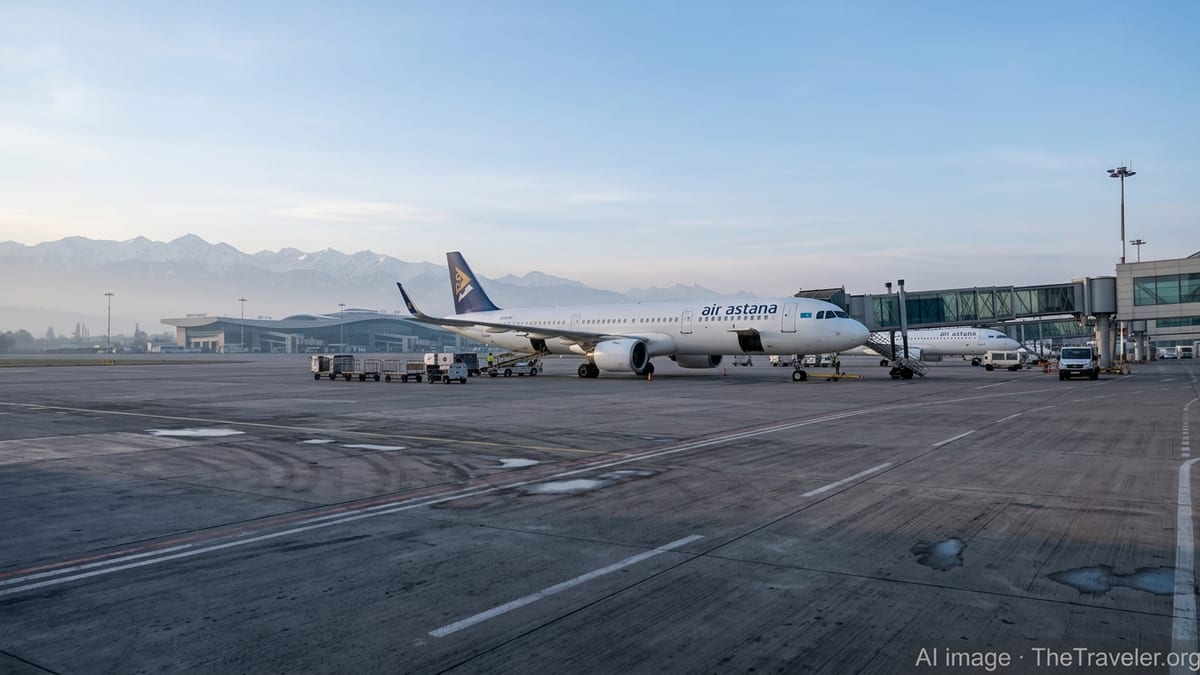
Almaty is preparing for a pivotal year in 2026, with new nonstop routes to Tokyo and Warsaw and an expanded roster of seasonal flights expected to transform Kazakhstan’s largest city into one of Central Asia’s most connected aviation hubs.
Get the latest news straight to your inbox!
Tokyo Link Signals New Era for Kazakhstan–Japan Travel
After years of relying on one stop connections via hubs in East and Central Asia, travelers between Kazakhstan and Japan are finally set to gain a dedicated nonstop option. Publicly available planning documents and company filings indicate that Air Astana is working toward the launch of an Almaty–Tokyo service from March 2026, positioning the route as a flagship addition to its long haul network.
Industry coverage of Air Astana’s fleet and network strategy shows that the airline has been building capacity ahead of the new Japan link, including orders for additional widebody aircraft and a broader push into Asian markets. The Almaty–Tokyo route is being framed as part of a wider effort to deepen tourism and business flows between Central Asia and Northeast Asia, tapping into Japan’s strong outbound travel appetite and growing interest in Silk Road destinations.
Current schedule data for 2026 still lists only connecting options between Almaty and Tokyo via cities such as Seoul, Beijing, Urumqi and Istanbul, underscoring the significance of the upcoming nonstop. Aviation analysts note that shaving hours off travel times and removing the need for transit visas is likely to make Kazakhstan more competitive for Japanese tour operators and corporate travelers, particularly in sectors such as energy, mining and technology.
Regulatory filings and statements from Kazakhstan’s civil aviation authorities describe the Tokyo route as part of a wider program to open new long haul destinations, including potential services to other major Asian and European capitals later in the decade. While exact start dates can still shift as airlines finalize fleet deliveries and slots, the sustained reference to a 2026 launch suggests that a direct Almaty–Tokyo link is now a central pillar of the country’s aviation strategy.
Warsaw–Almaty Nonstop Brings Central Europe Closer
On the European front, LOT Polish Airlines is preparing to add Almaty to its network in 2026, creating a new nonstop corridor between Central Europe and southern Kazakhstan. According to published schedules and route announcements, LOT plans to begin year round Warsaw–Almaty flights on 31 May 2026, initially operating four times weekly during the summer season with slightly reduced frequencies in winter.
The service will be operated with Boeing 737 MAX 8 aircraft configured in two cabins, reflecting LOT’s strategy of pairing efficient narrowbodies with medium haul markets where both business and leisure demand are emerging. Reports in aviation and business travel media emphasize that Kazakhstan is one of Poland’s key trading partners in Central Asia, and that Almaty’s role as a financial and cultural center makes it a natural second destination after the capital Astana.
For Kazakhstan, the Warsaw connection offers far more than point to point traffic. LOT’s hub at Warsaw Chopin Airport provides onward links across the European Union, the United Kingdom and North America, effectively turning a single new route into a web of one stop connections for passengers originating in Almaty. Travel industry observers note that this could be especially attractive for travelers heading to secondary European cities that currently require double connections.
The addition of Almaty also strengthens a broader trend of European carriers rebalancing their Central Asia networks. While some Western European airlines have pulled back from certain Kazakh cities in recent years, LOT’s move suggests sustained confidence in demand tied to energy projects, logistics corridors and growing leisure interest in the Tian Shan region.
Seasonal Routes Expand Almaty’s Summer Reach
Alongside the marquee launches to Tokyo and Warsaw, Kazakhstan’s airlines are preparing a busy seasonal schedule that will widen Almaty’s reach across the Mediterranean and Southeast Asia in 2026. Air Astana’s recently published summer timetable, running from late March to 24 October 2026, highlights a mix of returning holiday routes and new beach destinations.
According to the airline’s publicly released summer schedule, seasonal flights from Almaty are resuming to Nha Trang and Da Nang in Vietnam, Batumi in Georgia, Podgorica in Montenegro and Bodrum in Turkey. These services are aimed squarely at leisure travelers, many of whom have grown accustomed to flying via foreign hubs to reach coastal resorts. Direct links are expected to shorten travel times and keep more tourism spending within carriers registered in Kazakhstan.
New Mediterranean options are also on the horizon. Confirmed plans for Larnaca show that Almaty will gain a direct connection to Cyprus from June 2026, complementing services that Air Astana is launching from Astana. Tourism boards across the region have been courting Central Asian visitors, and the inclusion of Almaty in more summer charters and scheduled services is seen as a sign of Kazakhstan’s rising outbound travel volumes.
These seasonal routes are layered on top of year round services to major hubs in the Gulf and Europe, effectively turning Almaty into a summer gateway for travelers from across Kazakhstan and neighboring countries. Aviation specialists point out that as low cost and hybrid carriers expand in the wider region, competition on leisure routes is likely to intensify, with Almaty positioned to benefit from its modernized airport infrastructure.
China Connections and Central Asian Hub Ambitions
China remains another pillar of Kazakhstan’s connectivity strategy, with Almaty playing a prominent role. Air Astana has already established services from Almaty to major Chinese cities, and recent network updates confirm growth on routes such as Guangzhou, as well as plans to deepen cooperation with Chinese partners. These developments complement the Tokyo and Warsaw launches by strengthening Almaty’s position as a bridge between East Asia, Central Asia and Europe.
Public announcements by Kazakhstan’s civil aviation regulators highlight that more than fifty new international routes have been added nationwide in the past two years, including a substantial number touching Almaty. The emphasis is on using liberalized air service agreements and targeted incentives to attract both foreign and local carriers, with the stated aim of positioning the country as a regional transit hub.
Almaty’s expanding Chinese network also reflects broader shifts in regional trade. As logistics and energy corridors linking China with Europe and the Middle East grow in importance, passenger services often follow freight flows. Analysts suggest that increased connectivity with cities such as Shanghai and Guangzhou can support not only tourism but also business travel tied to manufacturing, finance and infrastructure projects.
For travelers, the practical impact of these changes is already visible in booking platforms that show a growing array of one stop combinations via Almaty for journeys between East Asia, the Caucasus and parts of Europe. With the Tokyo and Warsaw routes scheduled to join this web in 2026, Almaty’s role as a connective node across Eurasia is set to become even more prominent.
Competitive Pressures and Opportunities Ahead
The rapid build out of Almaty’s international links comes at a time of intense competition across Eurasian air corridors. Gulf carriers, Turkish Airlines and large European and Asian airlines all vie for transfer traffic that could otherwise flow through Kazakhstan. Some carriers have scaled back or restructured services to Kazakh cities, while local airlines, led by Air Astana and its low cost affiliate FlyArystan, have moved quickly to plug gaps and open new markets.
Industry commentary suggests that this competitive environment is driving innovation in schedules and product offerings. Higher frequencies on core routes to hubs such as Dubai, Istanbul and Frankfurt are being paired with new point to point routes like Almaty–Warsaw and the anticipated Almaty–Tokyo, giving travelers more choice over how and where they connect. For Kazakhstan’s aviation planners, the objective is to capture a larger share of regional transfer traffic while also meeting rising local demand.
There are still challenges on the horizon. Some long discussed long haul projects, including direct services from Kazakhstan to North America, have been postponed until at least 2027 due to aircraft delivery timelines and airspace constraints. However, the strategy outlined by officials and airlines alike indicates that strengthening links in Asia and Europe first is viewed as the most realistic path to sustainable growth.
As 2026 approaches, the picture that emerges is of Almaty stepping into a more assertive global role. With fresh nonstop links to Tokyo and Warsaw, a dense web of seasonal holiday flights and strengthened ties to Chinese megacities, Kazakhstan’s largest city is on track to become one of the most connected airports in Central Asia, offering travelers a growing number of ways to cross the continent.