


More news on this day
Escalating conflict around Iran and the Gulf, combined with long-running restrictions on Russian airspace, is redrawing global flight paths, undermining key hubs in the Middle East while Chinese airlines accelerate a rapid build-out of direct connections and extra capacity between China and Europe.
Get the latest news straight to your inbox!
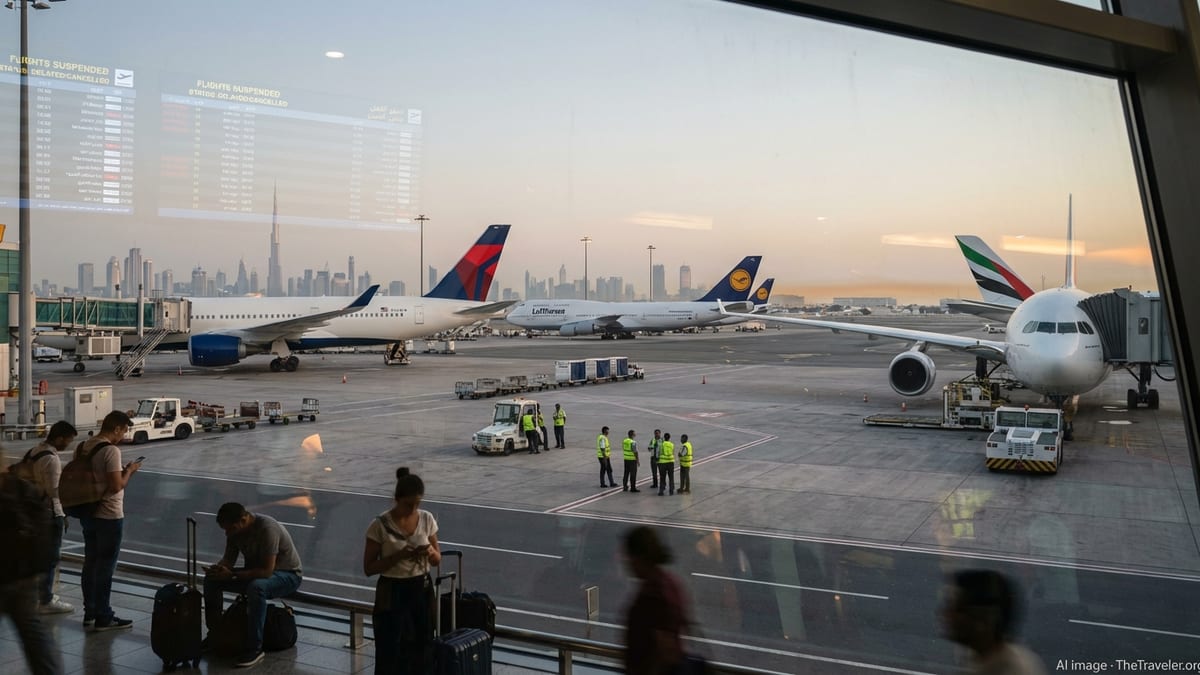
Iran Conflict Triggers Fresh Wave of Cancellations and Reroutings
Iran’s role at the center of the current Gulf crisis has translated into widespread air traffic disruption, with airspace warnings, temporary closures and mass flight cancellations affecting both domestic operations and overflights that once relied on Iranian corridors. Travel advisories issued in early March describe closures or severe restrictions across multiple Middle Eastern airspaces, including Iran, as missile and drone activity increased and carriers sought to keep crews and passengers away from high-risk routes.
Reports from regional media and aviation bulletins indicate that thousands of flights touching the wider Middle East have been cancelled or rerouted since late February, when a new phase of the Iran war began and threats to civil aviation intensified. International carriers that previously used Iranian airspace as a relatively direct bridge between Europe and Asia have shifted to longer detours to the north or south, increasing block times and costs while thinning frequencies on some routes that are no longer commercially viable.
The situation has also hit Iran’s own connectivity. Schedules filed by foreign airlines show sharp reductions in services to major Iranian gateways as demand softens and insurance premiums rise. Analysts note that this compounds years of sanctions-related pressure on Iran’s aviation sector, pushing more traffic toward alternative hubs and undermining the country’s ambitions to act as a transit bridge between Europe and South or East Asia.
UAE Hub Status Tested by Missile Threats and Temporary Closures
The United Arab Emirates, home to Dubai International and Abu Dhabi International, has also experienced significant operational headwinds as part of the same regional escalation. Publicly available security assessments from March describe repeated missile and drone launches from Iran toward Gulf states, with Emirati air defenses intercepting many of them but still prompting precautionary measures around key infrastructure.
Open sources on recent incidents detail instances in late February and March when debris and suspected strikes in the vicinity of Dubai International Airport led to evacuations, damage and temporary suspensions of arrivals and departures. Aviation risk briefs describe airspace across parts of the Gulf as intermittently closed or heavily restricted, with knock-on effects for global networks built around UAE hubs that normally depend on precise, high-frequency schedules.
Airlines that rely on Dubai and Abu Dhabi as connecting points between Europe, Asia, Africa and Australasia have responded by consolidating schedules, adding buffer time and, in some cases, temporarily diverting traffic via secondary hubs. While operations continue, the perception of elevated risk and the prospect of sudden closures have introduced volatility into a system that for years marketed itself on reliability and seamless global connectivity.
Russian Airspace Restrictions Continue to Burden European Carriers
Parallel to the Gulf crisis, long-standing restrictions on Russian airspace remain a structural challenge for European and some Asian airlines. Since Russia limited access to its skies for many Western carriers in response to sanctions, direct great-circle routes between Europe and Northeast Asia have become impractical for those operators, forcing substantial detours.
Industry analyses of post-2022 schedules show that European airlines now route China-bound and broader Northeast Asia flights along southern or polar tracks that can add between one and four hours to a typical sector. The extra distance increases fuel burn, crew costs and aircraft utilization, which in turn pressures yields and makes marginal routes harder to sustain. Several European flag carriers have reduced frequencies or withdrawn from secondary Chinese and East Asian cities, narrowing traveler choice compared with the pre-sanctions era.
By contrast, Chinese, Gulf and certain Asian airlines that retain access to Russian airspace have been able to keep more direct routings on many Asia–Europe sectors. This differential has underpinned a shift in market share on key long-haul corridors, with traffic progressively gravitating toward carriers that can offer shorter flight times and more competitive fares.
Chinese Airlines Seize Market Share With New Direct Europe Routes
Against this backdrop of disrupted Middle Eastern hubs and elongated Western routings, Chinese airlines are expanding aggressively into Europe. Data compiled by aviation intelligence providers and recent coverage in Asian and European business media indicate that Chinese carriers will add nearly 2,900 additional flights to Europe during the current northern summer season compared with a year earlier, with flagship operators Air China, China Southern and China Eastern driving most of the growth.
Air China has announced higher frequencies on more than ten long-haul routes, including services from Beijing to Warsaw, Milan and Budapest, alongside additional European destinations served from major Chinese hubs. Industry reports also highlight the airline’s growing network to Brussels and other secondary European cities, reflecting a strategy that targets both premium business flows and high-yield cargo traffic as supply chains diversify between China and the European Union.
China Eastern and other competitors are similarly widening their European reach. Over the past two seasons, China Eastern has launched or ramped up direct flights linking Shanghai and other large Chinese cities with points such as Geneva, Milan and Copenhagen, while increasing capacity on established routes to major gateways in Western and Northern Europe. Official statistics from Shanghai’s main international hub show strong year-on-year growth in international transfer volumes, underlining the city’s role as a connecting bridge between Europe, Northeast Asia and the broader Asia–Pacific region.
Smaller Chinese airlines, including Hainan Airlines and Juneyao Air, are also joining the push, adding links between interior Chinese cities and European capitals or regional centers. Collectively, these moves are shifting the center of gravity for China–Europe travel, offering passengers a wider menu of nonstop options that bypass some of the congested or risk-exposed hubs in the Gulf.
Competitive Advantage Built on Shorter Routes and Lower Fares
The combination of Russian overflight access and a surge in widebody capacity has equipped Chinese airlines with a tangible competitive edge on Europe–Asia corridors. Fare analyses by independent travel data firms indicate that Chinese carriers are able to undercut some European rivals by several hundred euros on economy-class round trips between Europe and China, with even bigger gaps on itineraries involving regional European cities newly connected by nonstop Chinese services.
Shorter routings over Siberia, combined with newer, more fuel-efficient aircraft types, allow Chinese operators to keep operating costs per seat relatively low. In contrast, European airlines that must detour around Russian airspace not only fly farther but also tie up aircraft and crews for longer duty periods, reducing the number of flights each aircraft can operate in a given day or week.
For travelers, the implications are increasingly visible in schedules and pricing. On many city pairs between Europe and China, the most frequent and competitively priced options are now offered by Chinese or partner airlines, often with total journey times that compare favorably with itineraries involving a connection in the Middle East. As geopolitical tensions continue to shape airspace access and risk assessments, industry observers expect these structural advantages to further entrench Chinese airlines as central players in trans-Eurasian travel.