


More news on this day
A new generation of mega-airports from Australia to the Middle East and Southeast Asia is set to reshape global tourism and air connectivity in 2026, as Western Sydney joins Vietnam’s Long Thanh, New Manila, Saudi Arabia’s King Salman and Riyadh hubs, Dubai’s Al Maktoum, and Southern California’s CPK in a high-stakes race to capture future passenger growth.
Get the latest news straight to your inbox!
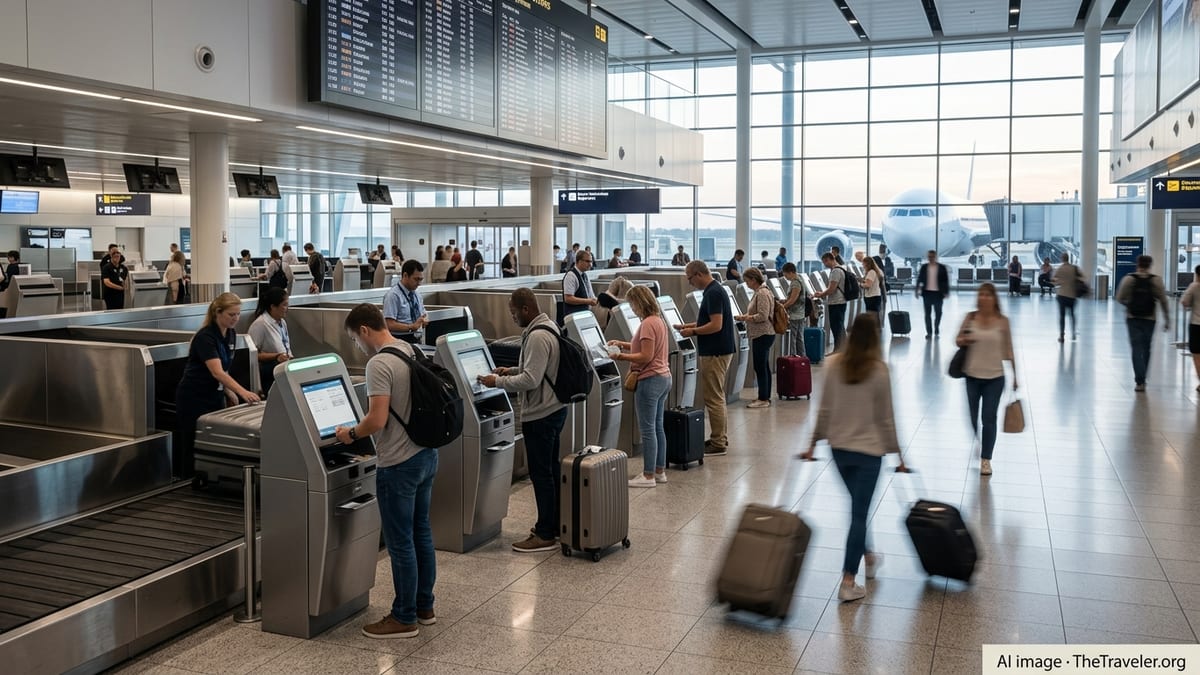
Western Sydney Positions Itself as Australia’s New Global Gateway
Western Sydney International Airport is entering the final stages before launch, with publicly available information indicating freight operations are scheduled to begin in late July 2026 followed by the first passenger flights in late October. Australian government releases describe the project as a second full-service international gateway for the Sydney region, designed to relieve capacity pressures at Kingsford Smith and provide 24-hour operations for long haul carriers and freight operators.
Regional development plans show that Western Sydney has been conceived not just as an airport but as the anchor for an aerotropolis focused on logistics, advanced manufacturing, education, and visitor experiences. Strategy documents from regional business groups highlight ambitions to grow a new tourism corridor linking the airport to the Blue Mountains, Western Sydney Parklands, and cultural precincts across Greater Western Sydney, with new hotels and conference facilities already in planning.
Transport upgrades surrounding the site, including new motorway connections delivered ahead of opening, are intended to reduce travel times from central Sydney and regional New South Wales. While rail links and airline lineups are still evolving, industry observers suggest that initial services are likely to focus on low cost and leisure traffic, as carriers seek to tap into new demand generated by the region’s fast-growing population and increasingly international visitor economy.
For long haul travelers, Western Sydney’s 24-hour operating model and modern terminal design are expected to provide additional connectivity to and from Australia during overnight and shoulder periods that are constrained at Sydney’s existing airport, a shift that could redirect some international itineraries across the wider Asia Pacific.
Long Thanh and New Manila Reshape Southeast Asian Tourism Flows
Vietnam’s Long Thanh International Airport is emerging as one of the most consequential aviation projects in Southeast Asia, with government statements and industry coverage indicating that phase one commercial operations are targeted for 2026. The initial terminal has been designed for around 25 million passengers per year, with phased expansion planned to ultimately rival the region’s biggest hubs.
Situated to replace much of the long haul and regional traffic currently handled by Ho Chi Minh City’s Tan Son Nhat Airport, Long Thanh is expected to offer greater slot availability, more modern facilities, and room for future growth. Analysts note that this could accelerate Vietnam’s push to attract higher-spend tourists, longer-stay visitors, and expanded connecting traffic between North Asia, Southeast Asia, and Australia.
In the Philippines, the New Manila International Airport in Bulacan continues to advance as one of the country’s flagship infrastructure projects. Corporate updates from the project sponsor emphasize that the airport has been designated a primary investment priority, with construction and land development framed as the foundation for a long term capacity solution to congestion at Manila’s existing hub. While current timelines point to operations after 2026, decisions made this year on financing, reclamation, and terminal construction are likely to influence how quickly the new gateway can enter the tourism and transfer market later in the decade.
Together, Long Thanh and New Manila signal a structural shift in Southeast Asian aviation away from single, land-constrained capital airports toward large greenfield facilities capable of hosting widebody growth, multi-hub airline strategies, and expanded low cost operations. Tourism authorities in both countries are aligning marketing campaigns and visa reforms with this infrastructure pipeline, positioning 2026 as a turning point in route-planning discussions across the region.
King Salman and Riyadh’s Airport System Underpin Saudi Tourism Ambitions
In the Gulf, Saudi Arabia’s plan for King Salman International Airport near Riyadh sits at the center of a broader tourism and aviation strategy aimed at reaching hundreds of millions of annual passengers across the kingdom by 2030. Public concept materials describe King Salman as a multi-terminal mega-hub capable of eventually handling up to 185 million travelers per year, integrated with the launch of new carrier Riyadh Air and the capital’s bid to become a global events and business destination.
Although the new airport will not be operational in 2026, this year marks a transition period in which Riyadh’s existing King Khalid International Airport is undergoing capacity upgrades and terminal reconfigurations. Aviation industry analyses indicate that these improvements, coupled with new long haul services announced by major global airlines, are expanding the city’s connectivity even before King Salman opens, helping Saudi Arabia attract more leisure visitors to its new resorts and cultural sites.
Saudi tourism planners have framed aviation development as essential to the country’s effort to diversify its economy beyond hydrocarbons. As new giga-projects, coastal destinations, and heritage itineraries move from concept to partial operation, additional medium and long haul air links through Riyadh are expected to feed visitor flows onward to secondary airports across the kingdom. The long term expectation is that King Salman’s eventual activation will shift Riyadh from a primarily origin and destination market into a competitive transfer hub on east west corridors linking Europe, Africa, and Asia.
For airlines and travelers planning for 2026 and beyond, the ongoing upgrades at King Khalid, the parallel construction of King Salman, and the ramp up of Riyadh Air collectively signal a rapidly changing aviation landscape in the Gulf that could redistribute connecting traffic now dominated by neighboring hubs.
Dubai’s Al Maktoum and Southern California’s CPK Extend the Network
Dubai’s Al Maktoum International Airport, located in the emirate’s south, continues to evolve from a secondary facility into the centerpiece of long term capacity planning for one of the world’s busiest aviation markets. Government announcements in recent years have outlined multibillion-dollar expansion plans intended to create a next-generation hub capable of handling significantly more passengers than Dubai International, with a focus on advanced terminal design, intermodal cargo infrastructure, and improved access to the surrounding logistics and tourism districts.
While Dubai International remains the city’s main commercial gateway in 2026, sustained investment in Al Maktoum is viewed by analysts as an essential hedge against saturation at the older site. As sections of the airport and surrounding infrastructure are gradually built out, tour operators and airlines are monitoring how future phases could enable new origin markets, larger volumes of transfer passengers, and supplementary leisure capacity tied to Dubai’s resorts and event calendar.
On the opposite side of the world, development of a new commercial airport project in Southern California’s Inland Empire region, frequently referenced under the working name CPK in regional planning documents, is intended to relieve pressure on existing airports serving Los Angeles, Orange County, and San Diego. Although at an earlier stage than the mega-hubs of Asia and the Gulf, local authorities and industry observers view the project as part of a broader trend in the United States toward adding capacity away from saturated coastal gateways, with an eye on future overseas services and inbound tourism.
For international travelers, these developments translate into the prospect of more entry points into key tourism regions, new combinations of long haul and domestic sectors, and greater resilience in the system when disruptions occur at traditional choke points. They also raise fresh competitive questions for established hubs as airlines reassess where to base aircraft, schedule banked connections, and invest in lounges and ground facilities.
Global Tourism and Aviation Strategy Pivot Around 2026
Taken together, Western Sydney, Long Thanh, New Manila, the Riyadh airport system anchored by King Salman, Al Maktoum, and emerging facilities such as CPK underscore how 2026 is shaping up as a pivotal year in the geography of global aviation. The projects are dispersed across regions, but they share an emphasis on future-proofing capacity, creating room for long haul growth, and integrating airport planning with tourism, urban development, and logistics strategies.
Public policy documents, investor presentations, and airline network plans increasingly treat airports not merely as infrastructure, but as catalysts for destination branding and regional economic diversification. At each of these sites, tourism is central to the business case, whether in the form of new leisure corridors into Western Sydney, expanded resort access in Saudi Arabia, or more seamless links between Vietnam’s emerging coastal hotspots and long haul source markets.
For travelers, the immediate impacts in 2026 will be most visible in the opening of new terminals and the addition of routes as facilities such as Western Sydney and Long Thanh switch from construction to operations. Over the longer term, the full build-out of King Salman, the maturation of Al Maktoum and New Manila, and the evolution of new airports in markets like Southern California will determine how the next generation of global tourism is distributed, and which cities and regions capture the greatest share of visitor growth.