


More news on this day
Germany’s state of Brandenburg is strengthening its role in the country’s urban mobility transition, as new Škoda ForCity Plus trams enter service in Brandenburg an der Havel and form part of a wider shift toward cleaner, higher-capacity public transport through 2026.
Get the latest news straight to your inbox!
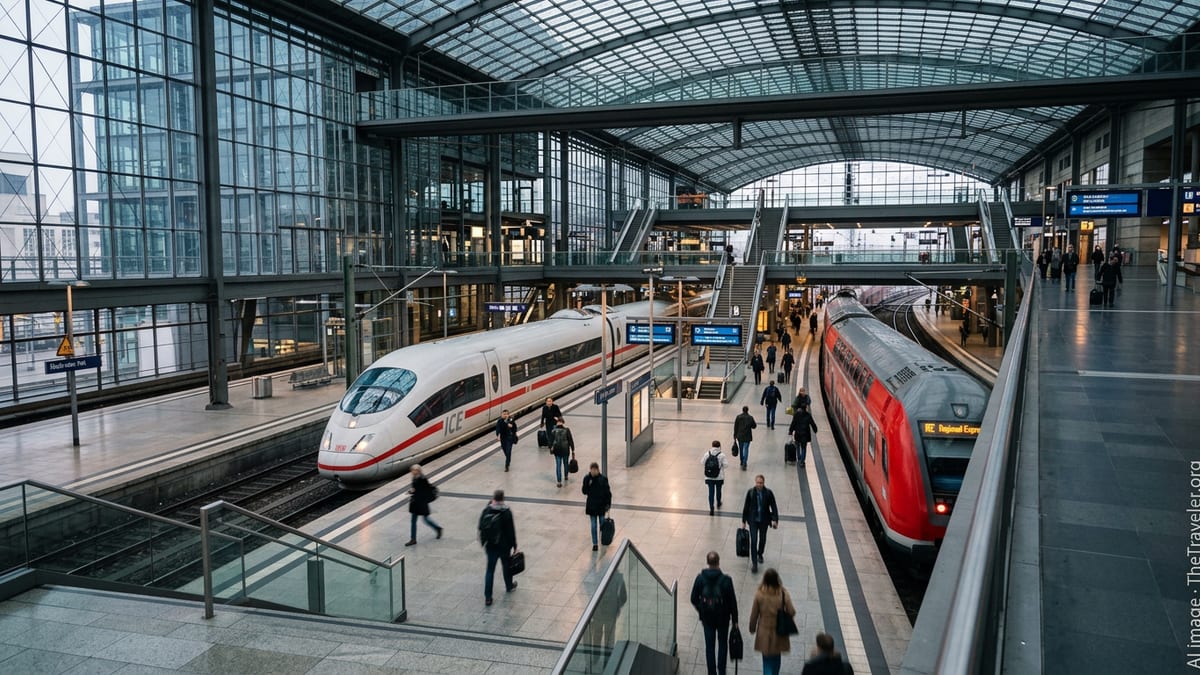
Škoda ForCity Plus Trams Enter Regular Service in Brandenburg an der Havel
Publicly available information shows that Brandenburg an der Havel has begun operating new Škoda ForCity Plus 48T trams, replacing older high-floor vehicles and expanding low-floor service across the city’s compact network. Industry data on the ForCity programme notes that four trams have been ordered for Brandenburg an der Havel, with options for up to eight additional units shared in a joint procurement with the cities of Cottbus and Frankfurt (Oder).
Reports from tram enthusiast and transport publications indicate that the 48T vehicles entered regular passenger service in late 2025, after a testing and acceptance phase. The new trams provide fully low-floor access, air conditioning and modern passenger information systems, features that are expected to raise the overall standard of daily mobility for residents compared with the city’s ageing Tatra fleet.
Network descriptions for Brandenburg an der Havel highlight that trams remain the backbone of local public transport, even as parts of the infrastructure have required refurbishment. The arrival of the new Škoda fleet is therefore framed as both a vehicle renewal and a visible symbol of long-term commitment to rail-based urban mobility in a medium-sized German city.
Technical documentation on the ForCity Plus family points out that the Brandenburg vehicles share a platform with trams delivered to Cottbus and Frankfurt (Oder), allowing operators to benefit from common spare parts, similar training requirements and harmonised maintenance procedures. This standardisation is viewed as an important factor in reducing lifecycle costs for smaller transport companies.
Regional Procurement Strategy Ties Brandenburg Cities into a Single Fleet Family
According to manufacturer catalogues and regional transport reports, the procurement for the new Škoda trams was organised jointly by the operators in Cottbus, Frankfurt (Oder) and Brandenburg an der Havel. The framework covers 24 ForCity Plus vehicles, with thirteen destined for Frankfurt (Oder), seven for Cottbus and four for Brandenburg an der Havel, alongside a substantial option package that can be exercised as local demand grows.
This multi-city approach reflects a wider trend in Germany’s regional transport planning, where smaller urban networks pool orders to secure better pricing, consistent technical standards and stronger bargaining power with suppliers. By aligning on a single tram platform, the three Brandenburg cities can coordinate upgrades, share technical expertise and present a unified profile when seeking state or EU co-financing for further modernisation.
In parallel, European Commission documentation on national recovery and resilience plans describes a broader target to raise the share of journeys made with zero-emission local public transport vehicles, including trams, by the middle of the decade. The Brandenburg Škoda investments fit into this policy context, adding electric, high-capacity rolling stock that contributes to emissions reductions at regional level.
Manufacturer information also indicates that Škoda has ramped up deliveries to German networks in recent years, including Chemnitz, Bonn and the Rhein-Neckar metropolitan area. The Brandenburg trams therefore form part of a growing German footprint for the ForCity product line, which is positioned as a flexible platform for both classic street-running systems and newer light rail corridors.
Alignment with Brandenburg’s Mobility Law and Climate-Focused Funding
Brandenburg’s new trams arrive against the backdrop of a state-level mobility strategy that explicitly promotes climate-friendly, socially equitable transport. The Brandenburg mobility law and the accompanying regional public transport plan set out objectives for shifting trips away from private cars and toward buses, trams and rail services, while maintaining accessibility across urban and rural areas.
The state infrastructure and planning ministry’s information on its “Mobility II” funding programme shows that resources from the European Regional Development Fund and the Just Transition Fund are being directed toward low-emission local public transport, particularly in regions undergoing economic change. Although funding streams are allocated project by project, the overall framework is geared toward modernising fleets, upgrading infrastructure and improving the user experience of public transport.
In this context, new Škoda trams for Brandenburg an der Havel support multiple policy goals at once: they offer zero local emissions at the point of use, improve accessibility through low-floor designs and provide a higher level of comfort that can attract additional riders. These factors are increasingly important as federal and state governments look to public transport not only as a social service but also as a central tool for meeting climate targets.
Legal commentary on the Brandenburg mobility law also underlines the importance of integrating the state’s urban networks with Berlin and neighbouring regions. While Brandenburg an der Havel operates its own compact tram system, improvements in reliability and service quality are seen as helping to stabilise the broader Berlin–Brandenburg transport area by providing strong alternatives to car use in the surrounding towns and cities.
Germany’s Urban Mobility Landscape in 2026: Trams Regain Strategic Importance
The deployment of new Škoda vehicles in Brandenburg occurs alongside a broader wave of tram investment across Germany. Berlin’s BVG, for example, is preparing to introduce its new Urbanliner tram generation to passenger service from 2026, with operator information describing the vehicles as longer, wider and more capacious than previous models, tailored to handle rising ridership on key corridors.
Elsewhere in Brandenburg, Potsdam has already launched Stadler’s Tramlink fleet into regular service, a move that transport company releases present as the beginning of “a new era” in sustainable mobility for the state capital. These trams feature full low-floor design, high energy efficiency and modern accessibility features, mirroring many of the characteristics of the Škoda fleet now in Brandenburg an der Havel.
Across Germany, major conurbations and mid-sized cities are turning to modern trams and light rail as central pillars of their mobility strategies. Policy documents from Berlin and Brandenburg’s joint transport authorities describe rail-based urban transport as an indispensable component of a future-proof capital region, especially as metropolitan growth and climate targets put pressure on road networks.
In this environment, Brandenburg’s Škoda trams can be seen as part of a synchronised national shift rather than an isolated procurement. Together with parallel investments in new S-Bahn rolling stock, regional trains and autonomous shuttles, they illustrate how German regions are knitting together different transport modes to create more cohesive, lower-carbon mobility systems.
Passenger Experience, Accessibility and Network Modernisation
For everyday travellers in Brandenburg an der Havel, the most immediate impact of the new Škoda fleet is felt inside the vehicles themselves. Operator and manufacturer materials highlight step-free entry, wider doorways and spacious interior layouts, elements that are particularly beneficial for passengers with reduced mobility, parents with strollers and cyclists.
The improved passenger information systems, including modern displays and audio announcements, are designed to make the tram network easier to navigate for visitors and infrequent users. Air conditioning and noise-reducing technologies also contribute to a perception of higher-quality service, which transport planners often regard as a factor in persuading people to shift from private cars to public transport.
From an operational perspective, the standardised ForCity Plus platform promises more efficient maintenance and potentially higher availability rates compared with the ageing high-floor vehicles it replaces. Technical references to the fleet suggest that the new trams are equipped with energy-efficient drives and regenerative braking, features that can reduce electricity consumption and operating costs over the long term.
Urban transport analyses note that rolling-stock upgrades of this kind are most effective when combined with infrastructure improvements, such as track renewals, modernised signalling and priority at intersections. In Brandenburg an der Havel, the presence of new low-floor vehicles is expected to strengthen the case for further incremental upgrades, reinforcing the tramway’s role as a core element of the city’s mobility offering well beyond 2026.
https://de.wikipedia.org/wiki/%C5%A0koda_ForCity
https://www.skodagroup.com/de/reference/frankfurt-oder-cottbus-und-brandenburg-an-der-havel-fcb
https://mil.brandenburg.de/mil/de/themen/mobilitaet-verkehr/neue-mobilitaet/
https://www.bvg.de/en/company/sustainable-mobility/fleet/tram