


More news on this day
Tianjin is set to introduce new three-day “cruises to nowhere” from its international home port at the end of August, marking a high-profile pilot for short sea vacations in northern China and underscoring the rapid revival of the country’s cruise tourism sector.
Get the latest news straight to your inbox!
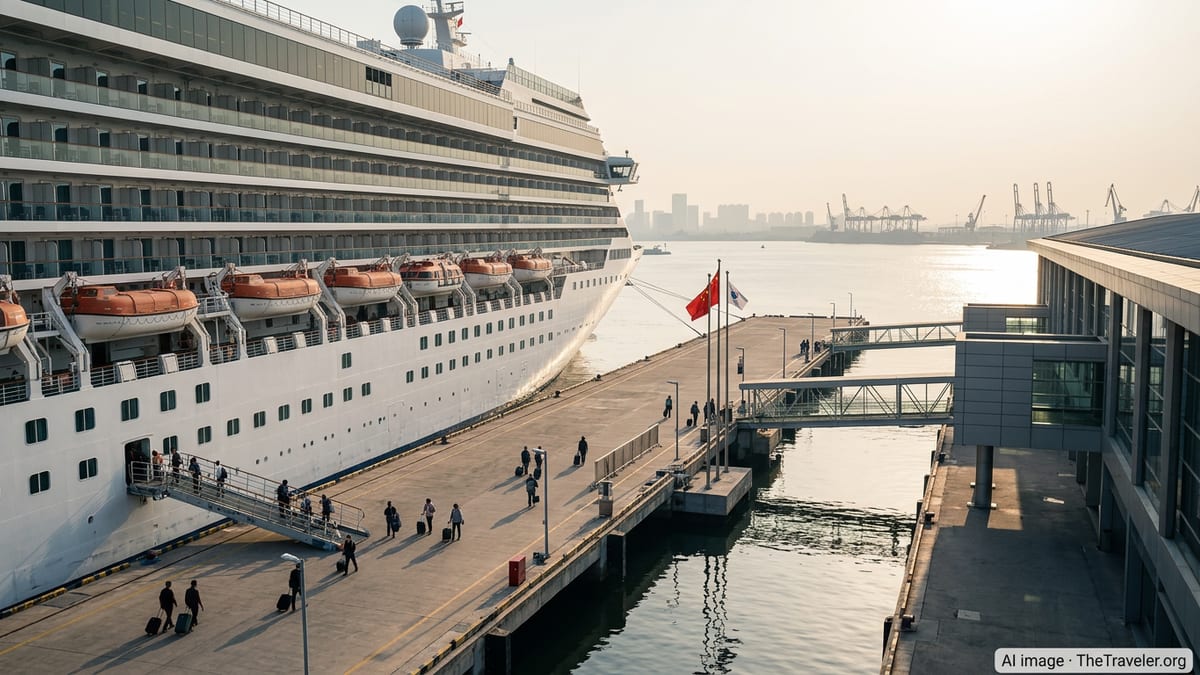
New Three-Day Voyages Departing Tianjin This Month
Publicly available booking information shows that Tianjin Oriental Cruises will operate two three-day, two-night voyages on the Visio at the end of August, with departures on August 29 and August 31 from Tianjin International Cruise Home Port. The itineraries are roundtrip sailings that remain at sea without intermediate port calls, positioning the product as a compact “sea getaway” for travelers from Beijing, Tianjin and the wider Bohai Rim region.
According to cruise industry coverage, both departures are scheduled to leave the Tianjin home port at 3 pm and return to the same terminal, with prices advertised from around 800 yuan per person on some Chinese travel platforms. Onboard programming for the August voyages includes themed entertainment such as live performances and comedy shows, aimed at differentiating the short sailings from longer international itineraries that typically focus on destination visits.
The launch follows a period of steady traffic growth at Tianjin International Cruise Home Port in summer 2026. Reports indicate that the terminal has handled more than 90,000 inbound and outbound cruise passengers so far this season, a year-on-year increase of close to 20 percent, as ships such as AIDA Mediterranea and Adora Mediterranea rotate through the port on East Asia routes.
First Northern China Pilot of “Cruises to Nowhere”
Industry reports describe the Tianjin departures on Visio as the first commercial deployment of a “cruise to nowhere” model in northern China. The initiative builds on regulatory work that began earlier in Shanghai, where China’s first large domestically built cruise ship, Adora Magic City, completed a three-day, two-night voyage with no destination earlier this year, testing demand for short, experience-led sailings in the domestic market.
China’s Ministry of Transport has categorized such “nowhere cruises” as special international voyages. Public information notes that exit-entry management for passengers and crew follows procedures consistent with international routes, even though the ship does not call at foreign ports. The Tianjin pilot therefore functions as a test bed for both operational processes and consumer appetite in a region historically focused on itineraries to Japan and South Korea.
The decision to prioritize northern China for the next phase of the concept reflects Tianjin’s role as the main cruise home port for the Beijing-Tianjin-Hebei metropolitan area and a gateway to the Bohai Sea. Sector analysis suggests that operators see significant potential among first-time cruisers looking for a low-commitment introduction to sea travel that does not require visas or extensive time off work.
Policy Support and Infrastructure Strengthen Tianjin’s Position
Tianjin’s new three-day voyages emerge against a backdrop of broader policy support for cruise tourism in China. Cruise development is listed as a priority in the country’s tourism planning framework, with dedicated investment in port facilities in cities including Shanghai, Tianjin, Xiamen and Sanya. Easing of entry rules has also played a role, with China expanding visa-free arrangements and transit exemptions at multiple coastal cruise ports.
Official notices on cruise visa policy indicate that foreign tour groups of at least two people arriving by cruise ship can enter China without visas at designated ports, including Tianjin, when their trips are organized by qualified Chinese travel agencies. Separate 24-hour and 144-hour transit schemes further reduce paperwork for eligible international passengers, making it easier for overseas travelers to join short sailings or combine cruises with land-based itineraries.
The port itself has invested in systems to handle rising volumes. Recent reports highlight measures such as streamlined border checks, online arrival card filing and the deployment of additional inspection staff during peak sailing days at Tianjin International Cruise Home Port. These steps are designed to speed up passenger flows while supporting the long-term goal of building a cruise tourism economic belt around the Bohai Rim.
Short Sea Vacations Target Domestic Leisure Demand
Market analyses of China’s cruise sector underline the growing appeal of compact itineraries for domestic travelers. Three-day and four-day voyages are viewed as an easy entry point for middle-class families, younger holidaymakers and multi-generational groups who prefer a single base with bundled entertainment, dining and accommodation. Short cruises also align with increasingly fragmented vacation patterns, allowing travelers to fit a sea trip into long weekends or public holiday windows.
For Tianjin, the three-day sea voyages complement a broader menu of cruise products that includes five- and six-night international journeys to South Korean and Japanese ports, as reflected in current schedule listings. By layering “cruises to nowhere” on top of traditional destination-focused routes, operators can appeal simultaneously to first-time cruisers testing the waters and repeat passengers seeking a quick, novelty-driven escape.
Travel industry commentary suggests that the popularity of short-haul voyages from Shanghai has helped normalize cruising as a mainstream leisure choice in China. The Tianjin pilot extends that dynamic to northern China, where a large catchment area, established transport links to Beijing and the relative proximity of the Bohai Sea create favorable conditions for sea-based mini breaks.
Implications for China’s Evolving Cruise Tourism Landscape
The debut of Tianjin’s three-day sea voyages is being watched closely as a potential template for other northern ports. If demand proves robust, analysts expect additional “cruise to nowhere” products to appear in schedules from Tianjin and possibly from neighboring coastal cities that share access to Bohai Bay and the Yellow Sea shipping lanes.
At the same time, the initiative contributes to China’s broader experiment with diversified cruise offerings, from domestically built large ships on coastal leisure circuits to traditional itineraries linking ports in Japan and South Korea. For international cruise brands already deploying capacity to Tianjin, the emergence of short domestic-style products may create opportunities for seasonal or joint programming tailored to different customer segments.
With the summer 2026 season already delivering double-digit passenger growth at Tianjin International Cruise Home Port, the three-day voyages signal a new chapter in how China’s northern gateway presents itself to leisure travelers. The coming months will reveal whether the Bohai Sea can establish a lasting reputation not only as a busy commercial waterway, but also as a hub for compact sea vacations that fit neatly into the travel habits of China’s expanding cruise audience.
Cruise Industry News: Tianjin Oriental adds cruises to nowhere
China Daily: Summer cruise boom in Tianjin Port
Embassy of China in the US: Cruise visa-free entry policy
GlobeNewswire: Adora Mediterranea kicks off 2026 Tianjin season