


More news on this day
New York, Bermuda and a string of Atlantic ports are positioning for a sharp rise in cruise traffic by 2027, as record global demand, new ships and fresh deployment plans point to a busier North Atlantic cruise corridor.
Get the latest news straight to your inbox!
Record Demand Sets the Stage for 2027 Growth
Global and North American cruise demand is laying the foundation for what industry observers describe as a substantial expansion in itineraries from East Coast ports in 2027. Cruise Lines International Association data shows that global ocean-going passenger numbers reached about 37 million in 2025, an increase of roughly 7.5 percent over 2024, with North America accounting for the majority of travelers. Separate figures highlighted in 2026 from financial and travel-sector analysts indicate cruise spending across income groups has continued to climb through this year, reinforcing expectations that capacity will keep rising into the next deployment cycle for 2027.
Publicly available information from CLIA’s North America reports indicates that U.S. travelers alone generated more than 20 million ocean-going cruise passengers in 2025, maintaining the United States as the largest single cruise source market. Industry coverage notes that bookings and onboard spending trends in 2026 remain strong, supporting advance planning for additional ships and new or expanded homeports along the Eastern Seaboard. That backdrop is critical as ports such as New York, Bermuda and emerging regional terminals prepare infrastructure and marketing strategies to capture a larger share of the traffic.
Travel market commentary in 2026 also points to a broad shift among consumers toward more frequent but shorter getaways, including three to seven night cruises that can be slotted into busy work and school calendars. That pattern tends to favor ports within easy reach of dense population centers, including the New York metropolitan area and nearby drive-to markets that feed Bermuda and Canada or New England sailings.
New York Invests in Bigger, Cleaner Cruise Terminals
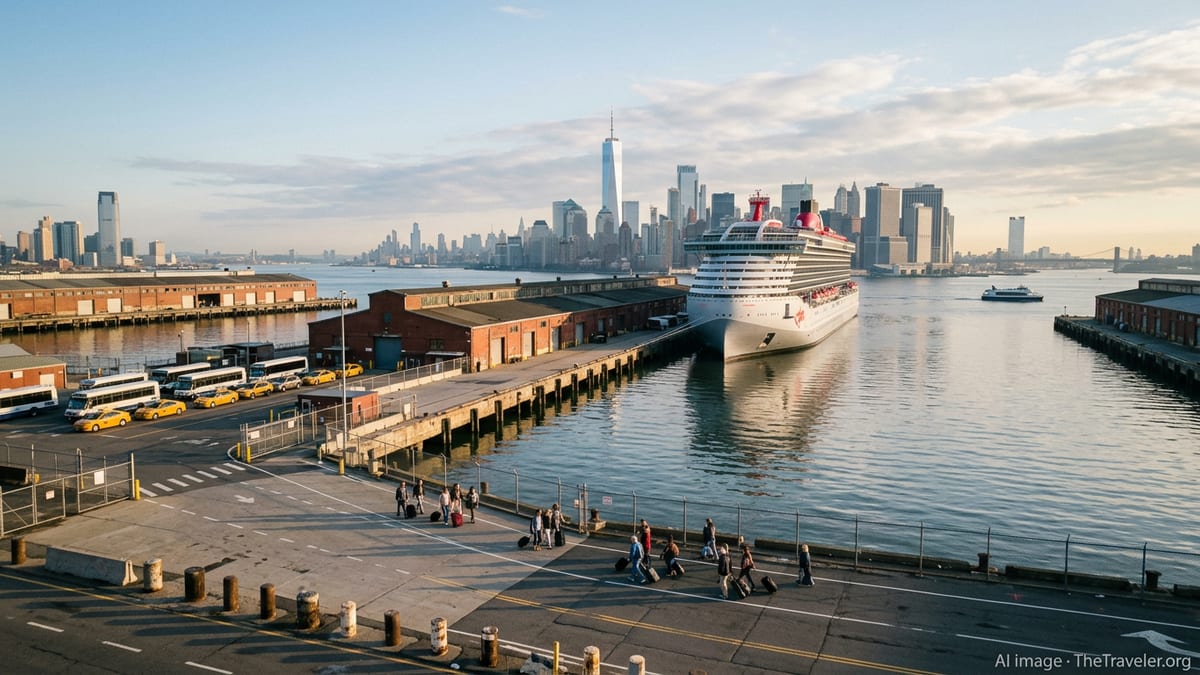
New York City is moving ahead with modernization plans that are expected to increase cruise capacity on the Hudson River by the latter half of this decade, with implications for 2027 deployments and beyond. A master plan for the Manhattan Cruise Terminal released through the New York City Economic Development Corporation outlines a long-term redesign of Piers 88 and 90 to accommodate some of the world’s largest ships, improve passenger circulation and add shore power connections. Architectural concept work published in 2026 describes proposals for resilient, all-electric piers and upgraded terminal facilities that can berth multiple large vessels simultaneously, which would underpin growth in homeport operations once phased improvements are complete.
Parallel investments are advancing across the harbor in Brooklyn. A 2025 vision plan for the Brooklyn Marine Terminal in Red Hook includes the redevelopment of the existing Brooklyn Cruise Terminal within a wider mixed-use waterfront district. The public documents emphasize creating a more modern maritime complex, additional commercial activity and new public open space around the piers, which is expected to enhance the passenger experience for ships already using the Red Hook facility and support expanded seasonal deployments as cruise lines adjust itineraries.
While construction timelines stretch into the late 2020s, port schedules and industry tracking suggest that New York is already attracting interest for additional berths in the mid-2020s, with some observers pointing to placeholders for future deployments by major brands. The combination of planned infrastructure upgrades and consistently strong regional demand underpins expectations that New York’s cruise traffic could climb further by 2027, particularly on routes to Bermuda, Atlantic Canada and the Caribbean.
Bermuda Targets More Calls and Higher-Value Visitors
Bermuda is emerging as one of the primary beneficiaries of the North Atlantic cruise expansion, with government documents and tourism reports pointing to a significant increase in ship calls through 2027. Information published by Bermuda’s government in 2025 on upcoming seasons projected 193 cruise ship visits in 2026, and more recent updates from 2026 tourism briefings indicate that 210 calls are currently scheduled for 2027, with additional berth space still available for occasional callers. Those figures suggest a notable step-up in activity compared with pre-pandemic years and reflect deeper commitments from key cruise partners.
Earlier government statements outlined that Norwegian Cruise Line would deploy some of its newer ships on Bermuda routes and add a third vessel calling regularly from 2026, enabling near daily visits during peak season. Public presentations and strategy documents tied to Bermuda’s 2023 to 2027 economic development and tourism plans also highlight cruise connectivity as a strategic priority, linking expanded ship calls to wider efforts to grow visitor spending, spread tourism more evenly across the calendar and encourage longer stays on the island.
Recent coverage from Bermuda’s tourism authority and local media in 2026 notes that cruise arrivals have been a major driver of visitor numbers this year, contributing to double-digit percentage increases in cruise passengers over the first half compared with 2025. At the same time, officials are emphasizing the need to balance volume with environmental protection and community impact, including ongoing work on shore excursion management and port operations. With more North American homeports looking to include Bermuda in short and medium-length itineraries, the island is positioning itself as a pivotal stop in the anticipated 2027 boom.
Emerging Atlantic Ports Join the Cruise Map
Beyond New York and Bermuda, a series of smaller and mid-sized ports along the U.S. and Canadian Atlantic coasts are preparing to capture a portion of the forecast growth. In July 2026, New York State’s Empire State Development agency confirmed that the Erie Canal Harbor Development Corporation had approved a construction contract for a new cruise terminal on Buffalo’s Outer Harbor. The project, budgeted at up to 13.4 million U.S. dollars for its first phase, is scheduled to open for the 2028 season, but its multi-year license agreement with American Cruise Lines signals confidence in continued demand for Great Lakes and regional itineraries that feed into broader North American cruise networks.
Elsewhere, planners and port authorities in Canadian Maritimes and New England are incorporating cruise projections into waterfront redevelopment and tourism strategies, guided by the same favorable demand trends highlighted in recent CLIA and travel-industry reports. As itineraries diversify, more ships are expected to alternate between Bermuda, Canada and New England circuits from East Coast homeports, increasing calls in secondary destinations that can handle small to mid-sized vessels.
Analysts note that the expected 2027 expansion is not limited to traditional ocean cruising. Industry updates for 2026 point to steady growth in river and expedition cruising in North America and Europe, broadening the range of products marketed to travelers who might combine a short coastal voyage from New York or another East Coast port with inland or overseas river sailings in future years.
Capacity, Sustainability and Community Pressures
The prospective boom in 2027 also brings challenges, especially around port capacity, sustainability and quality of life in host communities. New York’s manhattan and Brooklyn terminal plans incorporate a shift toward cleaner operations, including expanded shore power capabilities to reduce emissions while ships are at berth. Planning documents underline ambitions for all-electric pier infrastructure and better traffic management around the terminals, blending cruise operations with public waterfront access.
Bermuda’s economic and tourism strategies through 2027 highlight similar priorities. Government and tourism-planning publications emphasize that while cruise connectivity remains central to the island’s visitor economy, new development must align with environmental safeguards and local expectations. Those reports call for upgraded infrastructure, more resilient port facilities and careful management of peak days when multiple large ships are in port, particularly as the 2027 schedule increases total calls.
With cruise demand and ship deployments on an upward trajectory, 2027 is shaping up as a pivotal year across the broader North Atlantic region. Ports that combine expanded capacity with sustainability investments and diversified tourism offerings appear best placed to benefit from the next phase of the cruise industry’s growth cycle.
Cruise Lines International Association: North America market data
Government of Bermuda: cruise season previews and projections
NYCEDC: Manhattan Cruise Terminal Master Plan
City of New York: Brooklyn Marine Terminal vision plan
Empire State Development: Buffalo Outer Harbor cruise terminal