


More news on this day
A fresh wave of aviation disruption has swept across Asia, with data from flight-tracking and passenger-rights platforms indicating around 743 cancellations and more than 4,600 delays centered on Tokyo and 23 other major airports, snarling itineraries for tens of thousands of travelers in one of the region’s most severe mid-year travel snags.
Get the latest news straight to your inbox!
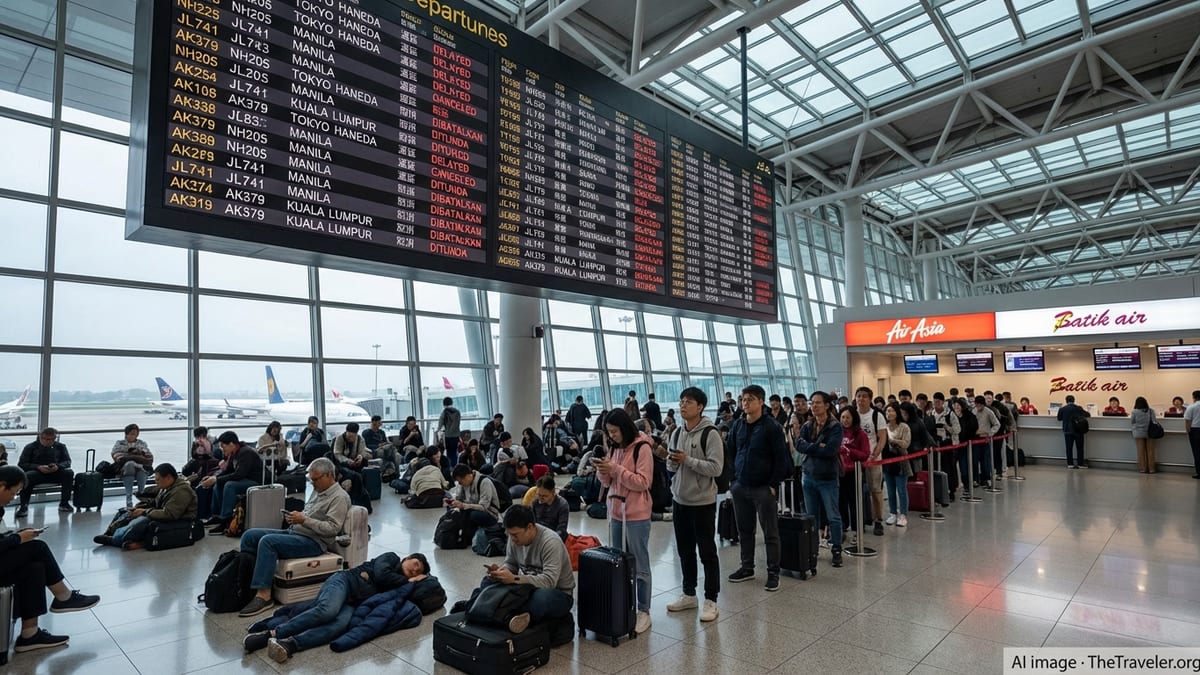
Tokyo Airports at the Heart of Widespread Asian Disruptions
Publicly available disruption tallies show that Tokyo’s Haneda and Narita airports once again ranked among Asia’s most affected hubs, with hundreds of cancellations and delays linked to severe weather systems and operational constraints rippling across the region. During recent events such as Tropical Storm Jangmi and subsequent storm activity, Japan repeatedly recorded some of the highest single-day cancellation totals in Asia, including more than 690 cancellations at Haneda alone on a peak day in early June 2026 according to passenger-rights tracking data.
Tokyo’s role as a major transfer gateway for regional and long-haul routes amplified the impact. When departure banks from Tokyo to domestic Japanese cities, Southeast Asia, and North America stalled, knock-on delays spread along connecting routes, leaving travelers from Europe, the United States, and Australia stranded far from their final destinations. Reports indicate that even short primary delays at Tokyo could cascade into missed onward flights several time zones away.
Recent advisories from major Japanese carriers, including updates tied to Typhoon Saudel in late August 2026, highlight how quickly conditions can deteriorate. Flight-status pages pointed to waves of cancellations and retimed services into and out of Tokyo, with airlines adding extra flights on certain routes while warning that further changes were possible as forecasts evolved. For passengers, that translated into a rolling pattern of last-minute gate changes, extended waits, and, in many cases, complete loss of same-day travel options.
Storm Systems and Summer Weather Push Asian Hubs to Breaking Point
Across Asia, disruptive weather has been a recurring theme in 2026, and the latest cluster of 743 cancellations and around 4,668 delays fits into a broader pattern of vulnerability. Data published by compensation and flight-rights platforms shows that tens of hundreds of flights were affected over multiple periods this year by tropical systems such as Jangmi, as well as intense summer thunderstorms that battered already congested airspace over China, Japan, South Korea, and Southeast Asia.
One recent July snapshot cited almost 7,000 disrupted flights, primarily at major Chinese hubs including Guangzhou, Shanghai Pudong, and Beijing Capital, illustrating how quickly storms can overload schedules even when airports remain technically open. When those weather events align with peak travel periods or intersect with highly connected hubs like Tokyo and Bangkok, delays multiply, aircraft and crews are displaced, and recovery can take days rather than hours.
In Japan, airlines have simultaneously grappled with tropical storm activity affecting Okinawa and Kyushu and the need to protect safety margins across dense domestic networks that funnel through Tokyo. Advisories around Typhoon Saudel, for example, warned of widespread cancellations on Okinawa routes and possible knock-on effects at Haneda and Narita, with extra sections added on some services but capacity still falling short of demand. This combination of localized weather and network-wide constraints helps explain why disruption numbers can climb so quickly into the hundreds of cancellations and thousands of delays.
Twenty-Three Other Airports Feel the Contagion of Delay
While Tokyo grabbed the most attention, disruption reports indicate that at least 23 other airports across Asia were caught in the same wave of schedule chaos. These included major hubs and secondary gateways in China, South Korea, Thailand, India, and the Philippines, many of which serve as critical transfer points for regional low-cost carriers and long-haul connections to Europe and the Middle East.
Published coverage of recent severe-weather and storm-related events in Asia points to airports such as Guangzhou Baiyun, Shanghai Pudong, Incheon, Suvarnabhumi Bangkok, and several large Indian metros as frequent entries on daily delay and cancellation league tables. When storms or airspace restrictions slow traffic at one of these locations, aircraft rotations and crew rosters on multi-leg itineraries are thrown off balance, often forcing airlines to cancel or heavily delay flights several segments away.
Secondary airports feeding into Tokyo and other hubs also felt the strain. Domestic Japanese fields in Kyushu and Okinawa, for instance, saw multiple days of wide-scale cancellations as storm bands passed through, cutting off feeder traffic that normally fills onward international departures from Tokyo. In Southeast Asia and India, afternoon thunderstorms that are common in the summer months further eroded on-time performance, pushing already stretched schedules beyond their limits.
Knock-On Effects: Missed Connections, Rebooking Battles, and Holiday Disruption
For travelers, the headline numbers of 743 cancellations and thousands of delays translated into very real disruption on the ground. Reports from regional media and travel advisories describe terminals packed with passengers waiting in long rebooking queues, hotel prices spiking around affected hubs, and holidaymakers facing unplanned extra nights away from home. Families connecting through Tokyo or mainland Chinese hubs on complex itineraries were particularly exposed when one delayed segment invalidated carefully timed onward flights.
Passenger-rights organizations note that while severe weather is generally classified as outside airline control, which often limits eligibility for financial compensation under regulations like Europe’s EC 261, carriers are still expected to offer care and assistance. That typically includes options such as free rebooking or refunds, meal and refreshment vouchers, and in some cases hotel accommodation and ground transport when overnight delays occur. Recent guidance tied to storm-related disruptions in Asia has reinforced those expectations, encouraging travelers to keep boarding passes, receipts, and screenshots of delay notices as evidence.
At the same time, airlines have urged passengers to use digital tools wherever possible. Many major carriers in Japan and across Asia now allow same-day changes, rebooking, or refund requests through mobile apps and websites, helping to relieve pressure on airport counters during mass disruption events. Travelers who acted quickly to switch to later flights or alternative routings were often able to secure seats before remaining capacity disappeared, underscoring the value of monitoring flight status in real time when conditions are unstable.
How Travelers Can Navigate Ongoing Volatility in Asian Skies
The latest surge of cancellations and delays around Tokyo and 23 other airports underscores a broader reality for Asia-bound travelers in 2026: operational volatility is likely to remain a feature of regional flying, especially during storm seasons and peak travel periods. Travel advisories from airport operators and national aviation bodies in markets such as Thailand and Japan consistently emphasize the need for passengers to check flight status before leaving for the airport and to build additional buffer time into connections through major hubs.
Passenger-rights platforms recommend several practical steps to reduce risk. Booking longer connection windows at hubs exposed to frequent thunderstorms or tropical systems, avoiding very tight late-evening connections that leave limited recovery options, and keeping itineraries on a single ticket where possible can all make it easier for airlines to rebook passengers when schedules unravel. Purchasing travel insurance with disruption coverage, including benefits for missed connections, accommodation, and alternative transport, can also soften the financial impact when large-scale events ground flights.
For those already en route, being proactive is key. Monitoring airline apps and airport websites, registering for flight-status alerts, and having a contingency plan for overnight stays can make stressful situations more manageable. As recent episodes around Tokyo and across Asia have shown, once disruption reaches the scale of hundreds of cancellations and thousands of delays, flexibility and rapid decision-making often make the difference between being stranded and reaching the destination, even if a little later than planned.