


More news on this day
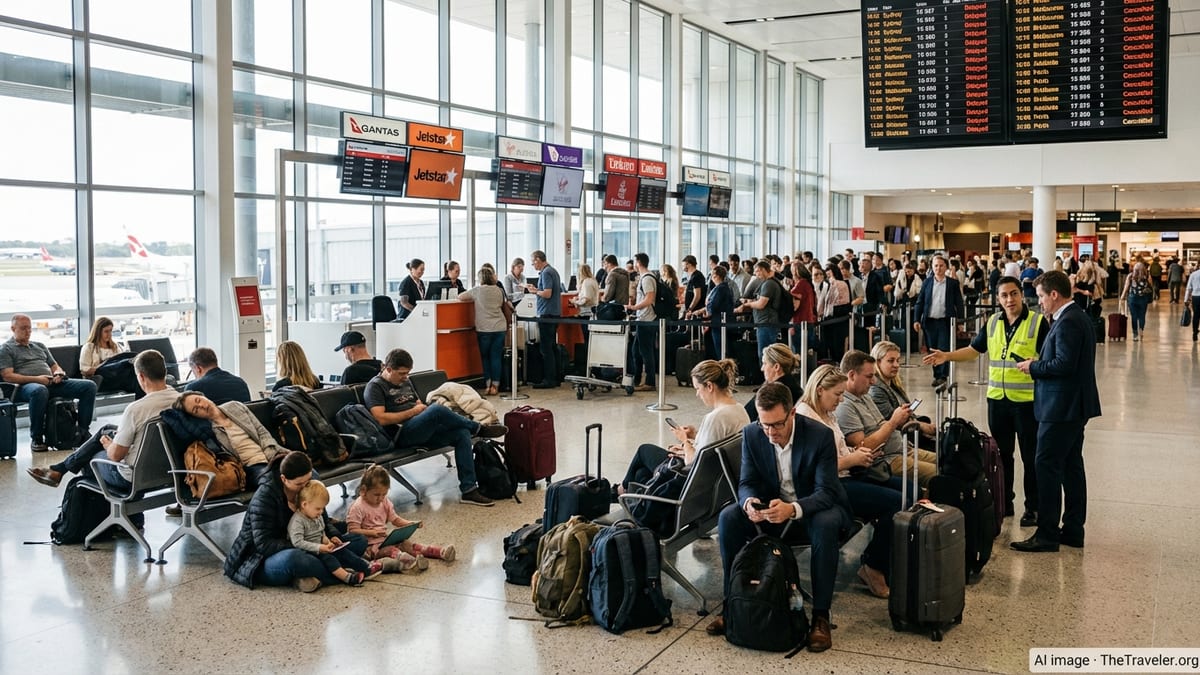
Major air travel disruptions are rippling across Australia and New Zealand as staffing constraints, fuel contamination in Fiji and heightened safety controls at Sydney push airlines to cancel, delay and reroute flights at the height of the southern winter travel season.
Get the latest news straight to your inbox!
Staffing Constraints Throttle Sydney Operations
Air traffic control staffing limits at Sydney Airport have led to repeated restrictions on the number of aircraft able to land and depart, creating knock-on delays across Australia’s busiest aviation hub. Recent coverage indicates that reduced controller availability has forced Airservices Australia to cap movements in peak periods, with flow-on impacts for domestic and trans-Tasman schedules that rely on tightly timed connections through Sydney.
Reports from earlier in August describe days where services into Sydney were held in airborne holding patterns or delayed on departure from other Australian cities, as traffic was metered into constrained runway capacity. Routes between Perth and Sydney were among those monitored closely by travelers, with local media noting that while some westbound and eastbound flights escaped the worst of the disruption, the wider network faced rolling timetable changes and extended journey times as airlines adjusted rosters and aircraft rotations.
These staffing-related constraints have emerged against a backdrop of strong demand for flights between Australia and New Zealand. Market analysis from Australia’s competition regulator published in mid-2026 highlights robust recovery in trans-Tasman traffic, putting additional pressure on major gateways such as Sydney. With more passengers funneled through a network still sensitive to crew and controller availability, even small operational issues can now trigger broader timetable turbulence.
Runway Safety Incidents Intensify Scrutiny
In parallel with staffing pressures, a cluster of runway and ground safety incidents at Sydney Airport has prompted tighter oversight and investigation, further complicating operations. Publicly available information shows that the Australian Transport Safety Bureau has opened inquiries into three separate events in a matter of weeks, including a near collision on the tarmac that left a crew member injured when a Jetstar aircraft braked sharply to avoid a Qatar Airways jet.
Another reported case involved a QantasLink service and a Qantas Boeing 737, where investigators described a breakdown in coordination that brought the two aircraft into closer proximity than intended during runway operations. A third episode, in which an aircraft crossed a runway more than a kilometre away from another preparing to depart, has raised questions about how quickly such occurrences were escalated through official reporting channels.
While none of the incidents resulted in passenger fatalities, the concentration of safety events at a single airport in a short span has placed Sydney firmly under the microscope. Heightened safety protocols typically translate into more conservative spacing between aircraft, extended ground checks and temporary reductions in runway throughput, all of which can swell delay statistics and lead airlines to pad schedules or adjust departure banks.
Fiji Fuel Contamination Reverberates Through Regional Hubs
A separate crisis unfolding in Fiji has added a further layer of disruption to Australasia’s air network. Coverage from regional broadcasters reports that a batch of aviation fuel at Nadi International Airport was found to be contaminated in late August, forcing airlines including Virgin Australia, Qantas and Fiji Airways to rework flight plans, tanker in additional fuel and in some cases cancel services entirely.
With supply at Nadi constrained, several Australia–Fiji services have been rerouted to make intermediate refuelling stops at airports in New Caledonia and Vanuatu. These additional legs increase flight times and complicate crew duty limits, resulting in cascading delays for aircraft scheduled to continue on to or from Australian and New Zealand destinations later in the day. Some passengers have been advised of last-minute cancellations or significant timetable changes as carriers juggle limited clean fuel supplies.
The Fiji fuel issue has particular implications for travelers connecting between Australia, New Zealand and Pacific island nations. Nadi functions as a key hub for leisure routes out of Brisbane, Sydney and Melbourne, as well as for itineraries that combine Australian cities with New Zealand and the wider South Pacific. Any persistent constraint on fuel availability at the airport is likely to keep pressure on airline schedules and reduce the buffer available to absorb other operational shocks.
Knock-on Effects at New Zealand Airports
Although no comparable fuel contamination or staffing crisis has been reported at major New Zealand airports, the combination of Sydney capacity limits and Fiji disruptions is feeding into the performance of trans-Tasman services. Flight status data for routes such as Sydney to Queenstown show cancellations and schedule adjustments around 25 August, with advisory notices urging passengers to verify departure times close to travel.
New Zealand’s domestic network, anchored by Auckland, Wellington and Christchurch, is also highly sensitive to irregularities on international services arriving from Australia and the Pacific. Historical performance reports from the New Zealand transport ministry highlight how adverse weather or bottlenecks at Auckland can quickly propagate into delays across the country’s jet routes. Similar patterns are emerging as international aircraft arrive late, compressing turnaround windows for onward domestic flights.
Airlines have responded by directing customers toward mobile apps and online tools to track live arrival and departure information, particularly during what carriers describe as major disruption periods. For travelers, that has translated into a greater need for flexibility around connections, with warnings that minimum legal connection times may not reflect the practical risk of missed onward flights on busy travel days.
What Travelers in the Region Can Expect Next
Current indications suggest that operational constraints at Sydney and the fuel contamination in Fiji may persist in the short term, meaning further timetable volatility for passengers moving between Australia, New Zealand and Pacific destinations. Industry reporting notes that air traffic management investments and recruitment initiatives are underway in Australia, but these are medium-term measures that will take time to ease day-to-day pressure on controllers.
Airlines are expected to continue using tactics such as proactive cancellations, schedule thinning on peak days and increased use of refuelling stops to keep services running where possible. Travelers booked on flights touching Sydney, Nadi or key New Zealand gateways are being encouraged by publicly available guidance to monitor flight status closely on the day of travel and allow for additional connection time, particularly when separate tickets or self-managed transfers are involved.
With demand across the trans-Tasman corridor remaining strong and school holiday periods approaching in parts of Australasia, the region’s aviation system is entering a critical test of resilience. How quickly staffing pipelines can be strengthened, fuel quality issues resolved and safety investigations translated into operational improvements will shape the reliability of air travel between Australia, New Zealand and their Pacific neighbors in the weeks ahead.
ABC News: Fiji fuel contamination impacts flights
ABC News: Sydney Airport near-miss investigations