


More news on this day
Travelers departing Lexington’s Blue Grass Airport on Monday, September 21, faced hours-long waits after an equipment outage tied to Newark Liberty International Airport disrupted flights across the Northeast and delayed at least one departure by more than four hours.
Get the latest news straight to your inbox!
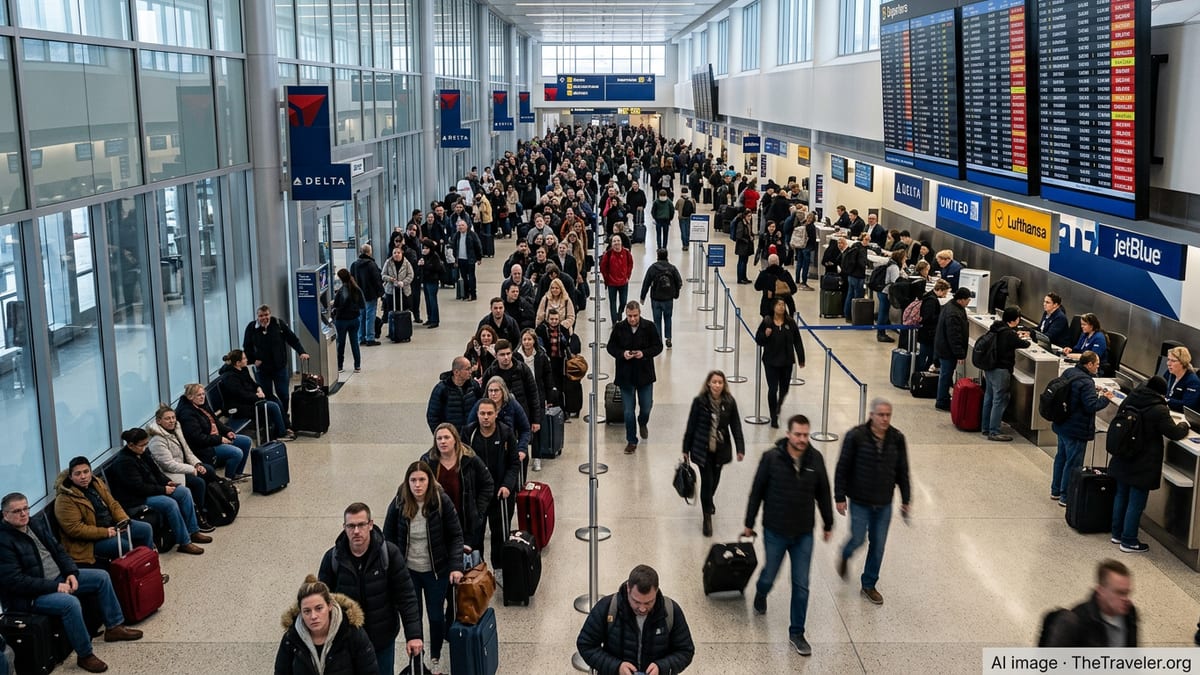
Regional outage reaches Kentucky travelers
Published coverage indicates that a wide-ranging equipment outage affecting air traffic control operations in the Northeast led the Federal Aviation Administration to impose ground stops and ground delays at several major airports on September 21, including Newark Liberty International, John F. Kennedy, LaGuardia, Philadelphia International and Teterboro. Flight-tracking data and national airspace status advisories show that the disruption began late Monday morning and continued into the evening, as technicians worked to restore key communications and radar functions.
Although Lexington’s Blue Grass Airport in Kentucky was far from the epicenter of the outage, it is closely tied into this network through connecting itineraries. A segment of local news coverage from Lexington, carried nationally through syndication, reports that an equipment problem linked to Newark resulted in a delay of about four and a half hours for a scheduled flight from Lexington to Philadelphia, a major hub for passengers connecting onward to the New York and New Jersey region.
Publicly available information from air-travel data providers shows that Philadelphia was among the airports most affected by the outage, which meant that flights feeding into the hub, including services from Lexington, were subject to rolling schedule changes. For Blue Grass Airport passengers booked onward to Newark or other Northeast destinations, the disruption turned a routine evening of travel into a prolonged wait at the gate.
While airport operations in Lexington continued, the equipment outage upstream effectively removed available slots at the receiving facilities. As a result, departures that would normally leave on time from Kentucky were held for extended periods so that congestion would not build within the constrained Northeast airspace.
What is known about the Newark equipment outage
According to published national and regional coverage, the root of Monday’s disruption has been linked to a telecommunications problem affecting a key air traffic facility that manages flights into and out of the New York and Philadelphia areas. Reports describe a damaged fiber-optic line in New Jersey that interfered with the flow of data and communications needed to safely sequence aircraft, prompting the FAA to order ground stops at several airports while backup systems were checked.
Advisories posted through the National Airspace System Status indicate that Newark Liberty International Airport was placed under a ground stop on September 21 due to an “equipment/outage” condition. In practical terms, this meant that many aircraft bound for Newark were held at their departure airports until the constraint was eased, rather than being allowed to depart and circle in holding patterns near New York while the technical issue persisted.
Newsrooms tracking the outage reported that hundreds of flights into and out of Newark were delayed or canceled on Monday, and that normal arrivals did not fully resume until late in the day. By early Tuesday, September 22, data from flight-tracking services showed Newark still coping with dozens of ongoing delays and cancellations as airlines repositioned aircraft and crew.
The same technical problem also affected Philadelphia International Airport, which serves as a critical hub for flights across the eastern United States. Because many Lexington passengers route through Philadelphia or Newark on their way to the wider Northeast, an outage of this type quickly translated into local disruption for travelers who never left Kentucky.
How delays unfolded at Lexington’s Blue Grass Airport
Local television footage and accompanying online summaries from Lexington describe a cascading effect on passengers at Blue Grass Airport. One outbound flight to Philadelphia, which would ordinarily support tight evening connections to Newark and other Northeast cities, reportedly faced a delay of approximately four and a half hours as crews awaited clearance to depart and secure an arrival slot amid constrained conditions at the hub.
Publicly accessible flight history tools indicate that some Lexington departures linked to the Philadelphia and Newark networks were rescheduled multiple times on Monday as the scope of the outage became clearer. Initial short delays stretched into longer holds as the ground stop and ground delay programs were extended, and airlines adjusted their operations in response to the evolving FAA advisories.
For travelers, the timing of the outage was especially challenging. Many evening departures from Lexington are designed to support same-night connections to late-night transcontinental or transatlantic flights out of major hubs. When those feeder flights are pushed back by several hours, passengers can miss onward services entirely, resulting in unexpected overnight stays or last-minute itinerary changes.
Airport information screens in Lexington continued to show the flights as operating, but with revised times, as carriers sought to preserve options where possible. Passengers with flexible plans were often encouraged, through general public information channels and airline notifications, to consider rebooking for later dates or routing through less affected hubs.
Recovery efforts and what travelers can expect
By late Monday night, publicly available statements and aviation data indicated that the damaged telecom line in New Jersey had been repaired and that Northeast airport operations were gradually resuming. However, the ripple effects of a daylong ground stop at Newark and associated delays at Philadelphia were still evident on Tuesday, with continued disruptions visible in schedules across the region.
Operational data compiled by flight-tracking services on the morning of Tuesday, September 22, showed Newark Liberty continuing to experience dozens of delays and cancellations as airlines worked through backlogs and repositioned aircraft. Travelers connecting from secondary markets such as Lexington were advised through carrier apps, email alerts and airport displays to verify departure and arrival times frequently, as schedules remained fluid while the system stabilized.
For passengers planning upcoming trips from Blue Grass Airport that involve connections through Newark, Philadelphia or New York-area airports, publicly available guidance from airlines and travel-industry outlets emphasizes the value of longer connection windows in the near term. While Monday’s equipment failure has been addressed, residual scheduling imbalances can persist for several days after a major disruption, particularly at heavily utilized hubs like Newark.
Travel analysts monitoring Monday’s outage note that large-scale ground stops of this type are relatively rare but can have outsized effects on smaller origin airports that depend on a limited set of daily departures to major hubs. Lexington’s experience on September 21 illustrates how an equipment problem hundreds of miles away can translate into missed connections and lengthy waits for travelers in an otherwise calm regional terminal.
Broader implications for Northeast-connected routes
The Newark outage and its knock-on impact in Lexington also highlight the broader sensitivity of hub-and-spoke networks that tie regional airports to major coastal gateways. Blue Grass Airport, like many similar facilities across the Midwest and South, relies on consistent operations at a small number of large hubs to keep itineraries running smoothly for both business and leisure travelers.
When a hub such as Newark or Philadelphia is constrained by a technical outage, weather event or staffing shortage, the first visible sign for passengers in cities like Lexington is often a gate announcement that a departure has been put on hold. Yet the underlying cause typically lies in upstream restrictions imposed to protect safety and manage congestion in crowded airspace.
Publicly available FAA planning documents and previous notices regarding Newark’s infrastructure have underscored the importance of improving communications resilience and redundancy in the New York region. Monday’s event is expected to feed into ongoing discussions about how to harden critical systems against single points of failure, particularly as passenger volumes in the Northeast corridor continue to recover and grow.
For now, travelers using Lexington’s Blue Grass Airport, especially those connecting through Newark or Philadelphia, are likely to pay closer attention to real-time status updates and connection times. While the equipment outage that sparked this week’s delays has been repaired, its impact serves as a reminder that disruptions far from home can quickly reshape even the most carefully planned itineraries.