


More news on this day
Philadelphia International Airport has resumed normal departures after a ground stop triggered by an air traffic control equipment outage was lifted, but passengers are still facing hours of residual delays as airlines work to untangle schedules across the Northeast.
Get the latest news straight to your inbox!
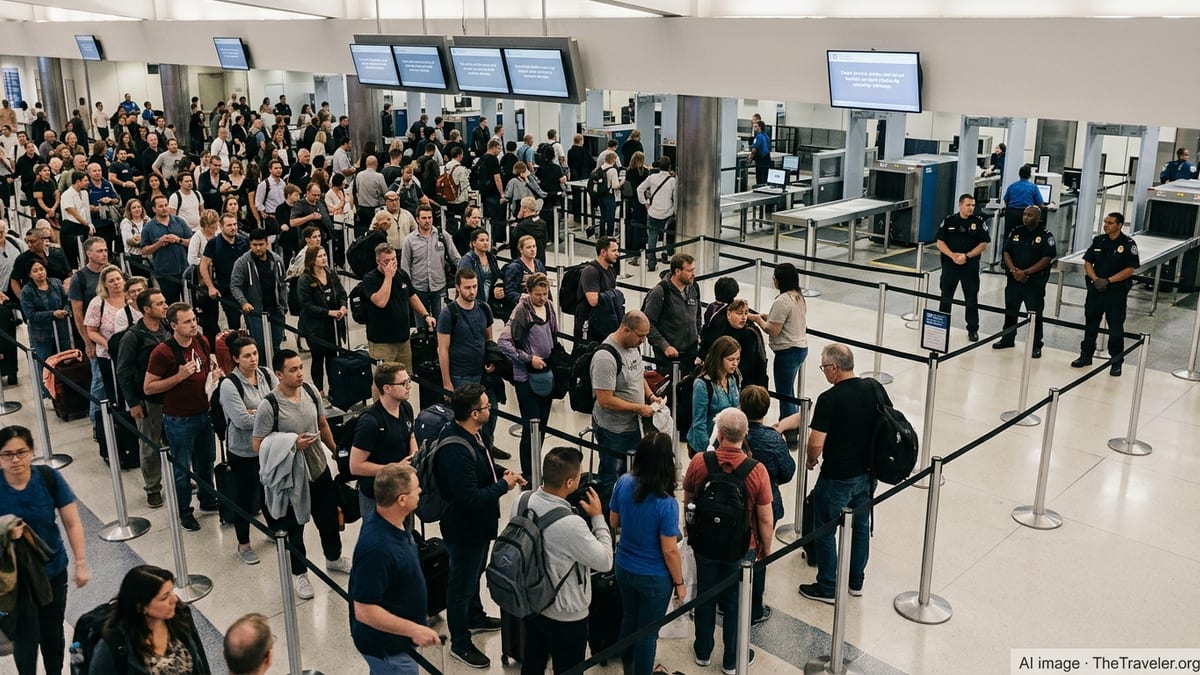
Ground stop ends after outage at regional control facility
Publicly available information indicates that on Monday, September 21, a communications failure at a Federal Aviation Administration terminal radar approach control facility serving Philadelphia and other major Northeast airports led to an immediate ground stop for flights bound for Philadelphia International Airport, Newark Liberty International Airport and Teterboro Airport. Reports describe a primary communications line failure followed by damage to a backup fiber-optic connection during nearby construction, disrupting systems that handle arrival and departure traffic for the region.
According to published coverage from multiple outlets, the ground stop at Philadelphia was put in place late Monday morning, halting departures from other airports that were scheduled to land at PHL. By late afternoon, the FAA’s public National Airspace System status tools showed the ground stop lifted and operations transitioning into a ground delay program, as controllers gradually increased the flow of arrivals while equipment was brought back online.
Local broadcast reports late Monday indicated that the formal ground stop order for Philadelphia expired around 5 p.m. Eastern time, with the associated ground delay program also canceled shortly afterward. Even as those restrictions ended, average arrival delays of more than three hours were reported during the peak of the disruption, leaving aircraft and crews widely out of position.
FAA operations advisories published overnight show no active ground stop or ground delay program for PHL on Tuesday morning, September 22, confirming that the airport is no longer under formal flow restrictions. Real-time status pages that aggregate this FAA data currently list Philadelphia as “on time,” even as airlines continue to recover.
Lingering delays and cancellations ripple into Tuesday
Despite the end of the ground stop, travelers heading through Philadelphia early Tuesday continue to encounter significant knock-on disruption. Flight status boards published on the airport’s official site for the overnight and early-morning period on September 22 list numerous arrivals and departures as delayed, some by several hours, as aircraft reposition and flight crews reach legal duty limits after extended holds and schedule changes the previous day.
Independent trackers that compile FAA delay data show Philadelphia categorized as “on time” in terms of new systemwide air traffic restrictions, but still list scattered delays and isolated cancellations tied to Monday’s outage and subsequent crew and equipment imbalances. Airlines that rely on tight aircraft turns through Philadelphia appear to be focusing on restoring their mainline schedules first, with some regional and late-night flights still adjusted or consolidated.
Airline travel waivers announced Monday evening for customers ticketed to or from Philadelphia, Newark and other affected Northeast airports remain in effect through at least Wednesday, according to publicly available customer advisories. These waivers generally allow passengers to rebook within a short window without change fees or fare differences, an indication that carriers expect schedule disruptions and limited seat availability to persist beyond the day of the outage itself.
For travelers flying on September 22, publicly available guidance suggests monitoring flight status frequently, as same-day schedule adjustments are still possible while airlines reposition aircraft and reset crew rotations. Passengers connecting through Philadelphia are being advised by many carriers’ online tools to allow additional time between flights or consider alternate routings where available.
What caused the disruption and how it affected the Northeast
According to detailed accounts published by national and local news organizations, the root of Monday’s disruption was an equipment outage at an air traffic control facility responsible for approach and departure control in the Philadelphia region and parts of the busy New York airspace. The incident reportedly began when a primary communications circuit failed, followed by accidental damage to a backup fiber line during railroad construction work, severing a key link in the system.
This failure affected traffic handling not only for Philadelphia, but also for Newark and Teterboro and, indirectly, for New York’s major airports and nearby facilities. The FAA’s operations summaries for Monday reference low ceilings and visibility in the corridor, which combined with reduced air traffic control capacity to force stringent limits on arrivals and departures as technicians worked to reroute communications and restore system redundancy.
Published dispatches from wire services and aviation-focused outlets note that hundreds of flights across the Northeast were delayed or canceled as a result, with Newark particularly hard hit. Because Philadelphia International Airport already plays a significant role in overall network congestion for the National Airspace System, even a temporary loss of capacity at its controlling facility had outsized effects on airlines’ ability to keep aircraft moving through the region.
FAA planning documents released earlier in the year have highlighted ongoing construction and modernization projects at and around Philadelphia International Airport, including taxiway reconfiguration work scheduled through late 2026. While those long-term projects are aimed at improving safety and reducing chronic bottlenecks, they also mean that unplanned outages or sudden changes in control capacity can be more difficult to absorb without visible impacts on day-to-day operations.
Advice for travelers heading through Philadelphia
For passengers with flights scheduled into or out of Philadelphia in the next 24 to 48 hours, publicly available airline and airport guidance points to a few practical steps. First, travelers are encouraged to check the status of their flight directly with their carrier before leaving for the airport, rather than relying on generic delay maps. After a disruption of this scale, a flight may show as “on time” from an air traffic control perspective while still being retimed or swapped to a different aircraft by the airline.
Second, many carriers have posted flexible travel policies for affected cities, including Philadelphia and Newark, allowing changes through specified dates without additional fees. Passengers whose trips are not time-sensitive may find it easier to use these waivers to shift travel to later in the week, reducing pressure on heavily booked flights immediately after the outage.
Third, travelers making connections through Philadelphia should consider longer layovers where possible. While FAA tools currently indicate no active flow restrictions at PHL, airlines are still working through the residual effects of Monday’s ground stop, which could result in late-arriving inbound aircraft and compressed turn times.
Finally, for those already at the airport, publicly available information indicates that customer service lines and call centers are busy throughout the morning as travelers seek rebooking options. Using airline apps or websites to request same-day changes or standby, where offered, may help avoid long queues at counters while the operation stabilizes.
Broader implications for Northeast air travel
The Philadelphia ground stop and its lingering effects are drawing attention once again to the sensitivity of the Northeast airspace to technical failures and construction-related incidents. FAA reports and Federal Register filings over recent years have emphasized that airports such as Philadelphia and Newark have limited slack capacity, meaning that even short-lived reductions in air traffic control or runway throughput can rapidly cascade into large waves of delays.
Aviation analysts commenting in published reports note that Monday’s incident underscores the importance of redundancy in communications networks that support radar and approach control facilities. Although backup lines were in place, the combination of a primary circuit failure and damage to the secondary link during separate construction work left the system exposed, forcing the FAA to slow or halt arrivals until confidence in safe operations could be restored.
For travelers, the episode is another reminder that causes of disruption are not limited to weather or airline staffing. Infrastructure work, fiber cuts and other behind-the-scenes technology issues can have the same practical result: full aircraft waiting on ramps, crews bumping against duty limits, and multi-day ripple effects as carriers recover.
As of Tuesday, September 22, public data shows that air traffic at Philadelphia International Airport is moving without new FAA-imposed restrictions, but residual delays from the earlier outage continue to affect individual flights and connections. Passengers planning trips through the airport this week are likely to see improving conditions day by day, yet may still benefit from building extra time into their itineraries and keeping a close eye on real-time updates from their airlines.