


More news on this day
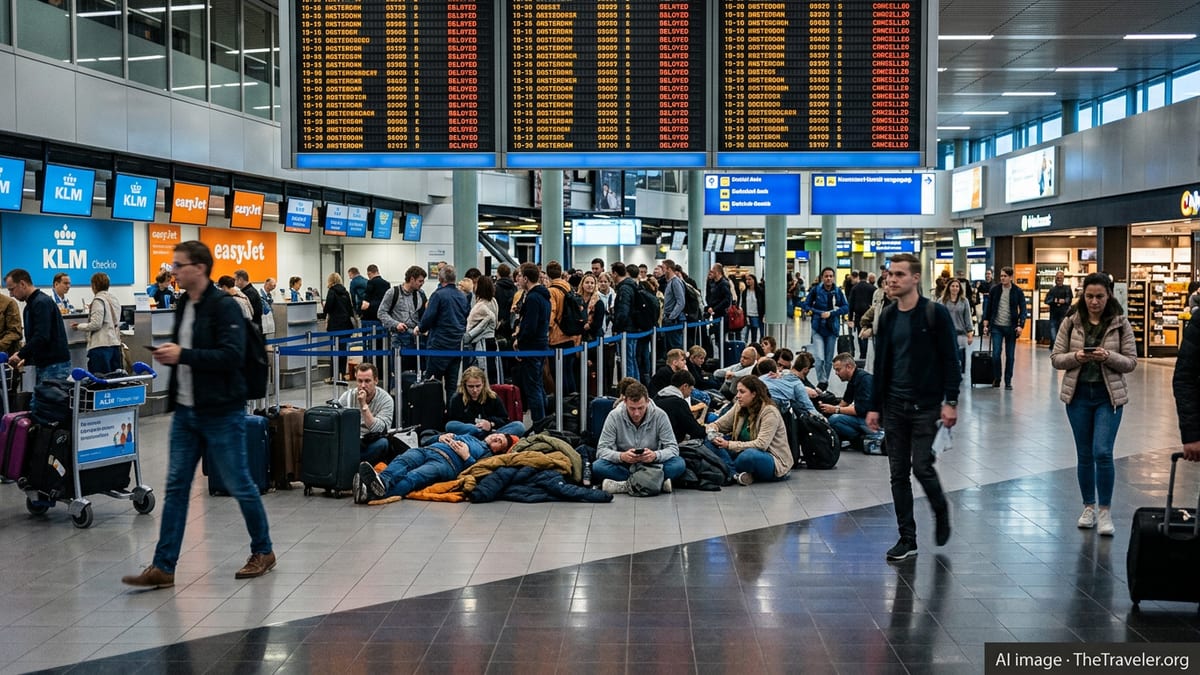
Travellers at Newark Liberty International Airport on Friday experienced a fresh round of disruption, with publicly available data indicating around 84 flight delays and two cancellations affecting services operated by United Airlines, Delta Air Lines, Lufthansa, JetBlue and other carriers on routes linking New York with London, Paris, Frankfurt and major cities across the United States.
Get the latest news straight to your inbox!
Ripple effects for transatlantic and domestic passengers
The disruption at Newark affected a mix of long haul and domestic services, with a noticeable impact on transatlantic links to London, Paris and Frankfurt as well as high demand routes to major US hubs such as San Francisco, Los Angeles, Chicago and key cities in Florida and the Midwest. Flight status boards showed multiple departures pushed back by more than an hour, creating tighter connections and missed onward journeys for some passengers.
Newark Liberty serves as a primary hub for United Airlines and a significant base for carriers including Delta Air Lines, Lufthansa and JetBlue, meaning even a relatively modest number of delayed or cancelled flights can quickly cascade through airline networks. When widebody aircraft operating Europe and West Coast services encounter delays on departure from Newark, connecting travellers can face rebookings, overnight stays or significant schedule changes at downline airports.
The pattern of disruption on Friday was spread throughout the day rather than confined to a single weather event or narrow time window. Published tracking data showed a mixture of short delays of 30 to 45 minutes and a smaller number of longer hold ups extending beyond two hours, alongside the two cancellations that removed capacity completely from the schedule.
Operational pressures at a constrained Northeast hub
Newark Liberty International is one of the most capacity constrained airports in the United States, serving the dense New York metropolitan market with limited runway and airspace flexibility. Federal planning documents and previously published analyses of airport performance have highlighted how tightly scheduled peak hours can leave little margin for recovery when disruptions arise, whether from weather, air traffic control metering or airline specific issues.
Regulators have in recent years imposed caps and operating limitations at Newark to manage congestion and reduce chronic delay patterns. These measures are intended to keep schedules at levels the airport and regional air traffic system can realistically handle, yet even with such limits in place, day to day operations remain vulnerable to knock on effects when several carriers concurrently experience schedule pressure.
United, Delta, Lufthansa and JetBlue each use Newark in different ways, from United’s hub and spoke model to point to point services offered by other airlines. Any period of irregular operations, even involving a few dozen delayed departures, tends to create visible crowding in gate areas, longer lines at customer service desks and heightened demand for same day rebooking options across multiple carriers.
Impacts for passengers bound for Europe
For travellers heading to London, Paris and Frankfurt, Friday’s delays at Newark came during traditionally busy transatlantic travel periods, when aircraft tend to depart with high load factors. When flights leave late from a constrained hub, rescheduling options are often limited because subsequent departures on the same day may already be close to full.
Nonstop flights linking Newark with major European hubs are frequently used by travellers connecting onward to other cities across Europe, the Middle East and Africa. Delays on the first leg from Newark can therefore lead to missed onward connections at hubs such as London Heathrow, Paris Charles de Gaulle and Frankfurt, forcing some passengers onto later flights or overnight stays arranged at destination.
Reports from publicly available aviation data suggested that on Friday a portion of the affected services were evening departures, a time when schedule disruptions can be particularly difficult for international travellers to absorb. Late evening long haul flights may have limited backup options until the following day, increasing the likelihood of extended travel times when things go wrong.
Domestic networks feel the strain
Within the United States, the delays and cancellations at Newark were felt most keenly on high frequency routes linking the New York area with major hubs such as Chicago, San Francisco, Los Angeles and key business and leisure markets along the East Coast. These services are integral to the national networks of United, Delta and JetBlue, feeding connecting banks throughout the day.
Even relatively short delays on Newark departures can create challenges for passengers trying to connect onward in other cities, particularly where minimum connection times are tight. Travellers arriving late into large hubs may find their onward flights closed or operating at capacity, prompting airlines to search for alternative routings through other connecting points or to move customers to later departures.
Regional services to secondary and tertiary US cities are also vulnerable when irregular operations emerge at a hub. Flights using smaller regional jets or operating with limited daily frequency can be challenging to reaccommodate if one departure is significantly delayed or cancelled, often forcing passengers to accept substantial changes to arrival times or even to travel a day later than planned.
What affected travellers can do
With Newark’s role as a critical gateway for both domestic and international traffic, travel advisors typically recommend that passengers build additional buffer time into itineraries that rely on tight connections, especially during peak travel periods or seasons prone to weather disruptions. Industry guidance often suggests avoiding minimum connection times when returning from Europe into Newark before continuing on to another US destination.
When delays and cancellations occur, passengers are generally advised to monitor their flights using airline apps or airport flight boards, and to respond promptly to rebooking offers when they appear. Many carriers now allow same day changes through digital channels, reducing the need to queue at customer service desks during peak disruption periods.
Travellers departing from or connecting through Newark in the coming days are likely to continue monitoring conditions closely, particularly on the busiest routes to London, Paris, Frankfurt and major US cities. While Friday’s total of 84 delays and two cancellations represents only a fraction of the airport’s daily schedule, the concentration among large network carriers at a constrained hub underscores how even limited disruption can significantly affect individual travel plans.