


More news on this day
An equipment outage that halted flights at Newark Liberty International Airport on Monday sent disruptions rippling as far as Lexington, Kentucky, where travelers at Blue Grass Airport faced significant delays and missed connections tied to the Northeast aviation slowdown.
Get the latest news straight to your inbox!
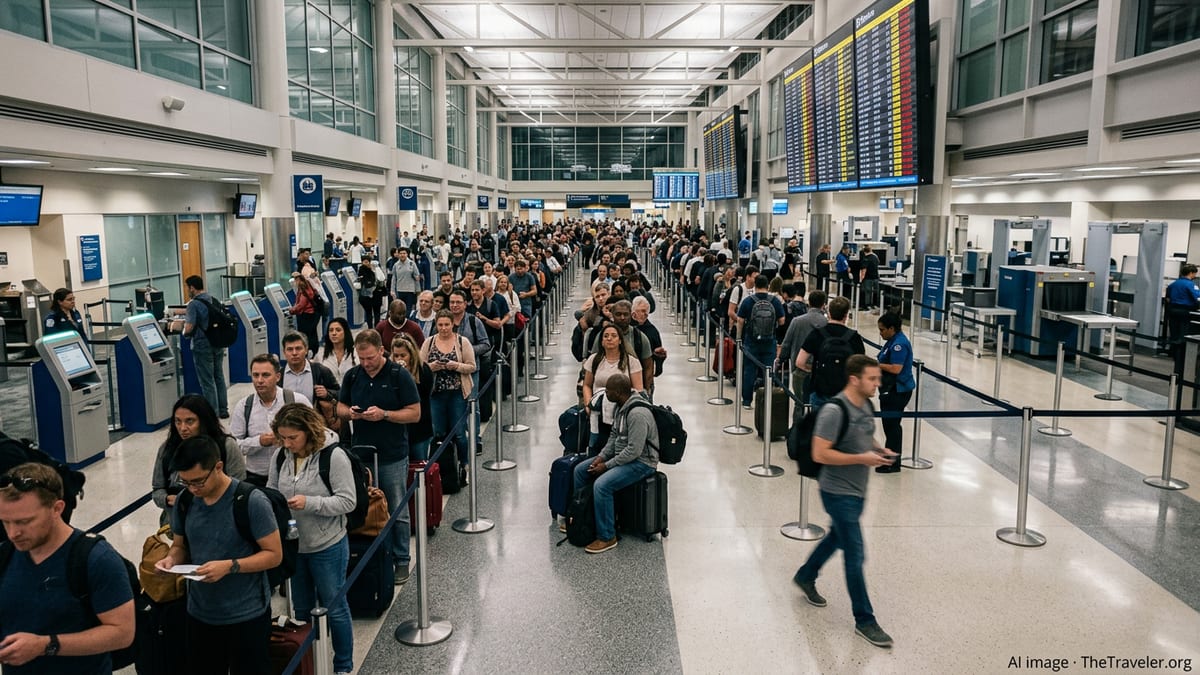
Outage in Northeast airspace reaches Kentucky
According to published coverage and federal air traffic status updates, a technical failure affecting air traffic control equipment in the Newark and Philadelphia region on September 21 led to ground stops at several major Northeast airports, including Newark Liberty International Airport. The outage curtailed commercial arrivals and departures for hours, with ripple effects reported nationwide as aircraft, crews and schedules became misaligned.
Local television coverage in Lexington indicates that Blue Grass Airport was among the smaller facilities caught in that wider disruption. One Lexington departure to Philadelphia was reported to be delayed by about four and a half hours as airlines worked around the halt in traffic linked to Newark. Passengers bound for the Northeast and for international connections through that corridor encountered extended waits and, in some cases, missed onward flights.
Publicly available information from flight tracking services shows that Newark experienced one of the highest volumes of cancellations and delays in the United States on Monday, leading to widespread schedule reshuffling. Because many Lexington itineraries rely on connections through larger hubs such as Philadelphia and Newark, the outage quickly translated into downstream delays on routes that never enter New Jersey airspace directly.
By Tuesday, real-time data from the Federal Aviation Administration indicated that operations at Newark had largely resumed, with only minor arrival and departure delays reported. However, the recovery in Lexington and other spoke airports has been slower as carriers reposition aircraft and normalize schedules.
What caused the Newark equipment outage
National and regional news reports attribute the disruption to a failure in air traffic control equipment overseen by the Philadelphia Terminal Radar Approach Control facility, which manages traffic for Newark and other major airports in the region. Transportation officials cited a malfunction involving an aging circuit and a damaged telecommunications backup line located along an Amtrak rail corridor in New Jersey.
The issue prompted the Federal Aviation Administration to implement ground stops at Newark Liberty, Philadelphia International, John F. Kennedy International, LaGuardia, Teterboro and other airports while technicians worked to restore service. During the stoppage, many flights already en route to the New York and Philadelphia areas were held at origin airports or diverted to alternate fields, further complicating airline operations.
Coverage from multiple outlets notes that the problem was resolved later Monday, allowing flights to resume in the evening. Even after the technical fix, though, airlines continued to face a backlog of delayed and cancelled flights. Industry analysts point out that disruptions in such a dense airspace corridor can take many hours, and sometimes days, to unwind as aircraft and crews are returned to their intended routes.
The outage has renewed attention on the resilience of the country’s air traffic infrastructure, particularly at already congested hubs such as Newark. Prior government briefings and policy documents have highlighted concerns about aging equipment, redundancy of critical systems and the need for modernization to prevent similar large-scale interruptions.
Impact on Blue Grass Airport passengers
At Lexington’s Blue Grass Airport, the Newark-centered failure translated into practical problems for passengers trying to reach the Northeast and beyond. Reports from local media describe travelers facing extensive waits in the terminal after learning that their flights could not depart as scheduled because arrival and departure flows through Philadelphia and Newark were effectively locked.
The roughly four-and-a-half-hour delay cited for one Lexington–Philadelphia departure illustrates how a single chokepoint in the network can affect airports hundreds of miles away. For passengers planning to connect through Philadelphia or Newark to reach destinations in Europe or within the United States, such a delay can mean missed connections and unexpected overnight stays.
Public flight status information shows that some Lexington departures operated with significant delays, while others were cancelled outright as carriers restructured their schedules. Travelers whose flights were operating often faced last-minute gate changes and rolling departure times as airlines waited for clearance slots in the constrained Northeast airspace.
Airport operational plans indicate that regional facilities like Blue Grass have limited ability to absorb cascading disruptions of this scale, as they rely on a small number of daily departures to each hub. Once an upstream outage constrains those hubs, options for rerouting passengers from Lexington can narrow quickly, especially later in the day when alternative flights are already near capacity.
Advice for travelers with upcoming itineraries
In the wake of Monday’s outage, travel industry coverage emphasizes the importance of close communication with airlines whenever large-scale technical problems affect air traffic control systems. Carriers typically post real-time updates through their mobile apps and customer notification systems, and several airlines issued travel waivers on Monday that allowed passengers to rebook affected flights without additional fees.
For travelers departing from Lexington in the coming days, publicly available schedules show that flights to major hubs such as Philadelphia and other Northeast gateways are operating, but some residual delays remain possible as networks fully stabilize. Checking flight status early and often, especially on itineraries requiring tight connections through Newark or Philadelphia, can help reduce the risk of missed onward travel.
Consumer advocates note that when delays or cancellations stem from air traffic control equipment issues rather than airline-specific problems, compensation rules may differ from those that apply to carrier-caused disruptions. Passengers are encouraged to review their airline’s published policies and to retain receipts for necessary expenses such as meals or lodging in case any goodwill reimbursements are later offered.
Travelers who are particularly schedule-sensitive, such as those heading to events in New York during the United Nations General Assembly or to international departures, may wish to build extra connection time into their itineraries this week. While federal aviation status pages on Tuesday show only minor delays at Newark, recent events highlight how quickly a localized equipment issue can escalate into broad regional disruption.
Ongoing questions about system resilience
The Newark equipment failure is part of a broader pattern of concern over the robustness of the U.S. air traffic management system. Recent government correspondence and public discussions have pointed to repeated telecommunications and radar outages affecting facilities that support Newark and other high-volume airports.
According to prior Federal Aviation Administration planning documents, Newark has been operating under capacity constraints for several years, with runway construction, air traffic controller staffing challenges and dated infrastructure all contributing to longer average delays. Monday’s incident added a fresh technical complication to an already strained operating environment at one of the nation’s busiest hubs.
Industry commentators have suggested that the latest outage may accelerate calls for accelerated modernization of critical communications and radar systems, as well as more robust physical protections for fiber lines and other components that serve multiple airports. With a single damaged line contributing to widespread disruption across the Northeast corridor, questions are being raised about how many layers of backup are truly in place.
For airports like Lexington’s Blue Grass, which depend heavily on seamless connections through larger hubs, the episode underscores the importance of reliability far beyond local runways and terminals. As airlines and regulators review the circumstances surrounding the Newark outage, travelers across the country, including in Kentucky, will be watching for signs that the system is becoming more resilient to the kind of cascading failures that turned a single equipment issue into a multi-state travel disruption.