


More news on this day
Persistent flight delays across Nigeria’s domestic network are intensifying scrutiny of local airlines and renewing pressure on the Nigeria Civil Aviation Authority to more firmly enforce passenger protections already on the books.
Get the latest news straight to your inbox!
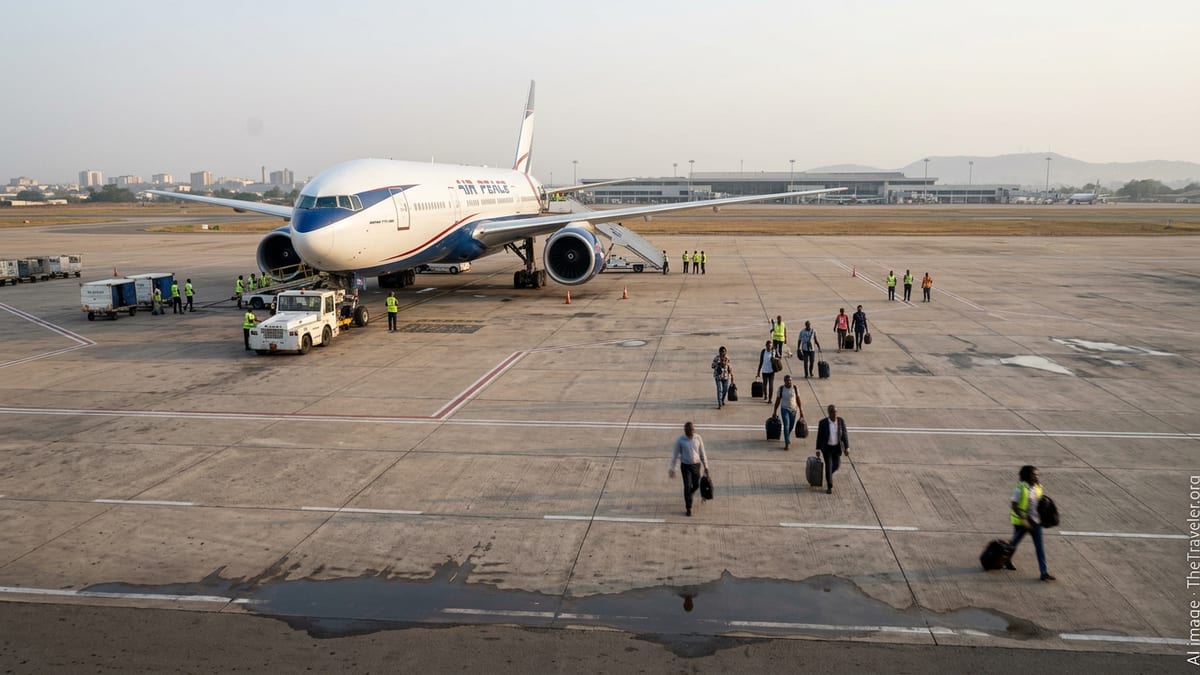
Delays Mount Despite Clear Passenger-Rights Framework
Recent data from the Nigeria Civil Aviation Authority show that domestic airlines recorded hundreds of delayed departures in the third quarter of 2025, alongside dozens of cancellations, underscoring how disruption has become a routine part of air travel in the country. Industry reports indicate that leading carriers, including major private operators, frequently appear among the worst performers for on-time operations.
The numbers build on a longer trend. Policy research on the sector notes that in just two months of late 2024, more than half of all scheduled flights in Nigeria arrived late, with hundreds cancelled outright. Analysts say this pattern has eroded confidence in air travel, added unplanned costs for businesses and families, and weakened the competitiveness of domestic aviation as road and rail alternatives slowly expand.
Yet the regulatory framework for protecting passengers is comparatively robust. The Nigeria Civil Aviation Regulations, updated in 2023, set out conditions for compensation, care and refunds when flights are significantly delayed, cancelled or overbooked. Guidance documents and consumer-rights summaries explain that airlines are expected to provide meals, hotel accommodation where necessary, rerouting or refunds, and in many cases financial compensation when disruption is within the carrier’s control.
Legal analysis of the updated rules indicates that carriers that fail to offer mandated care or to pay compensation can face civil penalties, mandatory reimbursement and other enforcement measures. In practice, however, passengers often report long queues at airline counters, sparse information about their options and a lack of proactive offers of assistance when schedules unravel.
Enforcement Actions Signal Tougher Stance on Non-Compliant Airlines
Under growing public pressure, the NCAA has in recent months moved more visibly against airlines that breach consumer-protection and financial obligations. In late May 2026, aviation coverage reported that the authority placed 11 Nigerian carriers on a no pay, no service list over unpaid debts to airport and airspace agencies, effectively restricting their access to critical operational support until outstanding charges are settled.
The regulator has also clarified that a series of recent sanctions against five airlines were grounded in consumer-protection violations rather than safety concerns. According to publicly available information, infractions included delays in refunding passengers, failure to provide care during lengthy disruptions and other breaches of the 2023 regulations. The authority has signalled that it will escalate penalties where airlines ignore directives on passenger treatment.
In earlier enforcement waves, the NCAA suspended the operations of specific carriers after audits and incidents, insisting that safety and regulatory compliance take precedence over commercial considerations. Public statements accompanying such decisions emphasise the dual mandate of maintaining high safety standards and upholding passenger rights, even when enforcement causes short-term inconvenience.
Industry observers say these steps, while significant, remain reactive and selective. They argue that a more systematic, data-driven approach to sanctions, combined with transparent publication of on-time performance and penalties, would create clearer incentives for airlines to invest in reliability and customer care rather than rely on ad hoc schedule adjustments.
Airlines Cite Structural Challenges but Passengers Bear the Cost
Airlines point to a difficult operating environment marked by volatile fuel prices, currency pressures and aging airport infrastructure as key reasons for delays. Reports from sector briefings highlight shortages of spare parts, limited maintenance capacity and runway or airspace restrictions that can quickly ripple into nationwide disruption when a single hub is affected.
Carriers also note that congested peak-hour slots at Lagos and Abuja, combined with weather-related constraints and air traffic management bottlenecks, leave little margin for recovery once delays begin to cascade. In some cases, operators have resorted to trimming schedules or consolidating flights at short notice, decisions that can strand passengers or push departures late into the night.
While these structural factors are real, aviation policy analysts argue that they do not absolve airlines of their obligations under consumer-protection rules. The regulations differentiate between extraordinary circumstances beyond a carrier’s control and operational issues such as poor fleet planning, insufficient spare aircraft or avoidable maintenance delays. Only in the former case can airlines be exempt from paying compensation, although they are still expected to provide basic care and assistance.
For travellers, the distinction often feels academic. Business passengers miss meetings and connections, families face unplanned hotel stays, and students risk forfeiting fees or exam dates. Many complain that even when a delay might qualify for compensation, carriers fail to inform them of their rights or require multiple follow-ups before refunds or vouchers are processed.
Growing Calls for NCAA to Move From Rules to Results
The gap between Nigeria’s formal regulatory framework and everyday passenger experience has prompted calls from civil-society groups, legal scholars and policy institutes for the NCAA to adopt a more assertive, customer-centric posture. A recent policy brief on incessant delays argued that proper regulatory and legislative oversight is essential to align airline behaviour with stated national objectives for safe, reliable and consumer-friendly aviation.
Among the proposals circulating in public discourse are automatic compensation mechanisms for qualifying delays, stricter timelines for refund processing and mandatory publication of monthly on-time performance statistics for each carrier. Commentators also suggest that the regulator should intensify unannounced inspections, audit carriers’ handling of complaints and impose escalating penalties for repeat offenders, including temporary capacity caps or route suspensions.
New enforcement handbooks published by the NCAA already outline a menu of civil penalties for failure to provide care, issue refunds or pay compensation in line with the regulations. Observers argue that the next step is to demonstrate consistent application of these tools, so that airlines and passengers alike can anticipate predictable consequences when rules are not followed.
Some analysts further advocate closer cooperation between the NCAA, competition authorities and consumer-rights bodies to address structural issues, such as market concentration or opaque fees, that may reduce incentives for airlines to improve punctuality. Stronger parliamentary oversight of the regulator’s performance has also been suggested as a way to sustain pressure for reform.
What Greater Responsibility Could Look Like in Practice
As debate intensifies, aviation specialists are sketching out what a more responsible approach by both airlines and the NCAA might entail. For carriers, this could mean aligning schedules more closely with available aircraft and crew, building realistic turnaround times, and investing in predictive maintenance to reduce technical delays. Transparent communication, including timely notifications of changes and clear guidance on entitlements, is seen as central to rebuilding trust.
On the regulatory side, publicly available documents indicate that the NCAA is already engaging airlines on trimming operations to match fleet capacity and on prioritising prompt handling of complaints. Analysts say expanding these efforts to include regular scorecards, naming carriers that consistently breach standards, would help passengers make informed choices and create peer pressure for improvement.
There are signs that enforcement can change behaviour. Recent reports show some major airlines paying compensation to thousands of disrupted passengers on specific routes and days, suggesting that awareness of the financial cost of non-compliance is rising in boardrooms. If such practices become the norm rather than the exception, Nigeria’s aviation market could gradually shift from reactive crisis management to more predictable, passenger-focused service.
For now, however, travellers continue to navigate a system in which flight delays are common and remedies often require persistence. Whether the current wave of sanctions, policy reviews and public scrutiny will translate into lasting change depends on how rigorously the NCAA wields its powers and how seriously airlines embrace responsibility for getting passengers to their destinations on time.