


More news on this day
A large-scale air traffic control failure in the United Kingdom has triggered what travelers describe as a nightmare, with more than 1,000 flights canceled and tens of thousands of passengers stranded at airports and overseas destinations.
Get the latest news straight to your inbox!
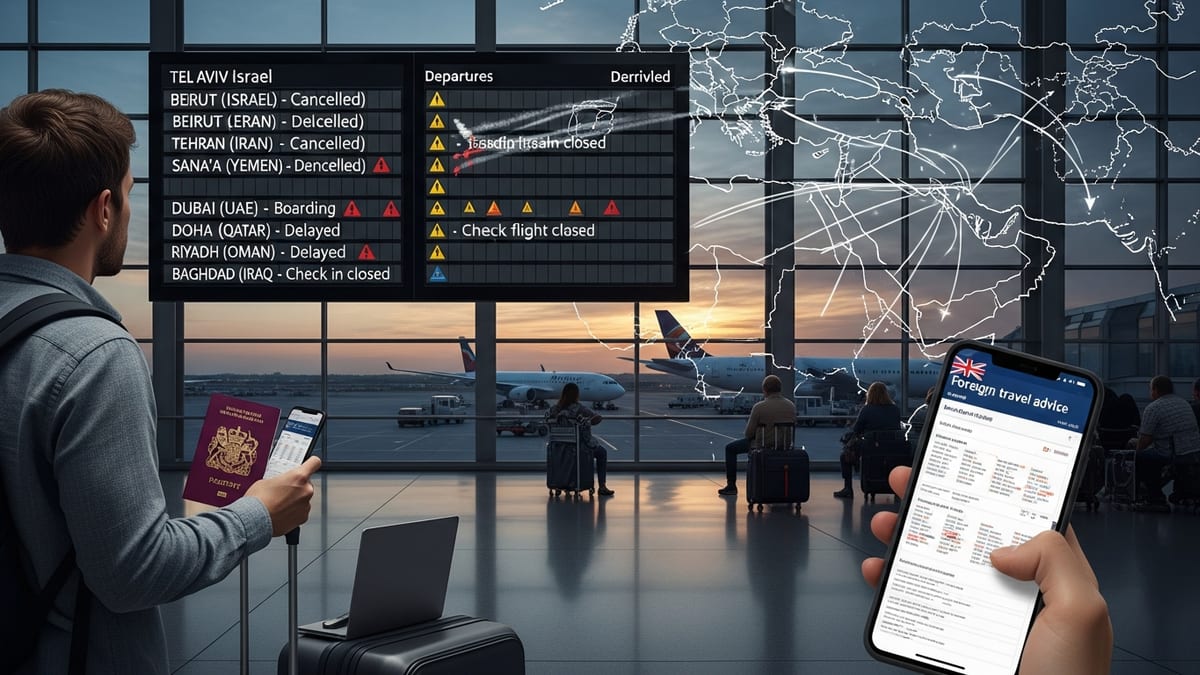
Technical glitch triggers nationwide disruption
The disruption began on Tuesday 8 September when a technical problem at UK air traffic control provider NATS sharply reduced the number of aircraft allowed to take off and land. Publicly available flight-tracking data indicates that more than 1,000 flights were canceled in British airspace, affecting services at major hubs including London Heathrow, London Gatwick, Bristol and Edinburgh.
Coverage from multiple outlets reports that the issue prompted an immediate reduction in air traffic movements while safety checks were carried out, with departures halted at several points during the day and arriving flights forced into holding patterns or diverted to alternative airports. By early Wednesday, hundreds of additional services had been canceled or heavily delayed as the system struggled to clear the backlog.
Reports from NATS and government-facing briefings indicate that a cyber attack has been ruled out, with the incident described instead as a technical fault in part of the air traffic control system that manages flight data. While services have gradually resumed, the scale of the initial disruption has created a rolling wave of cancellations as aircraft and crews remain out of position.
Industry analyses suggest that more than 60,000 to 70,000 passengers may have been affected across the UK and on international routes, with airlines warning of knock-on disruption that could last for several days as schedules are rebuilt.
Passengers stranded on aircraft and in terminals
Across the network, passengers faced hours of uncertainty, with some reports describing travelers stuck on board aircraft for three to seven hours before being instructed to disembark. At London Gatwick and Heathrow, images and eyewitness accounts published by media outlets show crowded departure halls, long queues at customer service desks and many travelers sitting or sleeping on the floor after missing onward connections.
Regional airports also experienced severe strain. In Bristol, local coverage describes passengers sitting on a plane bound for Turkey for around seven hours before being told the flight would not depart, while at Edinburgh, travelers returning to southwest England reported spending the night in the terminal after hotels near the airport reached capacity. Airport statements reviewed by TheTraveler.org advise passengers to check directly with their airlines before traveling and warn that further delays and cancellations remain possible.
Social media posts and user accounts aggregated by news organizations highlight widespread frustration over limited information, with some travelers reporting difficulty accessing rebooking support or clear guidance on overnight accommodation and meal entitlements. Others describe staff shortages at key points such as baggage reclaim and customer service counters, compounding the sense of chaos.
Despite pockets of normal operations, especially on early morning and late evening services, the overall picture on Wednesday morning remained one of patchy and unpredictable service, particularly at the UK’s busiest airports where the backlog of stranded passengers is still being cleared.
Carriers warn of knock-on impact and complex recovery
Major airlines operating from UK hubs have warned that the effects of the disruption will not be resolved immediately, even as air traffic control systems return to normal operating parameters. Public statements from UK and European carriers indicate that aircraft and crew are currently out of position across multiple continents, forcing operators to cancel or consolidate flights as they work to reset schedules.
Analysts cited in international coverage note that long-haul networks are particularly vulnerable in these situations. An aircraft that failed to depart London or Manchester on Tuesday morning could not operate its return sector from North America, Asia or Africa, triggering a cascade of additional cancellations that may stretch well into the week.
Industry commentators point out that the incident comes against a backdrop of already tight aviation staffing and aircraft availability, leaving airlines with limited spare capacity to absorb such shocks. Even when air traffic restrictions are lifted, the combination of crew duty-time limits, maintenance requirements and airport slot constraints makes rapid recovery difficult.
Consumer advocates quoted in published reports argue that the event underscores the fragility of the aviation system, where a single technical fault can quickly reverberate across entire regions. They also note that passengers may face complex processes when seeking compensation or reimbursement, as some carriers classify the air traffic control failure as an extraordinary circumstance.
Questions over resilience and passenger rights
The scale of the cancellations has prompted fresh scrutiny of how resilient the UK’s air traffic management infrastructure is to technical failures. Commentaries from European and international outlets compare the incident with previous glitches that caused widespread disruption to flights to and from the UK, suggesting that questions are likely to be raised about system redundancy, testing and crisis management procedures.
Passenger groups and travel specialists writing in public forums say travelers should document expenses and keep all receipts for hotels, meals and alternative transport while they wait for guidance from their airlines. Under UK and European regulations, carriers are generally required to provide care and assistance during long delays, although eligibility for cash compensation can depend on the cause of the disruption and whether it is deemed within an airline’s control.
Legal and consumer advice columns note that travelers whose flights were canceled are typically entitled to a choice between a refund or rerouting at the earliest opportunity, but in practice rebooking may take several days when capacity is constrained. Some passengers have reported buying alternative tickets on rival airlines or different routes in order to continue their journeys, which may later complicate reimbursement claims.
Travel planners suggest that those yet to depart consider flexible arrangements over the coming days, including allowing extra time for transfers, monitoring airline apps and airport websites closely, and preparing for the possibility of overnight stays near major hubs while operations stabilize.
Western routes and holiday travel particularly affected
The timing of the technical failure has proved especially disruptive to popular leisure routes serving Mediterranean and North American destinations. According to regional and international coverage, flights from western England and Scotland to holiday hotspots in Turkey, Spain and Greece were among those most heavily impacted, with families reporting lost or shortened trips after outbound services were canceled at short notice.
Travelers on transatlantic and long-haul services have also faced significant challenges as missed connections in London cascaded into missed departures for the Americas, Africa and Asia. Some passengers returning to the UK from overseas found themselves stranded in third-country hubs while waiting for replacement flights to become available, adding extra complexity to already long journeys.
Commentary pieces circulating in the travel press argue that the incident is likely to feed into broader discussions about aviation reliability following a summer marked by weather-related disruption, staffing shortages and occasional infrastructure failures across Europe and North America. For many passengers caught in the latest chaos, however, the immediate priority remains far more basic: finding a seat on a working flight out of a crowded terminal.
Travel experts emphasize that while large-scale air traffic control incidents of this type are still relatively rare, their impact can be dramatic when they do occur, particularly on dense Western European corridors. The events of this week offer a stark reminder of how quickly modern air travel can unravel when a key piece of the system falters, leaving thousands of travelers in an experience widely described as a nightmare.
https://currently.att.yahoo.com/att/nightmare-airports-chaos-leaves-west-114620912.html