


More news on this day
Fresh charter programs and seasonal nonstop flights are quietly redrawing the leisure map for 2027, connecting more mid sized US cities directly to Mexican beaches and Caribbean resorts without the need to connect through major hubs.
Get the latest news straight to your inbox!
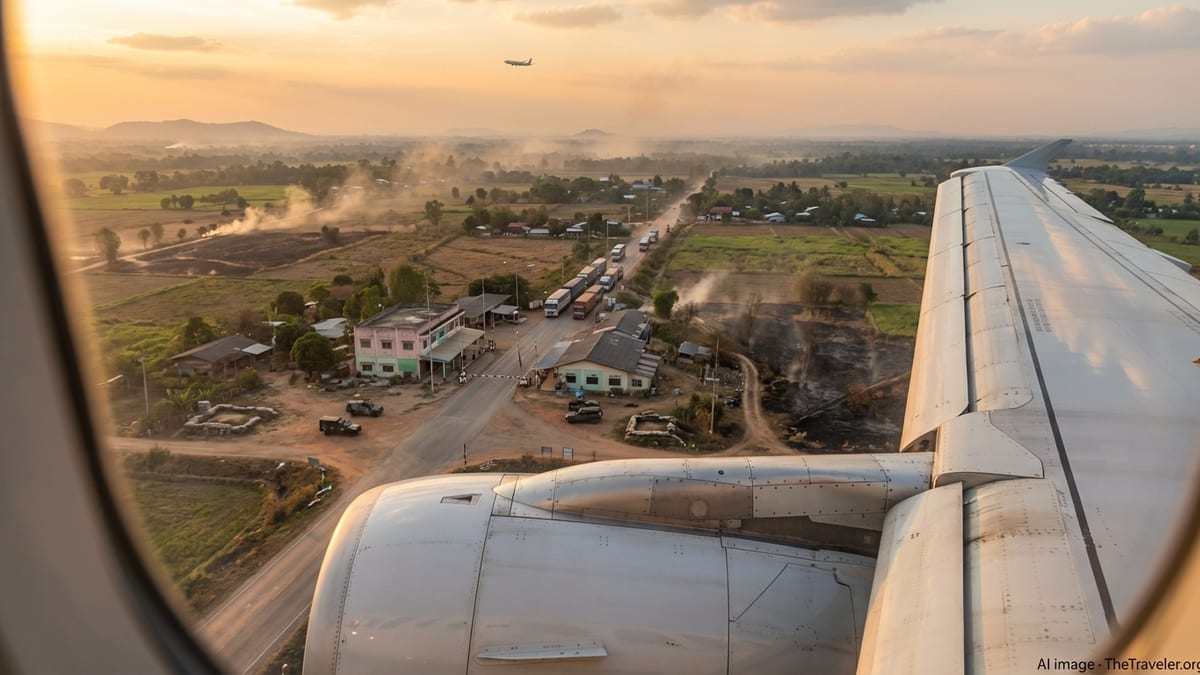
Tour Operators Lock In 2027 Nonstop Vacation Flights
Tour operators are emerging as key architects of new tourism corridors as they contract entire aircraft for bundled vacation packages into Mexico and the Caribbean. Apple Leisure Group’s ALG Vacations brands have expanded their Exclusive Nonstop Vacation Flights program for the 2026 to 2027 winter, adding more US departure cities and increasing capacity into Mexican resort areas and Caribbean islands. Publicly available program details indicate that new charter flying for 2027 will originate from cities such as Cleveland, Cincinnati, Columbus, Lansing, Milwaukee, New Orleans, Pittsburgh, Raleigh Durham, Richmond, Rockford, Chicago O’Hare and St. Louis, with services focused on classic sun destinations including Cancun, Punta Cana and Montego Bay.
The structure of these charter programs allows operators to package airfare, transfers and hotels at fixed prices across the season, which in turn gives resort destinations more predictable visitor flows. Charter prospectus filings with the US Department of Transportation show that these programs typically run from early January through early April 2027, aligning with peak winter and spring break demand. The concentrated schedules, often built around weekend departures, are designed to maximize aircraft utilization while providing travelers from secondary markets with nonstop access that scheduled network carriers do not always offer.
Tour operator contracts with carriers such as Frontier Airlines, Sun Country Airlines, GlobalX Airlines, Allegiant and Breeze Airways are central to this shift. Industry coverage notes that these partnerships underpin much of the new lift into Mexico’s Caribbean coast and Dominican Republic resorts in 2027, effectively turning mid sized US airports into temporary gateways for popular leisure corridors.
For destinations, the advantage lies in guaranteed seat blocks that can be marketed months in advance. For travelers, the benefit is the ability to board in their home region and arrive in a resort area in a single flight, a convenience that is increasingly used as a selling point by both airports and tour operators.
Sun Country, Breeze and Southwest Target Winter 2027 Beach Demand
Several US leisure carriers are extending their schedules through spring 2027, highlighting how nonstop flights to Mexico and the Caribbean are becoming core to their business models. Sun Country Airlines has extended its selling schedule through mid April 2027 and reports show it plans to serve multiple destinations in Mexico and more than a dozen in the Caribbean and Central America during the 2026 to 2027 winter season. The airline has built a reputation for blending scheduled and charter flying, with a heavy emphasis on beach destinations that appeal to travelers from its Midwest base.
Breeze Airways is also entering the Mexico leisure market with seasonal nonstop service from Richmond to Cancun starting in January 2027. Airport announcements describe twice weekly flights on Mondays and Fridays, framed as a way for local travelers to access Mexican resorts without connecting through larger East Coast hubs. This type of limited frequency, point to point leisure flying is expected to support both short breaks and longer winter stays as the 2027 season approaches.
Southwest Airlines is expanding its Caribbean and Mexico presence around the same timeframe. Route announcements and airport releases show that the carrier’s early 2027 schedules include added capacity to Cancun and other warm weather destinations, with some routes timed to capture peak winter and spring break travel from interior US cities. In markets such as Indianapolis, Southwest is planning record Saturday nonstop counts during spring break 2027, with expanded frequencies to Mexico and Caribbean hotspots alongside Florida service.
Together, these moves illustrate how airlines that historically focused on domestic routes are leaning more heavily into international beach markets for 2027. Nonstop links from cities like Richmond, Indianapolis, Nashville and Pittsburgh into Cancun, San Juan or other resort gateways are helping to distribute tourist traffic beyond the traditional coastal strongholds.
Smaller Gateways Become New Launchpads to Resorts
The growth of charter and leisure focused nonstop flying is elevating a new tier of US and regional airports as origin points for Mexico and Caribbean vacations. Midwest and Southern airports that once funneled most of their international traffic through hubs are increasingly marketing their own direct connections to resort areas. ALG Vacations’ 2027 program is a prominent example, using chartered aircraft to provide nonstop services from secondary markets such as Lansing, Rockford and Richmond to beach destinations.
On the destination side, smaller Caribbean and Central American airports are gaining additional links that extend through early 2027. Announcements from carriers such as BermudAir indicate new or expanded service into Turks and Caicos, Belize and Anguilla between late 2026 and May 2027, using medium size jets configured for leisure travelers. While not all of these routes are pure charters, they form part of a broader pattern of targeted nonstop services aimed at resort markets.
These developments are reshaping how certain US communities think about international travel. Instead of driving several hours to a large hub, passengers in cities like Richmond or Columbus can increasingly start their vacation from their local airport. For airports, securing even a handful of weekly flights to Cancun or a Caribbean island represents a significant win in terms of passenger volumes and brand positioning.
Resort destinations, meanwhile, are seeing advantages in diversifying their source markets. Additional nonstop flights from midwestern and interior US cities reduce reliance on a small number of coastal gateways and can help fill hotel rooms during shoulder periods around peak winter dates. Tourism agencies and hotel groups are closely tracking these new routes as they plan marketing campaigns aimed at first time visitors coming from newly connected cities in 2027.
Charter Economics and Package Travel Drive Corridor Growth
The economics of charter flying are an important factor behind the rapid expansion of nonstop corridors to Mexico and the Caribbean. By contracting most or all of the seats on a flight, tour operators can negotiate favorable rates from airlines and spread fixed costs across bundled hotel and transfer packages. Public charter agreements and tour operator terms and conditions highlight how flight schedules, pricing and change policies are locked in seasons in advance, providing cost certainty for both carriers and resort partners.
For airlines, charters and quasi charter seasonal programs reduce the risk associated with launching new international routes from smaller US cities. Instead of relying solely on individual ticket sales, carriers can depend on pre committed seat blocks purchased by tour operators or groups. This model has been particularly attractive for leisure focused airlines that seek to balance domestic demand swings with high margin winter flying to sun destinations.
Package travel dynamics are also influencing traveler behavior. As inflation and higher interest rates weigh on discretionary spending, all inclusive resort stays bundled with charter flights are being marketed as value propositions that protect customers from fluctuating airfares. Travel industry reports suggest that guaranteed nonstop flights, combined with included transfers and resort credits, are resonating with families and groups planning 2027 vacations.
These factors together are helping to sustain and expand nonstop corridors that might not be viable as year round scheduled services. The temporary winter 2027 pattern of flights nonetheless has lasting effects, familiarizing travelers with new routes and cementing relationships between airlines, tour operators and destinations that can be extended or replicated in future seasons.
Regional Connectivity and Future Outlook for 2027
The proliferation of 2027 charter and seasonal nonstop flights is occurring alongside broader efforts in the Caribbean to strengthen air connectivity. Tourism organizations in the region are convening airlift and route development summits focused on expanding both international access and intra Caribbean links. These gatherings, planned into 2027, are examining how new partnerships, charter models and coordinated scheduling can address longstanding challenges such as limited frequencies and high travel costs between islands.
At the same time, partnerships between charter operators and specialized regional carriers are enabling more seamless last mile connections from US gateway airports to smaller resort islands. Recent commercial agreements in the private and semi private charter space, particularly involving amphibious and short runway capable aircraft, are expected to open additional resort docks and secondary airstrips to US based travelers who first arrive on larger jets in Florida or major Caribbean hubs.
Looking ahead to the 2026 to 2027 and 2027 to 2028 winter seasons, industry observers anticipate further growth in nonstop leisure flying from US interior cities. Airlines are already signaling that they will continue to increase capacity to Mexico and the Caribbean in response to strong demand for warm weather travel, while tour operators are extending their booking windows and expanding their charter contracts well into late 2027.
The outcome is a more intricate network of tourism corridors that bypass traditional hub and spoke patterns. For US travelers, this translates into more options to reach Mexican beaches and Caribbean resorts on a single flight. For destinations, it represents a chance to tap new markets and smooth visitor arrivals across the peak months of 2027, deepening the economic impact of tourism in the process.