

More news on this day
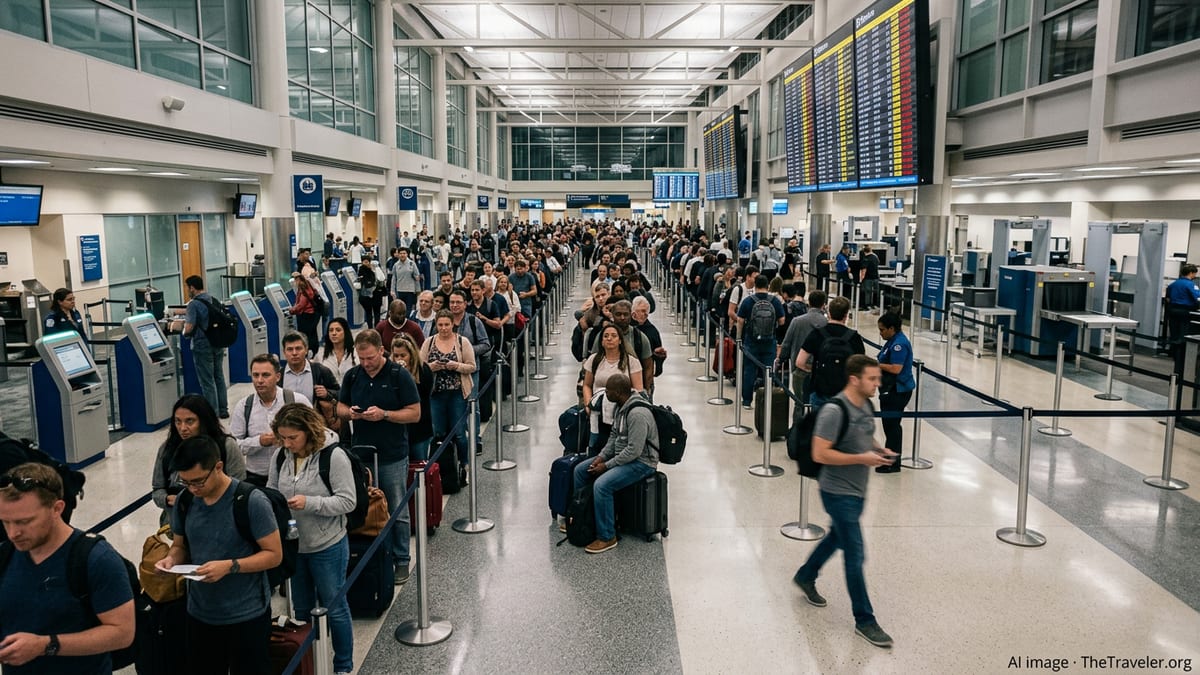
Passengers at Norfolk International Airport in Virginia faced a difficult travel day as publicly available flight-tracking data showed dozens of delays and several cancellations affecting services from major hubs including Atlanta, Charlotte, Dallas and New York.
Get the latest news straight to your inbox!
Delays and Cancellations Mount at Norfolk International
Data from widely used flight-tracking services on June 19 indicated that Norfolk International Airport experienced a wave of disruptions, with more than 30 flights delayed and several cancelled across the day. The disruptions affected departures and arrivals operated by large U.S. carriers serving the coastal Virginia city.
American Airlines, Delta Air Lines, Southwest Airlines, JetBlue and other operators all showed irregular operations on routes linking Norfolk with some of the country’s busiest hubs. Services connecting to Atlanta, Charlotte, Dallas and New York were among those impacted, creating knock-on effects for travelers attempting to make onward domestic and international connections.
Norfolk International is a key air gateway for the Hampton Roads region, handling a mix of business, government and leisure traffic. When multiple large carriers simultaneously report delays and cancellations at such mid sized airports, the options for rebooking can quickly shrink, making the impact on passengers more acute than at larger hubs.
Published operational data for the carriers involved show that, although each airline maintains on time performance targets, weather, air traffic control constraints and network congestion regularly combine to create clusters of delays on individual days. The situation in Norfolk on June 19 reflects how those pressures can concentrate at a single regional airport.
Major Hubs Disrupted: Atlanta, Charlotte, Dallas and New York
The bulk of the disruptions at Norfolk involved flights to and from major U.S. connecting hubs. Services to Atlanta, a central hub for Delta, and Charlotte, a primary hub for American, were among those delayed, affecting travelers relying on those cities for onward domestic and international connections.
Dallas services, primarily tied to American’s network, also appeared in delay tallies, limiting options for travelers heading toward the central and western United States. New York area flights, which provide access to dense business markets and transatlantic connections, experienced schedule changes that complicated evening and overnight itineraries.
When hub bound flights are delayed at a spoke airport such as Norfolk, the disruption often ripples across the system. Missed connections at the hubs can strand passengers far from home or destination, pushing rebooking efforts into later days when flights may already be heavily booked, particularly during peak travel periods.
Travel industry analyses note that disruptions on routes into hub airports can also feed back into the spoke city, as late arriving aircraft restrict the ability to launch subsequent departures on time. That pattern appeared to be reflected in Norfolk’s schedule, where late inbound flights from major hubs coincided with departures leaving behind their scheduled times.
Impact on Travelers in a Constrained Regional Market
For travelers using Norfolk International, the day’s 36 recorded delays and seven cancellations translated into hours spent in terminal waiting areas and uncertainty over arrival times at final destinations. Unlike large coastal hubs, Norfolk offers a more limited set of alternate flights, which can make same day recovery from major disruptions challenging.
Passengers facing cancellations often must decide between accepting next day rebooking options, seeking ground transport to larger airports such as Washington National or Richmond, or abandoning trips altogether. Publicly available consumer guidance from transportation regulators emphasizes that rebooking choices and compensation policies differ by airline and by the cause of disruption.
Families, business travelers and military personnel, all of whom make up a significant share of Norfolk’s passenger base, can be particularly affected when disruptions cluster on the same day. Missed cruises departing from nearby ports, delayed military reporting dates or cancelled client meetings become more likely as the range of available flights narrows.
Travel planning experts frequently advise that passengers using regional airports build longer connection times into itineraries when routing through busy hubs, especially during seasons prone to thunderstorms along the East Coast. The complications experienced by Norfolk travelers illustrate how tight transfer windows can quickly unravel when a bank of flights runs behind schedule.
Airlines Respond Within a Wider Summer Disruption Pattern
The pattern of delays seen in Norfolk aligns with broader summer travel conditions across the United States. Industry data collected in recent years shows that large carriers often experience higher rates of weather and airspace related disruption during peak travel months, particularly on routes linking the Southeast and Northeast.
Historical performance reports compiled by federal transportation agencies indicate that, while most flights still arrive on time nationally over the course of a year, clusters of delays and cancellations are not unusual on days when storms, congestion or staffing constraints converge. Norfolk’s experience fits within that wider context in which regional airports feel amplified effects when multiple carriers’ networks are stressed.
Publicly available airline guidance typically encourages passengers affected by delays to use mobile apps, airport kiosks and call centers to seek rebooking, same day standby or hotel vouchers where applicable. However, during broad regional disruptions those channels can become congested, leaving some travelers waiting in long lines at airport counters or struggling to secure information about alternative options.
Travelers passing through Norfolk during the disruption also had to navigate the airport’s own capacity limits. With concourses shared by several carriers and waiting areas sized for normal operations, extended delays can quickly crowd gate areas and food concessions, making basic comfort and access to seating more difficult.
What Passengers Can Do When Flights Grind to a Halt
Consumer advocates point to several practical steps travelers can take when faced with a situation similar to the one at Norfolk. Monitoring flight status in airline apps before leaving for the airport, checking whether same day flights from nearby airports remain available, and understanding each carrier’s policies on delays and cancellations can help passengers make faster decisions when schedules unravel.
Published federal guidance encourages travelers to familiarize themselves with airline customer service plans and contracts of carriage, which outline what support is offered in cases of significant delay, cancellation or missed connections. These documents can clarify when meal or hotel vouchers may be available and when rebooking is limited to the next available flight without additional cost.
In regional markets such as Norfolk, where alternative nonstop options may be scarce, some frequent travelers choose to reserve earlier departures to build extra buffer time into same day itineraries. Others select routings with longer layovers at hubs, accepting extra waiting time in exchange for a higher likelihood of successfully making onward connections if delays occur.
The disruptions experienced at Norfolk International highlight how quickly a day of routine flying can shift into a prolonged ordeal for passengers when multiple airlines and hub connections are affected at once. As peak travel demand continues, travelers using regional airports may face similar episodes and may benefit from planning strategies designed to manage an increasingly unpredictable air travel environment.