


More news on this day
Severe weather sweeping across the Southeast and mounting operational strains at regional carriers have combined to disrupt travel at Jackson–Medgar Wiley Evers International Airport, where multiple cancellations and rolling delays on PSA Airlines, Piedmont, and Delta flights are rippling across major routes to Charlotte, Dallas, Atlanta, Nashville and Washington.
Get the latest news straight to your inbox!
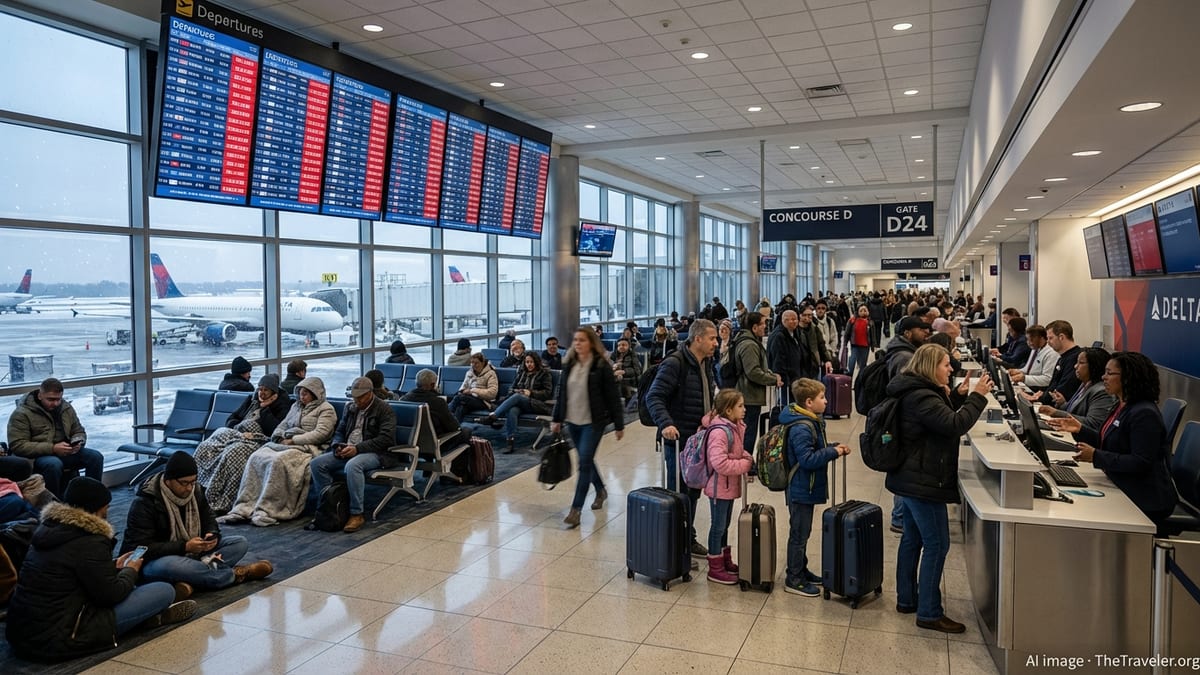
Storm System Over the Southeast Triggers Schedule Shakeups
Publicly available weather and aviation data indicate that central Mississippi has been under repeated rounds of heavy rain and storms in recent days, tied to a tropical system moving inland from the western Gulf Coast. Forecasters in Jackson have highlighted the risk of flooding and travel disruptions as bands of intense rain and thunderstorms pass over the region, periodically reducing visibility and forcing airlines to adjust schedules.
These conditions have coincided with a wave of interruptions at Jackson–Medgar Wiley Evers International Airport, a small hub that nonetheless plays a key role in connecting travelers from Mississippi to larger national networks. Even a modest number of cancellations at such an airport can have an outsized impact, as passengers often depend on a single daily frequency to reach major hubs like Atlanta, Charlotte, Dallas, Nashville and Washington.
Flight-status boards on commercial tracking platforms on June 19 show a pattern of cancellations and late departures affecting at least five PSA Airlines, Piedmont and Delta services to and from Jackson. While the raw number appears small compared with disruptions at larger hubs, each cancellation forces rebookings, missed connections and overnight stays that echo through the broader system.
Reports from airline-focused forums and traveler communities describe passengers facing extended waits in terminals across the Southeast as regional flights into and out of Jackson and nearby airports are held or scrubbed. Many travelers have turned to alternate routings through secondary airports or different carriers in an attempt to bypass bottlenecks at the major hubs serving Mississippi.
Regional Carriers Under Pressure on Charlotte and Dallas Routes
PSA Airlines and Piedmont, which operate flights under the American Eagle brand, handle a significant share of regional traffic on routes linking smaller cities to Charlotte and Dallas. Transportation statistics and historical operations data show that both carriers run thin schedules from smaller markets, often relying on just one or two daily flights to connect passengers to the national network.
When weather or staffing issues hit, that limited schedule can quickly turn into an all-or-nothing situation for travelers. Flight-monitoring services and recent public discussions among passengers highlight cancellations on PSA and Piedmont flights in multiple markets feeding into Charlotte, with some trips experiencing extended taxi times and repeated delays before ultimately being called off.
At Jackson, disruptions on these regional flights are particularly consequential for passengers bound for or returning from the East Coast and Midwest, because Charlotte and Dallas frequently serve as the only same-day connection options. When a PSA or Piedmont flight is canceled, affected travelers often must wait for the next day’s departure or attempt to reposition by car to a different airport with more frequent service.
Recent consumer complaints shared on aviation forums point to a pattern in which PSA and Piedmont flights are held in lengthy delay windows before cancellations are confirmed, complicating efforts by travelers to secure alternative arrangements. As the current storm system unsettles operations in the Southeast, that pattern appears to be repeating on some of Jackson’s key regional links.
Delta Delays on Atlanta and Beyond as Hub Strains Intensify
Delta and its regional partners connect Jackson to Atlanta, one of the world’s busiest hubs and a critical gateway for Mississippi travelers heading to destinations across the United States and overseas. Industry data and prior months of public reporting have shown that when storms sweep across Georgia, Atlanta can experience ground stops and delay programs that quickly cascade across Delta’s network.
Real-time information from flight-tracking services on June 19 shows several Delta-operated departures and arrivals in the Southeast running behind schedule, with at least one Jackson to Atlanta service departing late and arriving well past its scheduled time. Passenger accounts from Atlanta describe lengthy tarmac waits and rolling departure times as thunderstorms move through the area, underscoring how quickly operations can back up at the hub.
Once Atlanta schedules are disrupted, knock-on effects reach smaller spokes like Jackson. Aircraft and crew that were meant to continue to Nashville, Washington and other cities are delayed or reassigned, leaving limited slack in the system to recover from earlier cancellations. In this latest episode, a cluster of delayed departures in the afternoon and evening has compounded the impact of the five canceled flights touching Jackson.
Delta has recently issued exception policies for severe weather in the Southeast that include Jackson as an impacted city, enabling some customers on canceled flights to change their itineraries or seek refunds. Public advisories show that these policies are designed to give passengers more flexibility when weather makes normal operations impossible, but they cannot fully offset the inconvenience of last-minute schedule changes.
Passengers on Major Routes Face Missed Connections and Overnight Stays
The immediate effect of the cancellations and delays at Jackson is being felt most sharply by travelers using the airport as the first or last leg of a multi-segment journey. Routes to Charlotte, Dallas, Atlanta, Nashville and Washington are all heavily used as connection points, meaning each canceled regional flight can strand dozens of passengers who then miss long-haul departures.
Published guidance from airlines emphasizes that passengers affected by cancellations stemming from weather are typically rebooked on the next available flight at no additional cost, space permitting. However, because Jackson’s schedule is relatively sparse, “next available” may not mean the same day. In some cases it can require overnight hotel stays, last-minute rental cars or lengthy drives to alternative airports.
Recent social media posts and forum discussions paint a picture of crowded customer-service lines and overburdened phone centers as travelers seek to reroute trips around the Southeastern storms. Some report success in switching to flights through alternative hubs with clearer weather, while others describe waiting for hours as available seats into Charlotte, Dallas or Atlanta quickly fill.
For travelers bound for Nashville and Washington, disruptions often arise further down the line. A delayed or canceled Jackson to Atlanta or Jackson to Charlotte leg can cause passengers to miss their onward connections, even if the subsequent flights depart on time. As airlines work to rebuild their schedules following the latest round of storms, those downstream effects are likely to continue through at least part of the weekend.
Ongoing Weather Risks and What Travelers Can Expect Next
Meteorological outlooks for the central Gulf Coast and lower Mississippi Valley indicate that unsettled conditions could persist, with additional showers and storms possible as the remnants of the tropical system move inland. Aviation planners and airline schedulers are likely to remain cautious, building in buffers around peak storm windows and adjusting operations at hubs such as Atlanta and Dallas when convective activity intensifies.
Travel analysts note that while five canceled flights at a single regional airport may sound modest compared with national totals, such disruptions can be highly disruptive at the local level, particularly when they involve key connecting routes. The experience at Jackson illustrates how weather far from a traveler’s final destination can still derail an itinerary if it affects a critical hub or regional spoke.
Publicly available performance data from the US Department of Transportation show that regional carriers like PSA and Piedmont, along with large network airlines including Delta, regularly face weather-related challenges in the spring and summer months, when thunderstorms and tropical systems are most active. The current episode at Jackson fits that seasonal pattern, though the combination of severe weather and already stretched resources has made recovery slower than usual.
As airlines continue to update schedules and issue travel waivers in response to evolving conditions, passengers using Jackson–Medgar Wiley Evers International Airport are being advised through public channels to monitor flight status closely, allow extra time for connections, and consider flexible itineraries that account for potential last-minute changes on routes linking Jackson with Charlotte, Dallas, Atlanta, Nashville and Washington.