


More news on this day
Norfolk Southern’s share price has traded in a narrow range this week as investors weigh the lingering financial impact of recent derailments and legal settlements against signs of resilient U.S. rail freight demand ahead of the company’s next earnings report.
Get the latest news straight to your inbox!
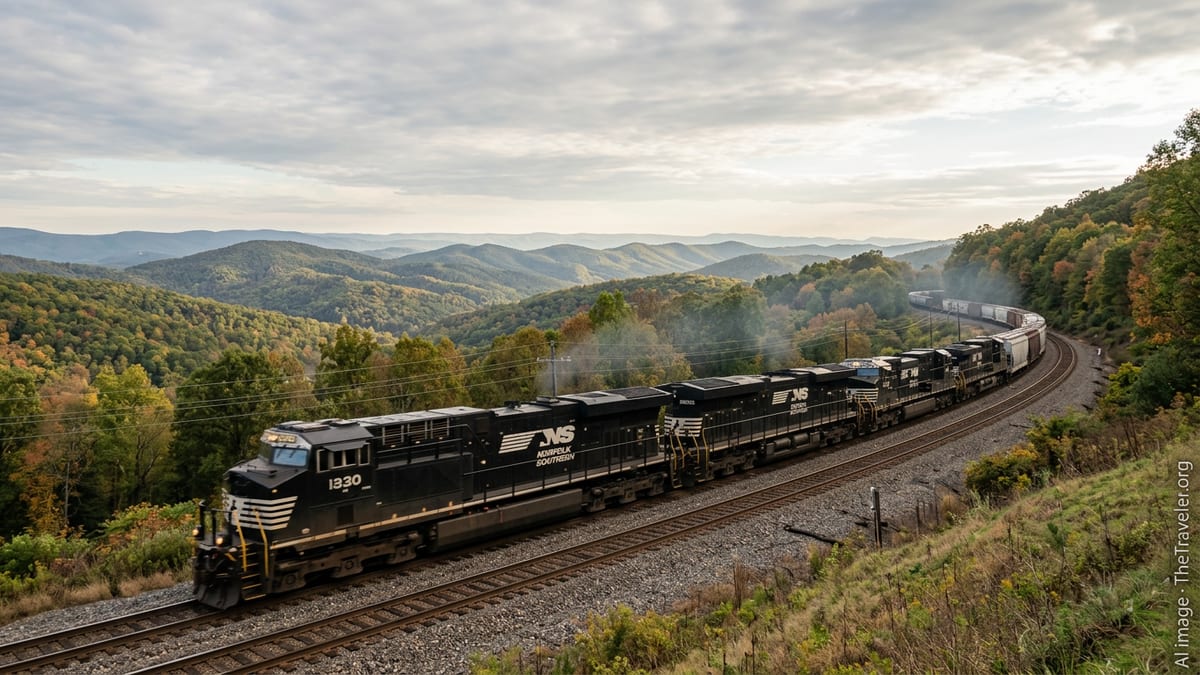
Stock price holds its ground ahead of earnings
Norfolk Southern shares have remained relatively stable in recent sessions, with market data showing the stock consolidating after earlier volatility linked to safety incidents and merger speculation. Trading volumes have been moderate rather than frenzied, suggesting that many institutional investors are maintaining positions rather than making abrupt shifts.
Analyst commentary compiled in recent research notes indicates that expectations for the upcoming second-quarter 2026 earnings report are cautiously optimistic, driven by an anticipated pickup in freight volumes and ongoing cost-control efforts. Forecasts highlighted by equity research firms point to modest revenue growth and a focus on operating ratio improvements compared with the prior year.
The steadier price action contrasts with the sharp swings that followed the 2023 East Palestine, Ohio derailment and subsequent federal actions, when investors struggled to quantify the company’s eventual liabilities. With much of the core cleanup and initial settlement framework now established, market attention has shifted toward the pace of operational recovery and the trajectory of broader rail demand.
Options activity and pricing imply that traders expect movement around the July earnings release but not a fundamental break from the stock’s recent range, underscoring the view that new information on costs and demand, rather than lingering headlines, will drive the next leg in performance.
Derailment legacy still shaping cost outlook
Publicly available filings show that Norfolk Southern has already booked substantial charges linked to the East Palestine derailment, with prior disclosures indicating that direct cleanup and community support costs alone had climbed toward the billion-dollar mark within the first year. Additional reserves have been set aside to cover regulatory actions, civil litigation, and longer-term environmental monitoring.
Regulatory documents and company updates describe a series of safety investments, including enhanced defect detection technology, expanded track and equipment inspections, and new training initiatives. These measures add to ongoing operating expenses but are presented by the company as essential to reducing incident risk and restoring shipper confidence along key corridors.
At the same time, federal agencies have continued to detail the scope of the Ohio incident, emphasizing infrastructure damage, hazardous material remediation, and long-term health and environmental assessments. These elements contribute to uncertainty about the ultimate legal and settlement bill, even if the pace of new headline developments has slowed.
For investors, the central question is not whether derailment-related costs will persist, but how large any incremental charges will be relative to annual operating income. With the most acute emergency spending now behind the railroad, market participants are increasingly focused on whether recurring safety and compliance expenses will be offset by efficiency gains elsewhere in the network.
Rail demand supported by industrial and intermodal flows
Recent company communications and sector analysis suggest that demand for rail freight remains generally supportive, despite pockets of softness tied to specific commodities. Intermodal volumes have benefited from steady consumer goods flows and a gradual rebalancing of truck capacity, while automotive and industrial shipments have shown resilience in several key markets.
Norfolk Southern’s latest quarterly results, released in April, pointed to disciplined cost management alongside modest revenue pressure in certain segments. Management commentary summarized in earnings materials framed 2026 as a year of recalibration, with emphasis on safety, service reliability, and selective pricing actions designed to reflect higher input costs.
Industry-wide data compiled by transport consultancies indicates that railroads are still contending with a competitive trucking market and evolving supply chain patterns. Nevertheless, rail’s structural advantages in long-haul bulk and container moves, along with ongoing efforts to improve service reliability, have supported baseline demand for freight corridors that Norfolk Southern serves across the eastern United States.
Analysts following the sector note that the proposed Union Pacific–Norfolk Southern merger, which is undergoing regulatory review, adds another layer to long-term demand assumptions. Published coverage of the deal describes plans for a coast-to-coast network that could alter route economics, although any material changes would likely unfold over several years rather than impact near-term volumes.
Balancing safety investments, merger costs, and shareholder returns
Norfolk Southern’s capital allocation strategy has become a focal point for investors attempting to reconcile the costs of derailment-related remediation with ongoing shareholder returns. Company announcements show that the railroad has continued to fund dividends while moderating share repurchases compared with the pre-derailment period, reflecting a shift toward bolstering the balance sheet and funding safety upgrades.
Merger-related expenses associated with the proposed Union Pacific transaction have introduced additional cost lines, including advisory fees, integration planning, and regulatory filings. Equity research notes point out that these outlays are front-loaded, while any synergy benefits would only materialize if regulators ultimately approve the combination and after a multi-year integration process.
Debt markets have so far remained open to the company, with bond spreads reflecting a modest premium to some peers but not signaling acute stress. Credit analysts cite the durability of rail cash flows and the essential nature of freight corridors as mitigating factors, even as they track derailment and merger developments as key risks.
For shareholders, the calculus involves weighing the near-term drag from safety, legal, and transaction costs against the potential for improved efficiencies and network reach over the longer horizon. The current trading range suggests that many investors are willing to wait for clearer evidence from upcoming earnings and regulatory milestones before re-rating the stock decisively higher or lower.
Market outlook as regulatory and legal processes evolve
Looking ahead, the next major catalysts for Norfolk Southern shares are likely to come from the company’s second-quarter earnings release, further disclosures on derailment and legal provisions, and updates on the timeline for regulatory review of the proposed merger. Transport sector commentators indicate that investors will pay close attention to any revisions in cost estimates related to safety initiatives or litigation.
In parallel, macroeconomic conditions will remain a key driver of rail demand. A steadier industrial backdrop, improved container flows through East Coast and Gulf ports, and incremental shifts from highway to rail could support volume growth, but a slowdown in manufacturing or consumer spending would challenge that narrative.
Publicly available information from safety agencies and environmental regulators suggests that oversight of hazardous materials transport will remain intense in the wake of the East Palestine incident. Any new rulemaking that increases compliance requirements could raise operating costs for Norfolk Southern and its peers, although it might also incentivize greater reliance on rail relative to trucking for certain hazardous shipments if rail is perceived as better regulated.
For now, the company’s stock is reflecting a balance between these crosscurrents. While derailment costs and legal uncertainties continue to cast a long shadow, steady underlying freight demand and the prospect of network changes tied to the proposed merger have kept investor sentiment from deteriorating sharply, leaving Norfolk Southern trading in a holding pattern as markets wait for the next round of data.