


More news on this day
A pregnant passenger was medically evacuated from a Carnival cruise ship off the coast of Miami after experiencing complications, prompting a coordinated response that brought the vessel close to shore so she could be transferred to advanced medical care.
Get the latest news straight to your inbox!
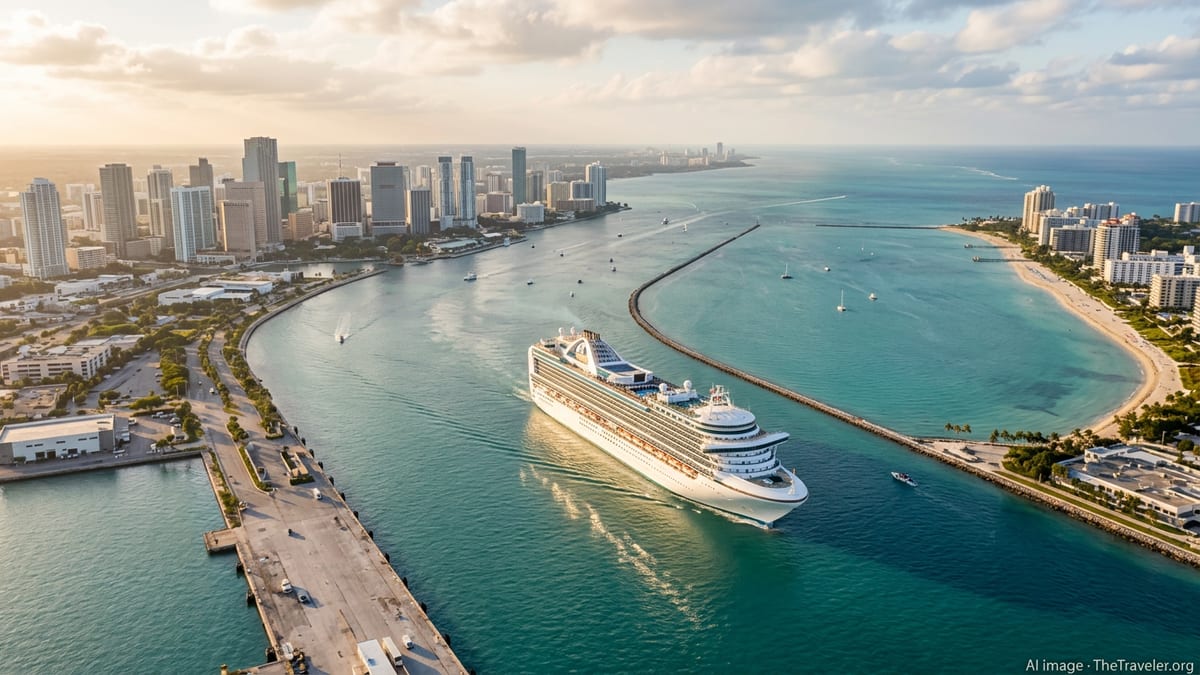
Coast Guard coordinates urgent evacuation near Miami
Publicly available information indicates that the incident unfolded on Thursday, July 16, when a Carnival cruise ship sailing near Miami requested assistance for a passenger reporting pregnancy complications. The vessel was operating a regularly scheduled Caribbean itinerary and was positioned only a few miles northeast of the entrance to Government Cut, the main shipping channel leading into PortMiami.
According to published coverage, a U.S. Coast Guard Station Miami Beach crew met the cruise ship offshore to carry out the evacuation. Images and video shared through official channels show a small Coast Guard response boat pulling alongside the much larger cruise vessel as personnel prepared to move the passenger on a stretcher.
Reports indicate that the woman was transferred from the cruise ship to the Coast Guard vessel and taken to Miami Beach, where local emergency medical services assumed care. She was then transported to a shoreside medical facility for further evaluation and treatment. No further details about her condition or identity have been released in publicly accessible reports.
The operation took place in relatively close proximity to Miami, which allowed responders to rely on a small boat transfer rather than a helicopter hoist at sea. For pregnant passengers or individuals with complex medical needs, rapid access to a fully equipped hospital is often a critical factor in outcomes.
Routine voyage turns into high stakes medical response
The Carnival ship involved was sailing a standard route popular with vacationers departing South Florida. Such itineraries are usually uneventful, and the presence of onboard medical staff is rarely front of mind for most travelers. This case illustrates how quickly a leisure cruise can pivot into a high stakes medical situation when a health emergency arises.
Published accounts describe the passenger as experiencing complications significant enough that the onboard medical team recommended evacuation rather than continued monitoring on the ship. Cruise infirmaries can handle many routine issues, but they are not designed to provide the full spectrum of obstetric or neonatal care available at a major hospital.
To facilitate the transfer, the cruise ship maneuvered closer to the Miami sea buoy and Government Cut, adjusting its course so that the Coast Guard vessel could safely come alongside. The coordination required between the ship’s bridge team, onboard medical personnel, and maritime responders reflects the structured protocols in place for such emergencies.
Once the passenger was safely off the ship, reports indicate the vessel resumed its itinerary with minimal disruption to the broader schedule. For most of the thousands of guests on board, the incident served as a visible reminder that, even on a vacation cruise, contingency plans for serious health events are continually in place.
How medical evacuations work at sea
Medical evacuations from cruise ships vary widely depending on the distance from shore, sea conditions, and the nature of the illness or injury. When an incident occurs close to major ports such as Miami, responders often prefer to use small boats to move patients quickly to land. Farther offshore, evacuations may require helicopters, which are more complex, weather dependent, and resource intensive.
Industry guidance and available U.S. Coast Guard information show that watchstanders monitor distress calls and coordinate with cruise ships to determine the safest and fastest evacuation method. Onboard doctors provide clinical details that help responders decide whether the situation can wait until the next port call or needs immediate intervention.
Pregnancy related emergencies are particularly time sensitive. Complications such as preterm labor, heavy bleeding, or high blood pressure may require specialized monitoring, surgical capabilities, or neonatal care that cannot be replicated on a ship. In such cases, diverting toward shore or arranging a mid voyage evacuation is often the preferred course.
In ports with dense cruise traffic like Miami, regular training and recent experience with a range of shipboard medical incidents contribute to relatively quick response times. The backdrop of frequent cruise movements means that emergency transfers, while not common for any individual sailing, are a well rehearsed part of the maritime safety landscape.
Growing spotlight on cruise ship medical preparedness
The Miami evacuation adds to a series of recent high profile medical incidents at sea that have drawn attention to how cruise lines and maritime agencies handle onboard health crises. In recent months, reports have highlighted helicopter hoists for critically ill passengers, diversions to unscheduled ports, and complex multinational efforts to manage outbreaks on large vessels.
Travel industry analysis suggests that as cruise itineraries expand and ships carry more passengers, the absolute number of medical incidents requiring outside intervention naturally rises, even if the overall risk to any one traveler remains low. Aging demographics among some cruise clientele and a growing number of family oriented voyages involving pregnant passengers and young children add layers of medical planning.
In response, cruise operators promote the capabilities of their onboard medical centers, which typically include physicians, nurses, basic diagnostic equipment, and emergency supplies. However, public health experts and maritime safety advocates consistently note that these facilities are intended for stabilization and initial treatment, not as substitutes for full service hospitals.
Cases such as the pregnant passenger off Miami underscore the importance of clear disclosure about pregnancy policies, pre travel medical consultations, and traveler awareness of the limits of shipboard care. Some lines restrict how late into pregnancy guests may sail, reflecting concern about emergencies that may require rapid access to specialized obstetric services.
What this means for travelers planning cruises
For travelers, the evacuation near Miami is a reminder to factor personal health, including pregnancy status and underlying conditions, into cruise planning. Publicly available guidance from both cruise operators and medical groups encourages prospective passengers to consult their healthcare providers before booking, particularly if they are in the later stages of pregnancy or have complex medical histories.
Travel insurance that explicitly covers medical evacuation and treatment costs can also be a significant consideration. While the coordination between cruise lines and maritime responders is generally robust, the expenses associated with emergency transport and hospital care can be substantial, especially for visitors from overseas.
Experts who study cruise safety note that these rare but serious incidents should be weighed against the large number of voyages that proceed without major issues. Nevertheless, understanding what happens in a medical emergency at sea can help travelers make more informed decisions and respond calmly if an incident unfolds on their own sailing.
As the Miami case shows, when complications arise, a combination of onboard medical evaluation, rapid maritime response, and proximity to a major port can together provide a critical lifeline for passengers needing urgent care during what was meant to be a routine voyage.