


More news on this day
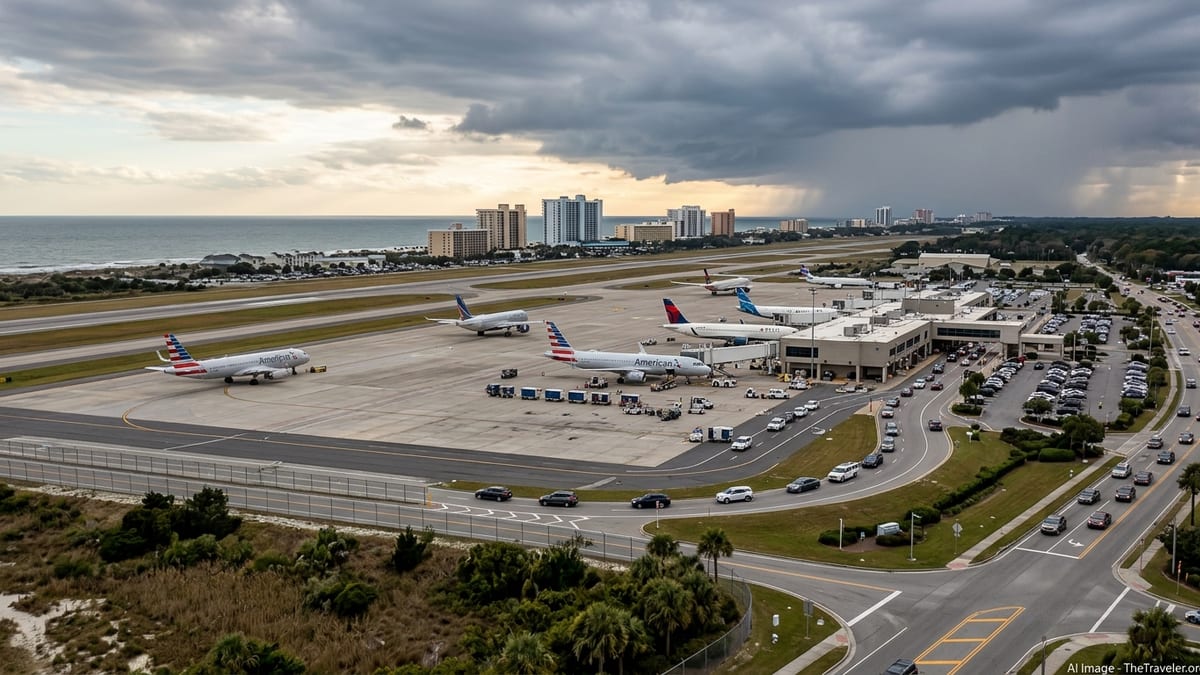
A powerful coastal storm forecast to bring heavy rain, strong winds and possible coastal flooding to the Northeast on Thanksgiving could disrupt holiday air travel nationwide, including flights to and from Myrtle Beach International Airport, even though the South Carolina gateway is not expecting summer-level crowds.
Get the latest news straight to your inbox!
Near-record Thanksgiving travel volumes, slight dip from 2025
AAA now projects about 81.5 million Americans will travel at least 50 miles from home for the 2026 Thanksgiving period between Tuesday, November 24 and Monday, November 30. That is a marginal 0.1 percent decline from last year’s record of 81.6 million but still above pre‑pandemic levels, meaning roads and airports are expected to be busy across the country.
Of those travelers, roughly 73 million are forecast to drive and just under 6 million are expected to fly on domestic routes. The auto club describes the change from 2025 as a modest easing rather than a meaningful slowdown, noting that high fuel prices and airfares may be persuading some people to stay closer to home while overall demand for holiday trips remains strong.
Airlines for America, which represents major U.S. carriers, expects nearly 29 million passengers to fly on U.S. airlines between November 20 and November 30. That equates to an average of about 2.6 to 2.7 million passengers a day during the 11‑day holiday travel period, keeping pressure on airline operations even in regions where the weather itself is relatively benign.
How a Northeast storm can affect Myrtle Beach flights
Forecasters at the National Weather Service and several private outlets are tracking a storm system expected to organize along the Eastern Seaboard on Thanksgiving Day. Forecast guidance as of Wednesday, November 25 indicates that the storm could bring periods of heavy rain, coastal flooding and wind gusts of around 40 to 50 miles per hour to parts of the Mid‑Atlantic and Northeast from Thursday into Friday. The same system is already prompting warnings about possible travel disruptions at major Northeast hubs, including New York City, Boston and Philadelphia.
Myrtle Beach itself is not currently expected to see the worst of the coastal impacts, but airport operations there can still be disrupted by conditions hundreds of miles away. Many flights to and from Myrtle Beach International Airport are routed through larger hub airports such as Charlotte, Atlanta, New York or Washington. When storms trigger ground delays, de‑icing operations or runway capacity reductions at those hubs, downline airports often experience late‑arriving aircraft, tighter turnaround times and potential cancellations, even if local skies are relatively calm.
Weather services caution that their outlooks remain forecasts rather than firm outcomes, and that the exact track and intensity of the Thanksgiving storm could still shift. However, both national and regional briefings highlight the potential for flight delays and cancellations along the Northeast corridor on Thursday and during the peak return period from Friday into Sunday, which is enough to warrant contingency planning for passengers flying into or out of Myrtle Beach over the same dates.
What to expect at Myrtle Beach International this Thanksgiving
Myrtle Beach International Airport officials say the facility’s busiest period remains the summer vacation season rather than the winter holidays, when the Grand Strand attracts its highest visitor volumes. Thanksgiving week passenger numbers are elevated compared with a typical off‑season week but do not approach July or August levels, which means security checkpoints, parking and terminal facilities may be somewhat less congested than at larger regional hubs.
That relative calm does not insulate Myrtle Beach travelers from wider network disruptions. Airlines often operate tightly timed schedules, and a single late‑running aircraft arriving from a weather‑affected hub can cause knock‑on delays for its next departure. A coastal storm affecting multiple Northeastern airports at once increases the likelihood that aircraft and crew will be out of position, which can lead to schedule changes on routes that never enter the storm zone itself.
Airport representatives are urging passengers to monitor their flight status closely via airline apps or websites, particularly for departures scheduled on Thanksgiving Day and the following Friday and weekend. Even modest schedule adjustments can have consequences for connecting passengers who rely on tight layovers, so travelers using Myrtle Beach as part of a longer itinerary to or from the Northeast should be prepared for potential rebooking, revised routings or longer connection times.
Road travel from the Grand Strand: busiest days and regional outlook
For travelers driving to or from Myrtle Beach, AAA expects the heaviest national traffic volumes on Wednesday, November 25 as people depart for the holiday and again on Sunday, November 29 and Monday, November 30 as they return home. Those patterns are broadly consistent with pre‑pandemic years, although the exact peak hours vary by metropolitan area and route.
The National Weather Service Greenville‑Spartanburg office, which covers parts of the western Carolinas, has highlighted the risk of heavy rain and gusty winds on Wednesday and Thursday. While Myrtle Beach sits outside that office’s primary area of responsibility, the same storm system could bring bands of rain and periods of stronger wind to sections of South Carolina’s coastal plain, which may reduce visibility and cause ponding on roads during peak departure times.
State officials continue to recommend that motorists check live traffic and construction information before setting out. In South Carolina, the 511 traveler information system provides real‑time updates on incidents, congestion and road conditions on major routes leading to and from the Grand Strand. For drivers returning north toward the Mid‑Atlantic and New England, forecasters warn that deteriorating weather from late Thursday into Friday may bring slick roads, localized flooding or wintry precipitation in higher elevations, which could significantly lengthen travel times.
How Myrtle Beach travelers can prepare for potential disruptions
With large numbers of people on the move and a significant storm in the Thanksgiving forecast for the Northeast, both road users and flyers with Myrtle Beach in their plans are being encouraged to build additional time and flexibility into their itineraries. For airline passengers, that can include allowing extra time to reach the airport, especially for early‑morning departures, and arriving inside the terminal well ahead of recommended check‑in and security deadlines in case of longer queues.
Given the potential for ripple effects from Northeast weather, passengers connecting through hubs such as New York, Boston, Philadelphia, Washington or even Atlanta may wish to consider earlier flights in the day, when options for same‑day rebooking are more plentiful if delays occur. Travelers whose plans are tied to fixed events, such as cruise departures, holiday gatherings or ticketed attractions, may want to allow a wider margin by scheduling their arrival for the day before rather than the day of the event where possible.
On the roads, those driving from Myrtle Beach toward the Northeast corridor can reduce the risk of encountering the worst conditions by checking the latest regional forecasts and radar on the morning of departure, adjusting their timing to avoid periods of heavy precipitation or high winds where feasible. Keeping fuel tanks topped up, carrying basic emergency supplies and sharing route and arrival details with family or friends are standard safety steps that become more important when storms are in the picture.
Forecasts and airline schedules will continue to be updated through the holiday weekend as the storm evolves. Travelers planning to use Myrtle Beach International Airport, or to drive to and from the Grand Strand during the Thanksgiving period from November 24 to November 30, should keep monitoring official weather statements and airline notifications so they can adjust plans promptly if conditions or schedules change.