


More news on this day
AAA expects 81.5 million people in the United States to travel at least 50 miles from home between Tuesday, November 24, and Monday, November 30, keeping roads and airports busy over Thanksgiving week even as overall volumes edge slightly below last year’s record.
Get the latest news straight to your inbox!
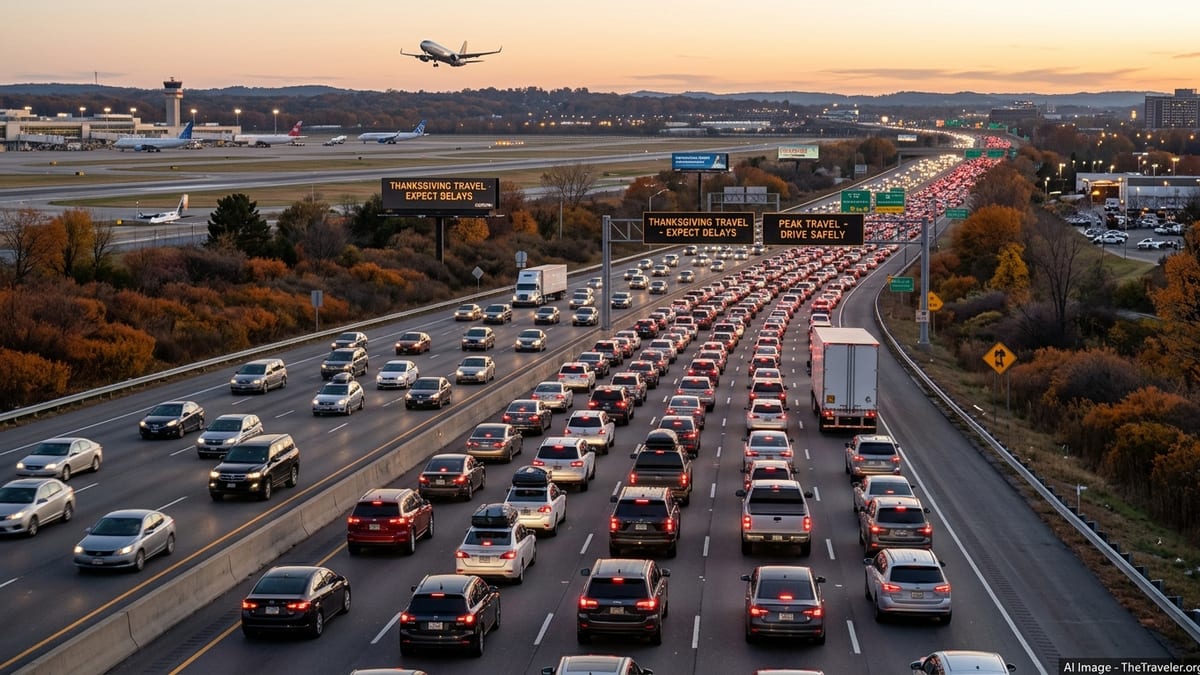
Forecast shows near-record volumes, but no new high
AAA’s 2026 Thanksgiving forecast projects 81.5 million travelers across all modes, down about 0.1 percent from an estimated 81.6 million in 2025. That modest decline ends a three-year run of record Thanksgiving travel that began in 2023, but still leaves activity very close to last year’s levels by historical standards.
The auto club’s national forecast defines the Thanksgiving travel period as the seven days from Tuesday, November 24, through Monday, November 30. To be counted, a trip must cover at least 50 miles from home. Within that window, AAA expects nearly 73 million people to travel primarily by car and just under 6 million to fly on domestic routes, with the remainder using other modes such as buses, trains and cruises.
AAA’s projections draw on travel data compiled with S&P Global Market Intelligence and are intended as a forward-looking forecast rather than a tally of completed trips. Final numbers will depend on factors including weather, fuel prices and any operational disruptions that arise during the week.
Road trips remain dominant despite higher fuel costs
Driving continues to account for the vast majority of Thanksgiving trips. AAA and regional affiliates expect nearly 73 million Americans to travel by car between November 24 and 30, roughly 9 in 10 holiday travelers nationwide. In Texas alone, AAA Texas projects about 5.7 million residents will drive or otherwise travel at least 50 miles during the period, mirroring the national pattern in which road trips far outnumber other modes.
Forecasts suggest that higher fuel costs compared with the previous year have been enough to slow growth but not to substantially reduce road travel. AAA’s national outlook notes that gasoline prices set new monthly highs in August, September and October, and could do so again in November if current trends hold. Some travelers have scaled back or chosen shorter trips, yet overall road volumes remain close to last year’s record.
Traffic analytics company INRIX, which provides congestion projections cited by AAA and local outlets, expects heaviest outbound traffic on Tuesday, November 24, and Wednesday, November 25, particularly during afternoon and early evening commute hours. Return traffic is projected to peak on Sunday, November 29, and Monday, November 30, as motorists head home at the close of the long weekend.
Air travel edges slightly lower but airports stay crowded
While the overwhelming majority of Americans will drive, almost 6 million are expected to fly on U.S. domestic routes during the Thanksgiving period. AAA’s forecast calls for about 5.96 million domestic air travelers between November 24 and 30, a small decline from 2025 that reflects higher airfares and more expensive jet fuel compared with a year earlier.
Recent government data show that average U.S. airfares this autumn are noticeably above last year, and AAA reports that Thanksgiving-period roundtrip tickets booked through its channels have risen by double-digit percentages year over year. Those higher prices appear to have discouraged some discretionary trips but have not significantly reduced crowds at major hubs. TSA has indicated in public statements that it expects the Sunday after Thanksgiving to remain among the busiest days of the year at airport security checkpoints, consistent with pre-pandemic patterns.
Operational reliability is another concern for flyers this season. In the weeks leading up to Thanksgiving, airlines and airports have faced intermittent technology problems and air traffic control constraints that resulted in large clusters of delays and cancellations. Regulators and carriers have said they are working to prevent a repeat over the holiday period, but travelers are being urged to allow extra time at the airport and to be prepared for schedule changes, particularly if storms develop along major flight corridors.
Weather and timing will shape actual delays
How smoothly the holiday unfolds will depend heavily on regional weather patterns. Forecasts from the National Weather Service in the days immediately before Thanksgiving have pointed to the potential for storms affecting parts of the eastern United States from Thanksgiving Day into Friday, bringing strong winds, reduced visibility and possible turbulence that could disrupt flights at some of the country’s busiest airports.
On the roads, even light rain or snow can quickly magnify congestion during already crowded peak hours. Transportation agencies and AAA affiliates advise motorists to check conditions and any travel advisories before departure, especially in the Northeast and Midwest, where late November storms are more common. Real-time navigation apps, state transportation department alerts and local media updates can help drivers identify construction zones, incidents and closures before they become bottlenecks.
Within metropolitan areas, traffic patterns around major airports, shopping centers and event venues can be markedly different from a typical workweek. Local forecasts in cities such as Dallas indicate generally favorable driving weather with only isolated periods of rain, but even in regions expecting clear skies, heavy volumes around popular departure and return times are likely to cause delays.
Practical steps travelers can take now
Given the combination of near-record volumes, higher costs and the risk of weather and operational disruptions, both road and air travelers are being encouraged to plan for potential delays. For flyers, airlines and airports recommend using carriers’ mobile apps or websites to verify flight status before leaving home, turning on push notifications for schedule changes, and keeping boarding passes and confirmation numbers downloaded or screenshotted in case mobile networks or airport Wi-Fi are congested.
Travelers are also advised to keep essential items in a small personal bag that stays with them at all times. That includes medications, important documents, a phone charger or power bank, and basic toiletries or snacks, particularly on routes where full flights increase the likelihood of larger carry-on bags being checked at the gate. Those driving are urged to check their route for construction, crashes and weather-related closures before departure, identify a viable alternate route in advance, and share an expected arrival window with family or hosts so plans can be adjusted if traffic builds.
Looking beyond this week, AAA and its data partners will compare the forecast with actual travel behavior once government traffic and aviation statistics are finalized. If fuel prices or airfares ease in the months ahead, future holiday periods could see a return to growth in traveler numbers. For now, anyone heading out between November 24 and 30 should expect roads and airports to remain busy and should verify the latest conditions, advisories and reservation details before starting their trip.