


More news on this day
A new Federal Aviation Administration rule that requires a dedicated supervisor to oversee a key takeoff procedure took effect on November 24, 2026, just as Thanksgiving travel peaked across the United States, prompting warnings from air traffic controllers that some airports could see slower departure flows and additional delays.
Get the latest news straight to your inbox!
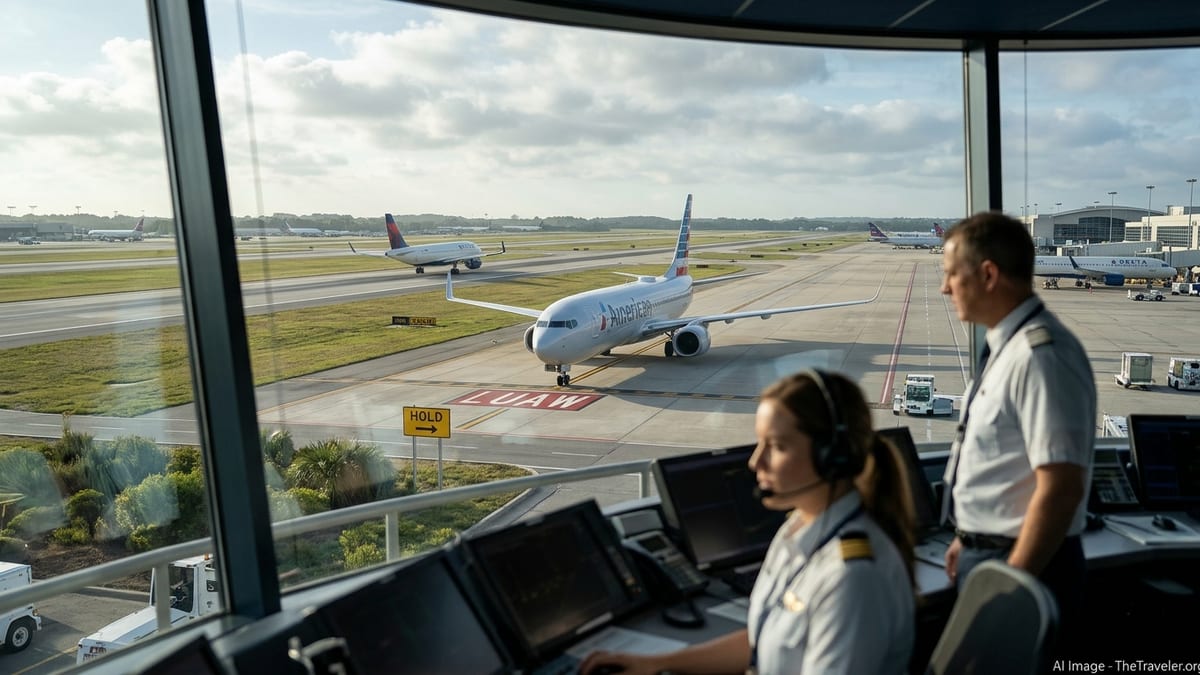
What the new Line Up and Wait rule changes
The Federal Aviation Administration has tightened its procedures for “Line Up and Wait” (LUAW), the runway instruction that allows an aircraft to enter a runway and hold in position while awaiting takeoff clearance. Under a notice that became effective on November 24, 2026, towers may clear aircraft to LUAW only when a stand‑alone watch supervisor or controller‑in‑charge is on duty specifically to oversee those operations and is not simultaneously working another operational control position.
The requirement is set out in FAA Notice JO 7210.979, which amends FAA Order JO 7210.3 governing air traffic facility operations. The notice upgrades earlier guidance that said such supervisory coverage “should” be provided during LUAW to a binding requirement that it “must” be in place. The intent, according to the FAA, is to remove ambiguity around staffing standards and ensure that the person responsible for watch supervision is fully available to monitor LUAW without the distraction of running a control position at the same time.
The change applies across FAA‑operated air traffic control towers that use LUAW. In practice, it means a departure controller can no longer be alone in the tower cab and issue LUAW clearances. For each period when LUAW is used, there must be both a controller working the local (tower) position and a separate operations supervisor or controller‑in‑charge tasked with watch supervision.
Why the FAA is tightening LUAW oversight
LUAW has long been identified as a higher‑risk phase of airport operations because aircraft are positioned on an active runway without immediate clearance to take off. FAA safety publications note that incidents involving aircraft holding in position typically occur after a period of waiting, when distractions and expectation bias can erode situational awareness. The new requirement for dedicated supervision is the latest in a series of measures aimed at reducing the chance of runway incursions and near collisions.
In recent years, the FAA and the National Transportation Safety Board have focused closely on runway safety, particularly after several high‑profile near‑miss events prompted reviews of procedures, equipment and staffing. Previous changes introduced standard “Line Up and Wait” phraseology in place of older terms and expanded the use of ground radar and alerting systems. The November 24 notice builds on that work by reshaping how people are organized in the tower rather than altering what controllers say on the frequency.
The agency’s order explains that the new rule is designed to ensure the supervisor or controller‑in‑charge overseeing LUAW is not distracted by other duties such as working a radar, local or ground position. By dedicating one person to watch supervision during LUAW, the FAA aims to create an additional layer of monitoring over the controller issuing takeoff clearances, with the goal of catching potential conflicts earlier and providing another safeguard against human error.
How the rule could affect departure flows
The most immediate concern among working controllers is that the new requirement effectively adds one more position that must be staffed whenever LUAW is used. At smaller or already short‑staffed towers, that may not always be possible, particularly during early morning, late evening or off‑peak periods when only a minimal crew is scheduled. In those situations, facilities may have to restrict LUAW operations or forgo them altogether until a qualified supervisor or controller‑in‑charge is available.
When LUAW is not available, controllers typically must sequence departures using more conservative spacing, allowing an aircraft to line up only when a takeoff clearance can be issued without an extended wait. That can reduce the rate at which aircraft depart, especially at busier fields where LUAW is routinely used to stage traffic and make full use of short gaps between arrivals. Aviation industry briefings published as the rule took effect highlighted this potential for reduced throughput, noting that the impact is likely to vary significantly by airport and time of day.
Some large hubs have robust supervisory staffing and may be able to meet the new standard during most of their operating hours, limiting noticeable effects on passengers. By contrast, contract towers and smaller FAA facilities that rely on lean rosters may have to adjust their watch schedules, reduce the hours during which LUAW is authorized or accept a lower departure rate. Several controllers commenting publicly in professional forums after the effective date said they expected modest slowdowns at times when only the minimum number of people are on duty.
Interaction with existing staffing strains and peak travel
The timing of the change has drawn attention because it arrived at the start of one of the busiest travel periods of the year. The rule took effect on Tuesday, November 24, 2026, during the Thanksgiving travel surge, when U.S. airports typically handle some of their highest passenger volumes and airlines schedule dense departure banks. While the FAA has emphasized safety as the motive for the change, controllers and industry observers have questioned whether implementation during a peak period will add pressure to facilities already managing heavy traffic.
The new LUAW supervision rule also sits against a broader backdrop of air traffic staffing challenges. In recent years, the FAA and the National Air Traffic Controllers Association have acknowledged that many towers and radar facilities are operating below ideal staffing levels, despite efforts to hire and train more controllers. Separate FAA notices have tightened rules around operations supervisor fatigue and coverage, which can further limit how often supervisory positions can be filled, particularly through overtime.
Because the LUAW requirement is framed as a safety mandate, facilities do not have the option to waive it in order to maintain throughput. If a tower cannot staff both a controller and a stand‑alone supervisor or controller‑in‑charge for watch supervision, it must modify its operations and rely on other departure procedures. How often that occurs is expected to depend on local staffing, schedule design and management decisions about when LUAW provides enough efficiency benefit to justify dedicating an additional person to supervision.
What travelers may notice and what to check
For passengers, the new rule is unlikely to change the visible aspects of the departure process, but it may contribute to longer taxi times or occasional delays to pushback and takeoff at some airports, particularly during complex weather or peak traffic banks. Any such effects will be intertwined with other factors that routinely influence punctuality, including airline scheduling, weather disruptions, ground handling constraints and the condition of the broader air traffic system.
Travelers do not need to take specific action in response to the LUAW staffing requirement, but those flying from historically constrained or weather‑sensitive airports may wish to allow extra time for connections and monitor their flight status more closely during busy periods. As with any schedule change linked to air traffic control procedures, the most up‑to‑date information on operational impacts will generally come from airline notifications and airport communications rather than from the FAA order itself.
The FAA has not set an end date for the LUAW supervision requirement, and the notice positions it as an enduring change to how towers are staffed during these operations. In the coming months, data on delays and airport performance will help clarify how much the rule is affecting departure capacity and whether facilities adapt their staffing models to restore throughput. Travelers planning trips over the winter holidays and into early 2027 should continue to check for day‑of‑travel updates from their airlines and airports, particularly when flying through congested hubs or during busy holiday peaks, as the system adjusts to the new standard.