


More news on this day
With nearly 6 million Americans expected to fly for Thanksgiving 2026 and storms and recent technology outages already disrupting operations at major hubs, U.S. travelers face a higher risk of delays and cancellations this holiday week and are being urged to prepare backup plans before they reach the airport.
Get the latest news straight to your inbox!
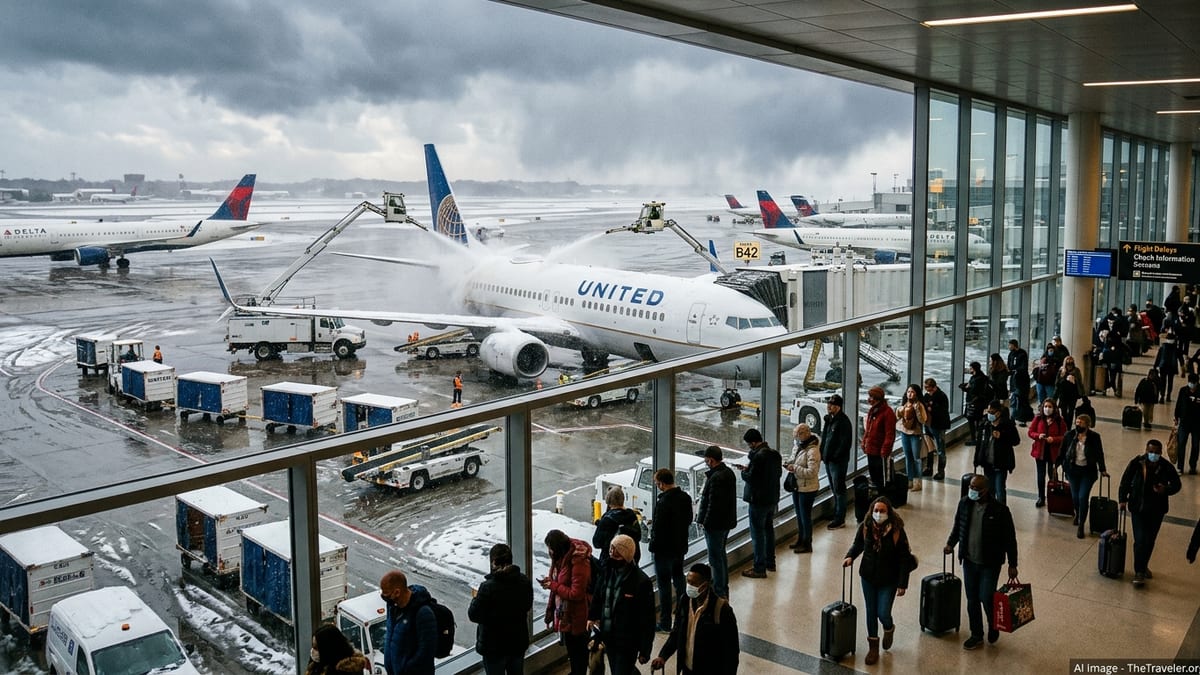
Busy skies and unstable operations shape Thanksgiving 2026
Travel over the 2026 Thanksgiving period is expected to be intense, even if overall volumes are slightly below last year. AAA forecasts that 81.5 million Americans will travel at least 50 miles from home between Tuesday 24 November and Monday 30 November 2026, with almost 6 million of them flying domestically. Although this represents a marginal dip compared with 2025, it still means crowded airports and fuller flights, giving airlines less spare capacity when things go wrong.
Airlines are operating into that demand after several recent operational setbacks. Within the past week, both United Airlines and Delta Air Lines have experienced separate technology outages that triggered hundreds of delays, including a computer glitch that briefly halted flights into Delta’s main hub in Atlanta on Sunday 22 November. While those specific issues have been resolved, they left aircraft and crews out of position, increasing the sensitivity of schedules to fresh disruption as the holiday period peaks.
Weather is adding another layer of uncertainty. Forecasts point to a large storm system affecting parts of both coasts around Thanksgiving Day, bringing strong winds, heavy rain and some snow. On the East Coast, forecasters are warning of gusts strong enough to affect airport operations and even threaten events such as the Macy’s Thanksgiving Day Parade, while in the Midwest and interior West, snow and freezing rain could slow ground handling and deicing. Even travelers departing from airports under clear skies may feel the impact if the aircraft or crew they are due to use are delayed elsewhere by storm conditions.
What airline waivers actually cover this week
In anticipation of the storms, several major U.S. airlines have published temporary travel waivers covering specific dates and regions, including parts of the Northeast and some Midwestern cities on and around Thursday 26 November. These waivers are confirmed policy, but they are narrow in scope: they typically apply only to tickets issued by the airline or its regional partners, for travel to, from or through an explicit list of affected airports, and for travel dates confined to the current week.
Most Thanksgiving 2026 waivers allow passengers booked on eligible flights to change their travel once without paying the usual change fee, and in many cases without paying any fare difference, provided the new trip departs within a set rebooking window, often between 25 and 28 November. Outside that window, travelers may be asked to pay any difference between the original fare and the new one. Some waivers also relax same‑day change rules at hub airports, but this depends on the carrier and the specific bulletin, so travelers should verify the exact terms on their airline’s website before adjusting plans.
It is important to distinguish between a voluntary change under a waiver and a formal cancellation by the airline. If a carrier cancels a flight for any reason, including bad weather, U.S. Department of Transportation rules state that passengers are entitled to a refund of the unused portion of their ticket if they choose not to accept an alternative flight. By contrast, when a flight remains scheduled but a traveler changes under a weather waiver, the airline generally owes flexibility rather than a refund, and may still limit options to certain dates, routes or booking classes.
Steps to take before you leave for the airport
Travelers who have not yet flown should treat Wednesday 25 November and Sunday 29 November as particularly high‑risk days, as these are expected to be among the busiest for both roads and airports. The Transportation Security Administration is projecting around 17.6 million passengers screened between Tuesday and Monday, and internal forecasts suggest that Sunday will again be the single busiest day of the holiday period. That combination of peak demand and unsettled weather means small schedule problems can quickly cascade into larger disruptions.
One of the most effective protections remains timing. Aviation and traffic data providers note that flying on Thanksgiving Day itself, Thursday 26 November, often involves shorter lines and fewer delays than the surrounding days, simply because fewer people travel. Those who still have flexibility may wish to move flights to early on Thanksgiving morning if their airline’s waiver allows date changes without extra cost. Early morning departures are also less exposed to knock‑on delays from earlier disruptions, because aircraft and crews have had the night to reset.
Travelers should also review their booking details and contact information now. Ensuring that the airline has an up‑to‑date mobile number and email address increases the chance of receiving real‑time notifications of delays, cancellations or gate changes. Downloading the airline’s app and enabling push alerts can further speed rebooking if something goes wrong, since many carriers now let passengers confirm new flights or add themselves to standby lists digitally instead of waiting in airport lines.
How to respond if your Thanksgiving flight is delayed or canceled
Once at the airport, the first step in managing a disruption is to confirm its cause and likely duration. Airlines classify delays under broad categories such as carrier‑controlled issues, national aviation system constraints and extreme weather. While exact classifications are primarily used for regulatory reporting, they influence how flexible airlines are willing to be with rebooking, meal vouchers or overnight accommodation. Travelers can ask agents for an indication of the cause, but should be aware that carriers are rarely obliged to cover hotels or meals for weather‑related delays in the United States.
If a Thanksgiving 2026 storm or knock‑on weather disruption forces a cancellation, airlines will typically offer the next available seat to the destination at no extra charge, but the definition of “next available” depends on seat inventory and network constraints. With flights already heavily booked for the holiday, the replacement may be later the same day, the following day or, in some cases, routed through a different hub. Passengers who are willing to travel at less popular times, such as late at night or on Thanksgiving Day itself, may find it easier to secure a seat.
Speed matters when seats are scarce. As soon as a cancellation appears in the airline app or on departure boards, affected travelers can try several channels in parallel: using self‑service rebooking tools in the app, joining the queue at a staffed desk, and if lounge access is available, speaking to agents there. Calling the airline’s customer service line from the airport can also help, especially for complex itineraries involving connections or partner airlines. Families and groups should clarify whether they are willing to split across multiple flights if necessary, as this can open up more options when only a few seats are available on each departure.
Protection, documentation and what to check after the holiday
For travelers who have not yet departed, travel insurance and credit card protections remain a key consideration, but they come with limitations. Some standalone policies and premium credit cards provide compensation for reasonable expenses such as meals, hotels or clothing if a covered delay or missed connection extends past a certain number of hours. However, many exclude weather‑related disruptions or treat them differently from carrier‑caused delays, and almost all require that travelers keep receipts and written confirmation of the disruption from the airline. Anyone relying on such coverage should review the specific policy wording before they fly rather than assuming a benefit will apply.
Keeping records during the disruption can also make a difference later. Screenshots of delay notices in airline apps, copies of emails or text messages, and photos of airport departure screens can help establish timelines if travelers later seek reimbursement or make a complaint. If an airline offers a voucher instead of a refund following a cancellation, passengers who would prefer cash should confirm their rights under U.S. rules and explicitly request a refund of the unused portion of their ticket if they decide not to travel. In most cases, accepting a voucher closes off the option of a cash refund for that trip.
Once the Thanksgiving period ends, operations may remain unsettled for several days as airlines reposition aircraft and crews and clear residual backlogs. Travelers with flights booked for the days immediately after the holiday, particularly on Monday 30 November, should keep monitoring their booking even if they are not flying on the core holiday dates. Given the mix of slightly lower overall volumes, high fares and recent glitches, travel groups expect airlines to adjust some schedules and equipment after reviewing the holiday’s performance, which could result in time changes or aircraft swaps on selected routes.
For those planning future trips, the 2026 Thanksgiving experience underlines a few durable lessons. Booking the first flight of the day where practical, traveling with carry‑on only where possible to avoid baggage delays, and building longer connection times through congested hubs can all reduce exposure to disruption when holiday weather or technology problems intervene. With forecasts pointing to continued strong demand but constrained capacity on key routes, travelers who want maximum flexibility around major holidays may also wish to prioritize fully refundable fares or itineraries with multiple daily frequencies, so that they have more options if the next round of storms or outages coincides with their plans.