


More news on this day
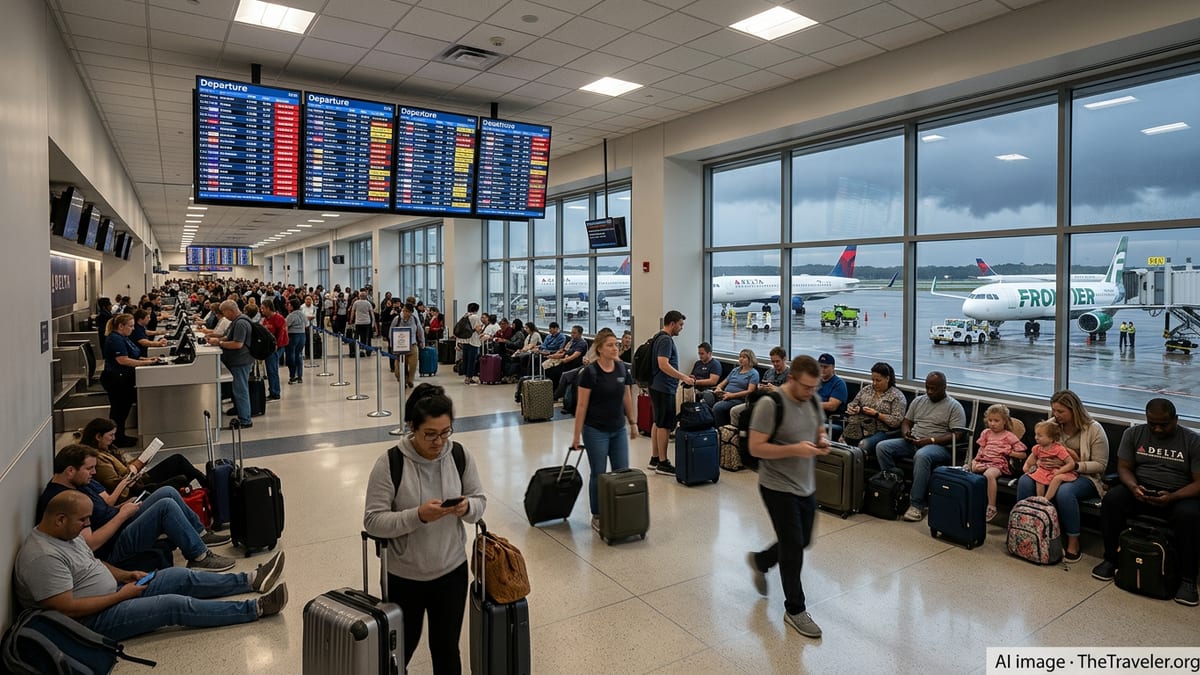
Severe storms across the Northeast late last week triggered a chain reaction of delays, diversions, and cancellations throughout the U.S. air network, leaving stranded travelers sleeping on terminal floors in West Palm Beach and facing missed connections thousands of miles from the weather itself.
Get the latest news straight to your inbox!
Stormy Northeast, Disrupted Nation
Strong convective storms across the busy Northeast air corridor disrupted air traffic late last week, with ripple effects reported nationwide. According to published advisories from the Federal Aviation Administration’s Air Traffic Control System Command Center, severe weather avoidance plans were activated for the New York and New England region on multiple summer days, limiting key routes in and out of major hubs and forcing ground delay programs at several airports.
Because so much of the country’s air schedule flows through the Northeast, disruption in that corridor quickly spread to flights far from the storms. Industry trackers report that when aircraft and crews are held on the ground or rerouted around thunderstorms, later segments can be delayed or canceled even in cities experiencing calm conditions. Publicly available guidance for passengers notes that aircraft, crews, and travelers can all end up out of position, creating knock-on delays well beyond the storm-affected airspace.
Air travel forums and flight status boards over the weekend reflected the strain, with travelers reporting rolling delays, diversions, and last-minute cancellations on routes across the country tied back to Northeast weather and resulting air traffic constraints.
West Palm Beach Becomes an Unplanned Overnight Stop
While the worst of the weather remained hundreds of miles to the north, West Palm Beach emerged as one of the unexpected pressure points in the system. Palm Beach International Airport serves as both an origin and diversion point for flights affected by storms elsewhere, and published summaries indicate that travelers were left stranded there after aircraft were rerouted or unable to depart on schedule from storm-affected cities.
FAA advisories for South Florida around the same period warned of arrival delays and airborne holding into major regional airports because of thunderstorms, compounding the disruption. As thunderstorms built over coastal and metro Palm Beach County, a National Weather Service special statement described strong storms near West Palm Beach with gusty winds capable of downing tree limbs and affecting ground operations.
Travel discussion boards show passengers describing diversions into West Palm Beach when Miami and other South Florida fields were temporarily constrained by weather and traffic. In several cases, aircraft that had been delayed by storms in the Northeast or Bahamas region ultimately reached South Florida late at night, with crews reaching legal duty limits and leaving passengers to be rebooked the following day.
Ground Delays, Holding Patterns, and a Strained Summer Schedule
Operational updates published by the FAA this summer describe a pattern familiar to frequent travelers. When forecasters highlight severe thunderstorms along key jet corridors in the Northeast, air traffic planners respond with severe weather avoidance plans, ground delay programs, and, at times, brief ground stops for the most affected fields. These steps are designed to keep airborne traffic at safe levels but often lead to lengthy waits before takeoff.
One recent operations plan noted that convective activity between New York and Boston required the use of special escape routes and limited the acceptance of offloaded traffic from the New York metro area into New England. Other advisories referenced holding delay notices for Florida arrivals on days when weather and heavy demand converged, an indication of how storms in one region can quickly interact with normal summer congestion elsewhere.
For travelers, that can translate into a patchwork of minor and major setbacks. Reports from airline-specific forums over the past month describe flights returning to gates after extended taxi times, diversions to alternate airports when storm cells settle over a destination, and sequences where short delays grow into cancellations as pilots and flight attendants reach maximum duty thresholds.
Stranded Travelers Search for Options
In West Palm Beach, the disruptions left some passengers facing overnight stays and improvised travel plans. With storms and air traffic programs affecting both the Northeast and parts of Florida, options for quick rebooking were limited. Flyers described long lines at customer service counters, difficulty reaching call centers, and limited availability on alternative departures for at least 24 hours.
Travel rights organizations emphasize that in the United States, weather-related disruptions are generally categorized as outside an airline’s control, which means carriers are not required by regulation to provide hotel or meal vouchers. Public guidance instead encourages passengers to ask about same-day rebooking, stand-by options, or routing through alternate hubs, as well as to consider refunds on the unused portion of a ticket if a trip is no longer possible.
Some passengers turned to third-party resources that track disruption data and explain compensation rules by region. These services note that while many consumer-protection regulations in Europe mandate compensation after long delays, U.S. rules focus more on refunds for canceled flights than on additional financial redress when storms disrupt schedules.
What Travelers Can Expect in the Days Ahead
Forecasts for the Northeast and South Florida suggest that the peak of the recent outbreak has passed, but late-summer storm patterns remain in place. The National Weather Service outlook around West Palm Beach shows more typical scattered showers and thunderstorms for early September, while many Northeast forecasts continue to flag the possibility of pop-up afternoon storms that can still affect heavily used airways.
Air traffic planners routinely advise that on days when severe weather is possible, travelers should expect slower operations and allow extra time for connections, particularly when itineraries route through New York, Boston, Philadelphia, or other major East Coast hubs. Airlines often issue general travel waivers ahead of the most severe systems, allowing passengers to change flights without certain fees if they are willing to move their trips to different days or routes.
For those departing or connecting through West Palm Beach, the recent disruptions underline the importance of monitoring flight status up to and including the time of departure, even when local skies appear calm. With so many routes linked to the Northeast corridor, conditions hundreds of miles away can still leave travelers unexpectedly grounded in South Florida.
Northeast storms trigger flight delays nationwide, stranding travelers in West Palm Beach