


More news on this day
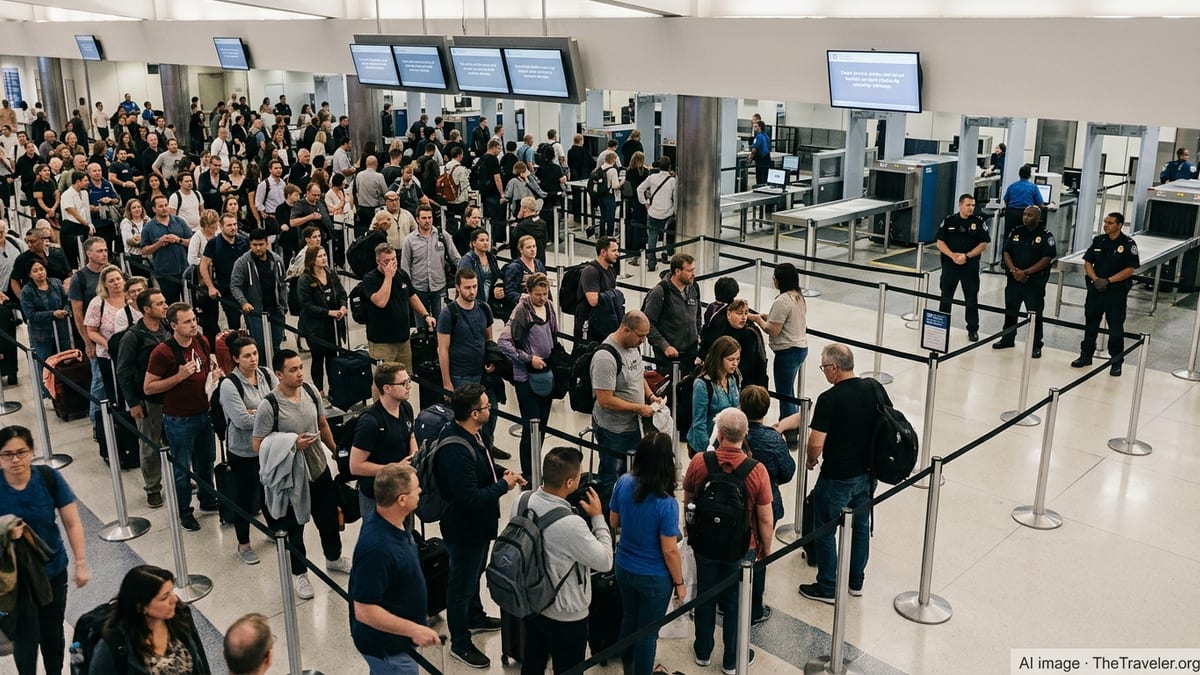
San Francisco Bay Oakland International Airport is preparing for an early September holiday travel surge, with about 140,000 passengers expected to pass through its terminals over the multi-day period, reflecting robust demand across Bay Area air travel as the summer season winds down.
Get the latest news straight to your inbox!
Labor Day Weekend Drives a Concentrated Travel Peak
The projected 140,000 passengers are spread across the extended Labor Day holiday window in early September, a period that traditionally marks the unofficial end of the busy U.S. summer travel season. Regional coverage of Bay Area travel patterns indicates that Oakland’s holiday passenger volumes typically climb well above an average non-peak weekend as residents look to fit in one last trip before fall routines begin.
Recent reporting on Bay Area holiday travel highlights that Oakland International Airport is positioned as a lower-cost, convenience-focused alternative to San Francisco International, drawing both local residents and travelers connecting through low-cost carriers. Publicly available data and past forecasts show that Oakland’s holiday passenger totals, while smaller than those at SFO, have been steadily rebuilding in line with national traffic trends since the pandemic downturn.
Compared with last year’s Labor Day period, when regional coverage pointed to an expectation of roughly 160,000 passengers at Oakland over the long weekend, this year’s estimate of 140,000 suggests a more moderate but still strong holiday peak. The figure remains well above off-peak winter weekends, underscoring that the airport continues to function as a key summer getaway hub for the East Bay.
Across the country, Labor Day remains one of the busiest late-summer travel windows for airlines and airports. National forecasts for this year’s holiday period point to elevated demand, with several large U.S. hubs planning for hundreds of thousands of travelers over the same stretch. Within that broader pattern, Oakland’s 140,000-passenger projection reflects its role as a mid-sized, price-sensitive gateway supporting both local leisure travel and visiting friends-and-relatives trips.
Capacity, Flight Schedules and On-Time Performance
Oakland’s ability to accommodate a 140,000-passenger surge is supported by a schedule anchored by major low-cost and hybrid carriers operating domestic routes and select international services. Industry databases tracking airport activity show that Oakland handled roughly 8.6 million passengers over the most recent 12-month period, placing it among the top 50 U.S. airports by total traffic and giving context to the scale of the upcoming holiday wave.
Operational statistics compiled for 2026 indicate that Oakland’s on-time arrival rate has generally tracked near national norms, although some months, such as June 2026, experienced more delays as summer weather and system-wide congestion affected performance. For holiday weekends, when seats are heavily booked and turnaround times can be tight, even modest disruptions may ripple through the schedule, increasing the importance of managing passenger flows efficiently.
Federal forecast documents and airport planning materials point to a medium-hub profile for Oakland, with long-term projections showing gradual passenger growth through the mid-2030s. Within that framework, the forecast of about 140,000 travelers for the Labor Day window aligns with a pattern of steady expansion rather than dramatic swings, suggesting that most of the demand is being met through existing gate capacity and aircraft upgauging rather than major schedule expansions.
At the same time, the early September peak is likely to press airport infrastructure, including check-in, security, and baggage-handling systems. Past Labor Day travel periods across the Bay Area have produced crowding in parking facilities and curbside zones, and the latest forecasts for national holiday travel point to tight seat availability, particularly on popular leisure routes such as Southern California, the Pacific Northwest, and major Midwest hubs.
Ground Access, Parking and Bay Area Travel Conditions
Holiday surges at Oakland do not occur in isolation: they are closely tied to the broader Bay Area transportation network. Road congestion on approaches to the San Francisco–Oakland Bay Bridge and regional freeways has historically intensified on peak getaway days, particularly Friday afternoon and evening. Transportation coverage for recent Labor Day periods identifies eastbound corridors toward Sacramento and key southbound routes as recurring choke points for holiday drivers.
Within the airport perimeter, parking is a recurring focus. Earlier Oakland travel advisories emphasized the availability of on-airport economy and daily parking, while recent promotions have encouraged travelers to reserve spaces in advance, especially for long weekends. With 140,000 holiday passengers expected, on-site lots and ride-hailing zones are likely to experience sustained demand from Thursday through Monday of the holiday stretch.
BART and other transit links also play a role in managing traffic. While schedules typically follow standard weekend or holiday patterns, system maps and prior holiday notices show that rail service to the Coliseum/Oakland Airport station provides an alternative to driving for some passengers. However, transit capacity is shaped by network-wide considerations, and travelers often weigh the convenience of door-to-door car services against the predictability of rail during busy periods.
Across the wider Bay Area, travel analysts anticipate that roads may feel more crowded than terminals for the Labor Day period, as local residents opt for regional road trips to coastal and inland destinations. Even so, the concentration of 140,000 airline passengers at Oakland over a short time frame suggests that the airport, nearby freeways, and surrounding neighborhoods will see notable increases in traffic volumes and demand for curbside access.
Regional Competition and Passenger Choices
Oakland’s holiday surge unfolds in a competitive Bay Area aviation market that also includes San Francisco International and San Jose Mineta International. In coverage of recent Labor Day periods, Oakland’s expected passenger counts have been compared against higher totals at San Francisco and lower volumes at San Jose, underscoring the varied strengths of each airport and the choices available to travelers.
Oakland’s advantages typically include shorter security lines relative to the region’s largest hub and a strong presence of low-fare carriers that appeal to budget-conscious travelers. Flight data aggregators show that the airport’s network focuses on domestic point-to-point service, particularly to Western and Sun Belt destinations, with seasonal and year-round routes tailored to leisure demand. During holiday peaks, that network supports dense flows of visiting friends-and-relatives traffic, students returning to or from the Bay Area, and vacationers heading to warm-weather cities.
By contrast, San Francisco International retains a broader global long-haul network and hosts a higher share of business-travel-oriented services, factors that support significantly larger overall passenger volumes. Nevertheless, reporting on Bay Area travel trends indicates that some travelers actively shift to Oakland during crowded holiday periods to avoid the heaviest congestion and to access lower fares or more convenient departure times.
San Jose, meanwhile, often serves as a secondary option for South Bay residents, with Labor Day passenger volumes roughly half or less of those at Oakland in recent years. Against this backdrop, the expectation of 140,000 passengers at Oakland reinforces its role as the primary East Bay gateway, particularly for cost-sensitive leisure and family travel during the end-of-summer holiday.
Economic Signals and Outlook Beyond the Holiday
The early September travel surge at Oakland feeds into a broader picture of aviation and economic activity controlled by the Port of Oakland. Airport facts and figures published by the port and summarized in recent business reports highlight that aviation operations, along with the neighboring seaport, support tens of thousands of jobs and contribute significantly to regional economic output.
As passenger volumes continue to recover, the airport’s performance over holiday periods has taken on outsized symbolic importance, offering a snapshot of consumer confidence and disposable income in the Bay Area. Labor Day travel bookings, including the estimated 140,000 passengers using Oakland, are generally considered a leading indicator for fall and winter demand, especially on core domestic leisure routes.
Federal enplanement projections, which classify Oakland as a medium hub, anticipate continued incremental growth through at least the mid-2030s, with annual gains in passenger totals rather than sharp spikes. Within that trajectory, a solid but not record-setting Labor Day weekend suggests that capacity at Oakland is being absorbed in a relatively orderly way, with room for additional growth tied to network adjustments by airline partners.
Looking beyond the holiday, attention is likely to shift to shoulder-season patterns in September and October, when business and conference travel can partially offset the end of school-related leisure trips. For now, however, the expectation of around 140,000 passengers at Oakland during the major September holiday period underlines the airport’s continued role as a central gateway for the East Bay and a bellwether of regional travel demand.
https://www.iflyoak.com/business/facts-figures/
https://www.sfchronicle.com/bayarea/article/labor-day-travel-2025-21021817.php
https://dwuconsulting.com/info/data/t100/airport/OAK
https://taf.faa.gov/Downloads/TAF2019Scenarios/TAFScenarios_OAK.pdf