


More news on this day
American Airlines has issued a fresh travel warning highlighting the risk of industrial action at two of Europe’s busiest airports, cautioning customers that strikes and related operational disruption could trigger last-minute schedule changes and cancellations during the coming days.
Get the latest news straight to your inbox!
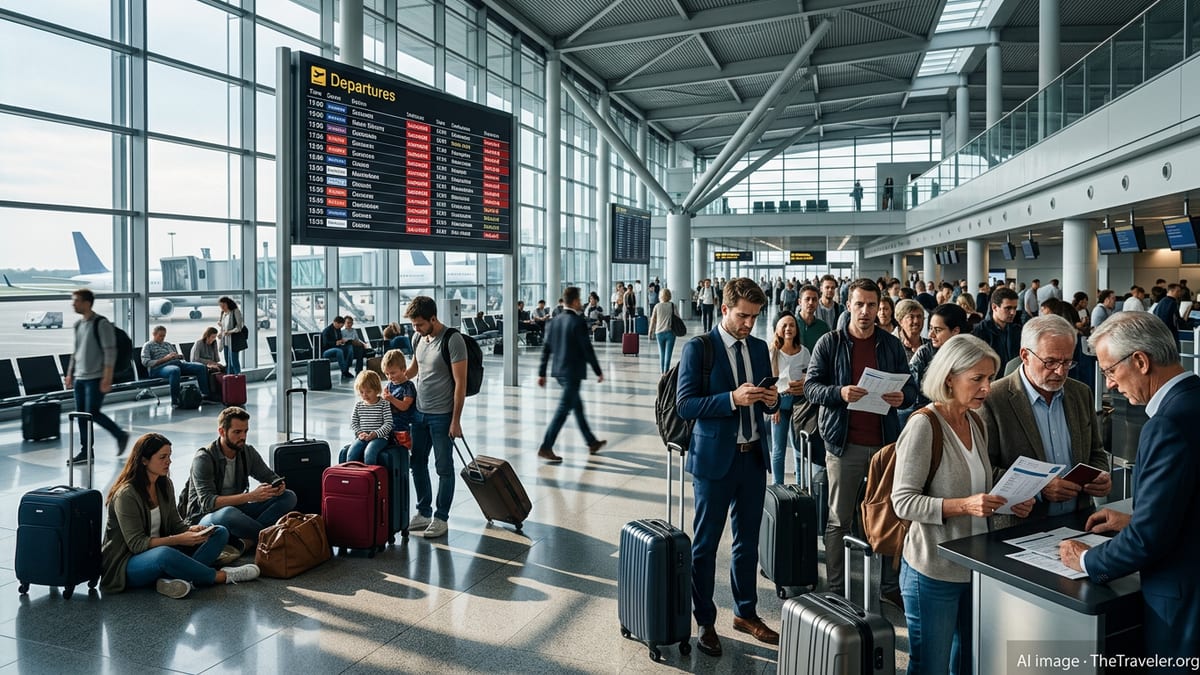
Travel Alert Flags Heightened Disruption Risk
According to the latest information on American Airlines’ travel alerts page, the carrier has introduced a special exception policy for customers booked on flights that could be affected by industrial action and related air traffic control disruption in Europe. The warning focuses on two of the continent’s largest and most congested hubs, where any reduction in staffing or capacity can rapidly cascade into widespread delays and cancellations across the network.
While the advisory language stops short of naming specific strike times by work group, the airline is telling customers to anticipate short-notice operational changes, including altered departure times, rebookings, and, in some cases, flight cancellations. Publicly available information from recent episodes of disruption at major European airports shows how quickly schedules can unravel when airport workers or air traffic controllers walk out or when control capacity is restricted.
The current advisory echoes previous alerts in which American Airlines has acknowledged that industrial disputes and airspace constraints in Europe can affect its own long-haul and feeder operations, even when its aircraft and crews are fully available. The warning notes that customers should monitor their flight status closely in the 24 hours before departure and ensure that contact details in their booking are up to date so that last-minute notifications can be delivered.
Heathrow And Gatwick Under Scrutiny As Capacity Pinch Points
Travel industry coverage and recent disruption patterns indicate that London Heathrow and London Gatwick are the primary focus of concern. Both airports rank among Europe’s busiest international hubs and operate with very limited spare runway capacity, leaving minimal room to absorb delays when industrial action affects air traffic control, security screening, baggage handling, or ground operations.
Heathrow data and guidance from the UK Civil Aviation Authority show that when industrial action has taken place in the past, Heathrow has sometimes asked airlines to cancel a proportion of their daily flights to keep overall movements within a reduced safe limit. That approach typically preserves core long-haul services but can see a number of short-haul or connecting flights withdrawn at short notice. Even a partial reduction in movements can strand connecting passengers or force extended re-routings through other European gateways.
At Gatwick, previous periods of disruption linked to air traffic controller shortages and other operational constraints have led to extended holds, diversions and cancellations that affected both low-cost carriers and full-service airlines. Because American Airlines relies heavily on transatlantic connections into London, any schedule cuts or prolonged delays at Heathrow or Gatwick can also affect onward travel to North America for passengers originating elsewhere in Europe, as well as travelers connecting from the United States to the continent.
Flexible Rebooking Policy And Passenger Options
In response to the heightened risk of disruption, American Airlines has activated a special exception policy that allows eligible customers to change their travel plans without the usual change penalties, subject to specific date and routing conditions detailed in the advisory. On similar recent advisories, the airline has allowed passengers booked to or through affected European airports on defined dates to rebook once to alternative flights in the same cabin, provided travel begins within a limited time window of the original itinerary.
American’s published conditions of carriage state that if the airline or one of its partners cancels a flight or delays departure or arrival beyond a defined threshold, its primary obligation is to refund any unused portion of the ticket and applicable optional fees. In certain scenarios, when disruption is within the airline’s control and no reasonable same-day option is available, American indicates that it may rebook customers on partner airlines at no additional cost. However, industrial action and air traffic control restrictions are often categorized as outside the carrier’s direct control, so automatic entitlements to accommodation and other expenses can be more limited.
Travel insurance providers and consumer bodies continue to advise passengers to keep receipts for any additional costs incurred when flights are disrupted and to check both airline policies and insurance terms before making alternative arrangements. For transatlantic flights touching the United Kingdom or European Union, passenger rights regulations can also apply in some circumstances, particularly when the disrupted flight is operated by a European or UK carrier or departs from a European or UK airport, adding another layer of potential protection beyond the airline’s own rules.
How Industrial Action Ripple Effects Spread Across Europe
Recent analyses by European aviation bodies show that industrial action affecting air traffic control or major airport workforces can create disruption well beyond the borders of the state where strikes originate. When controllers reduce available capacity in a single busy sector of European airspace, airlines are often required to slow their schedules, take longer routings, or cancel flights altogether to avoid overloading the system. A report on a two day air traffic control strike in France illustrated how cancellations and delays in one country can lead to large financial costs and knock-on disruption across the continent as aircraft and crews end up out of position.
For transatlantic operations, London’s role as a central hub magnifies that effect. If flights into Heathrow and Gatwick are delayed or capped, long-haul services may depart late, misconnecting passengers who intended to transfer onward to the United States or Canada. When that happens, airlines may need to find seats on later departures, rebook travelers via other European hubs, or hold aircraft on the ground to wait for connecting passengers, which can then delay subsequent rotations.
Industrial disputes among ground handlers, security staff, or border officers at major airports can have similar ripple effects. Even when runways and air traffic control remain fully available, queues at security or immigration can force airlines to delay boarding or miss departure slots, leading to rolling disruption throughout the day. With Heathrow and Gatwick operating close to their maximum declared capacity in peak periods, any such bottleneck can quickly translate into missed connections and unplanned overnight stays for travelers.
What Affected Travelers Can Do Now
Travel experts and consumer advocates suggest that passengers with upcoming itineraries involving Heathrow or Gatwick review American Airlines’ travel alerts page before departure and sign up for proactive flight notifications through the airline’s digital channels. American’s published guidance highlights that customers can track their journey, receive same day delay and cancellation alerts, and in some cases self-service rebooking through the airline’s mobile app, website, or airport kiosks.
Passengers with flexible schedules may wish to take advantage of any fee waivers to move their flights away from peak strike days or times identified in public reports, especially if they have critical connections or nonrefundable arrangements at their destination. Those who decide to travel as originally booked are advised to arrive at the airport earlier than usual, allow extra time for security and border checks, and monitor gate information in case of last-minute changes.
For travelers already en route when disruption occurs, American Airlines directs customers to use its app or service counters to obtain updated boarding passes or new itineraries. In situations where flights are canceled after boarding time or where overnight delays become unavoidable, passengers may need to combine the assistance available from the airline with claims to their travel insurer, particularly for hotel stays or ground transport that fall outside the scope of the carrier’s obligations. As industrial action and operational constraints continue to affect European aviation on a recurring basis, careful preparation and close monitoring of travel alerts are becoming an increasingly important part of flying through Europe’s busiest hubs.